|
The
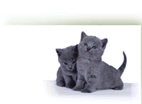
British Shorthair is possibly one of the oldest of the natural English
Breeds. The Romans are said to have introduced the domestic cat to
Northern Europe nearly 2000 years ago, so not surprisingly when cat
breeding and exhibiting became popular in the second half of last
century, many breeder concentrated their attention on these native cats.
Their stockiness tells of their humble origins, as they were developed
mainly from non-pedigree breeds and working cats of Europe. They
signify the opposite of the oriental Breeds with their cobby body, deep
chest, massive shoulders and round head.
In the early days the solid colours were the favorites, possibly
because they were less commonly seen in non-pedigree cats and the most
highly prized was the Blue.
British cat lovers were the first to standardize their cats and many
European Shorthairs were imported from Britain or have British
ancestors.
The British Shorthair suffered during World War II. In the
immediate post war period there were very few pedigree stud males left
and as a result some breeders mated their cats to shorthairs of foreign
type, which resulted in the loss of the heavy confirmation.
During the 1950's efforts were made to reverse the trend by mating out
to massively built Persians. This restored many of the breed
qualities, but tended to produce kittens with longer softer coats and a
more Persian head shape. This in turn created controversy over
breeding practices and standards.
The
British Shorthair is typically British by nature. The will display
an initial reserve towards invading human visitors but once accepted as
a true cat worshipper, the British rewards admirers with the grand
honour of stroking their very resilient coats.
Devoted in nature, the British Shorthair is an ideal companion.
They are a placid no nonsense cat, loving and affectionate yet rarely
over demanding.

|
|








|