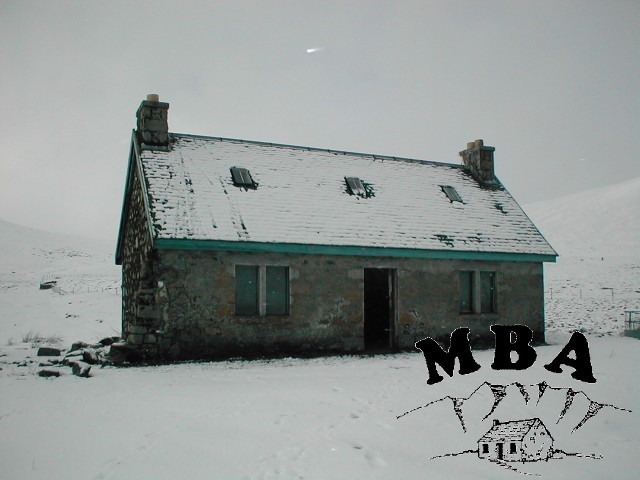
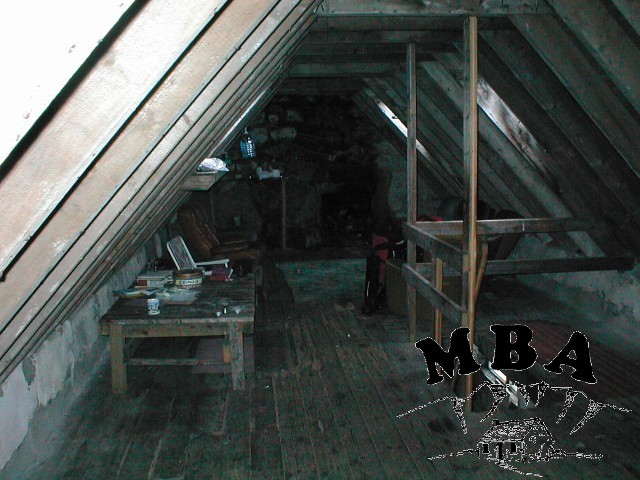
The Web of Life by Fritjof CapraThe bulk of this review was written beside a warm fire in this hut in Scotland, in a storm which lasted for three days. Wonderful! Many thanks to Mick Tighe for the firewood! Further down is a photograph of the inside. |
|
Quotations from this book are in blue. Links to websites explaining specific areas are on the left of the text and more general links at the bottom. I want to specifically mention the Calresco (Complexity and Artificial Life Research Project) site, which gives a comprehensive overview of many subjects talked about in this review This book is an exploration of the new models of organisation in the biosciences which have emerged since the 1960s, although their roots go back to the early years of the 20th century and even before that, to thinkers such as Kant, Humboldt and Goethe. After writing this review, I discovered another review, by a biology lecturer, which I printed out a year ago but never got around to reading. I like it - it reads very well - perhaps better than mine. It takes a different, but perhaps more integrated approach - you might like to read both - they don't cover exactly the same material. The first part of the book (a single chapter) - and the afterword - locate the content of the book within the ethical context of deep ecology with reference to the Norwegian philosopher Arne Naess. While I don't actually have a problem with that, it's not what I'm interested in right now. | ||
Systems theory and cybernetics linksSystems theory and Chaos IntroductionGeneral Systems Theory Introduction to systems theory and chaos Systems Theory Primer from the International Society for the Systems Sciences Principia Cybernetica comprehensive overview of cybernetics and systems theory |
The second part of the book, entitled The Rise of Systems Thinking provides a historical overview of the development of systems theory and cybernetics - ideas which underlie the rest of the book. A system in science is a relationship between two or more variables. Much of existing science up until the present is the analysis and description of simple systems: Newton's or Mendel's laws etc. Generally these involve relationships between independent and dependent variables: of an if x, therefore y and z nature. The crucial thing is that y and z have no effect on x - no feedback is involved. A description of this kind of system can be reduced to the relationships between its component parts, which are simply added together to deduce the behaviour of the system. However the systems now being studied are not simple linear systems of this kind, with dependent and independent variables. They are complex systems characterised by feedback loops which means that x is affected by y or z. So a change in x may cause a change in y or z but these in turn may cause a change in x, either directly, or indirectly, via other variables. The equations are nonlinear. Such systems produce emergent behaviour which cannot be predicted from a knowledge of the component relationships in the system. Something which fascinates me is that the definition of systems theory, which is used in the natural sciences, is exactly the same as that for structuralism, a method of analysis used in the social sciences. Here is a definition of structuralism, from Structuralism and Post Structuralism for Beginners, which is about my level! An organic view of the world sees reality as a totality, as an organism. The parts are real only insofar as they are related to each other and to the whole. I am curious as to whether the concepts of one can be applied to the other; it's interesting that Francisco Varela, author of some of the key ideas described below, uses terms taken from the post-structuralist philosopher, Derrida, and his work seems to incorporate that perspective. (end of insertion) Something I found difficult about this book, and something which certainly gives ammunition to Capra's detractors, is trying to pin down his language so that the ideas are clear and precise. To give some idea of the difficulty, here are some quotations from Chapter Two, with my comments underneath The third part of the book, The Pieces of the Puzzle, looks at the application of ideas from Systems Theory and Cybernetics in recent models of self organisation. By a self organising system Capra means a system which arises spontaneously from the interaction of the components, as distinct from a bicycle for example, which is created by an agent external to the system. Self organising systems are networks - they are composed of an interlocking grid of components arranged in feedback loops and can be described in terms of non-linear equations. Self organising systems are open to matter and energy but organisationally closed (which, as we shall see, does not mean that they cannot develop and change). However a self organising system is not necessarily a living system - Fritjof describes the work of Professor Ilya Prigogine on Benard cells - hexagonal patterns which may emerge in a liquid being heated, and in chemical clocks. Herman Haken has demonstrated that lasers are self organising systems - as are the catalytic cycles analysed by Manfred Eigen. | |
Autopoiesis linksAutopoiesis, structural coupling and cognition by Humberto Maturanathe link is not a direct one; you have to click on Actualities and then Articles to find it Interview with Francisco Varela Observer Web Tutorials, reference material, links |
This takes us to the idea of autopoiesis, the central concept of the book, developed by Chilean neuroscientists Humberto Maturana and Francisco Varela. Autopoiesis is the specification of a model of self organising systems which are both necessary and sufficent to give a precise definition of what life is - to answer the question posed by Erwin Schrodinger in his famous book, What is Life. Francisco Varela gives an extremely clear definition of autopoiesis in his paper, Autopoiesis and a Biology of Intentionality This is it: An autopoietic system - the minimal living organisation - is one that continuously produces the components that specify it, while at the same time realising it (the system) as a concrete unity in space and time, which makes the network of production of components possible. More precisely defined: An autopoietic system is organised (defined as unity) as a network of processes of production (synthesis and destruction) of components such that these components:
An unusual example of a living system is the Gaia model developed by James Lovelock and Lynn Margulis. Gaia is the new age name for the planet Earth perceived as a living organism. At this point I have to explain for non-scientists that during the 19th century there was a controversy between mechanism and vitalism in biology - vitalists asserted that there was a living principle in living organisms which could not be reduced to matter - it has been discredited, but organismic biology, which looks at biological phenomena from a holistic point of view, is a more sophisticated opposition to mechanistic reductionism. Anyway, James and Lynn were accused of the vitalist heresy, to which they replied that their model did not incorporate it, and to demonstrate that assertion they developed a simplified computer simulation of their model, called Daisyworld, which you can run as a Java applet from many web pages. The next chapter is about the new kinds of mathematics which have been developed since the 1960s, non-linear dynamics and fractal geometry. (The first is often known as chaos mathematics, but I think the term is misleading, as it is about modelling patterns of order in complex phenomena.) As an aside, here are a few personal reflections about maths He starts by making a distinction between linear mathematics, used in traditional reductionist science, and non-linear mathematics, used to model complex systems. I have to confess that his particular definitions didn't make sense to me - it's something I still have to get to the bottom of. In contrast to linear mathematics, non-linear mathematics is interative, that is that the output value of an equation becomes the new input value - it is a dependent rather than an independent variable. Because of this, simple nonlinear equations produce an unsuspected richness and variety of behaviour. Although deterministic, miniscule differences in starting variables after repeated iterations show increasingly divergent values, so (because measurement is never absolute) it is impossible to apply predictions to physical phenomena. Linear equations are usually solved for a particular variable by analysis, resulting in a formula from which a value can be obtained. By contrast, most non-linear equations are too difficult to be solved by analysis - you try out various combinations of numbers for the variables until you find ones that fit the system. With computers nonlinear equations can be solved numerically to any degree of accuracy. However, the solutions are of a very different kind. The result is not a formula, but a large collection of values for the variables that satisfy the equation. These sets of values are generated from the equation by computer and displayed visually as a series of points on a Cartesian system of coordinates (which has as many dimensions as the number of variables in the system) What is seen on paper or computer screen is the system's trajectory in phase space i.e. an imaginary space of the different variables - not a physical space. In phase space, some sets of values are more likely than others, and after frequent iterations, a system will end up in this set of states. Because the system always tends towards these states, the collective pattern of such states for a particular system in phase space is known as an attractor, of which there are three kinds. Point attractors correspond to systems reaching a stable equilibrium (like in an isolated chemical reaction), periodic attractors correspond to periodic oscillations (like a frictionless pendulum) and strange attractors correspond to chaotic systems. Precise quantitative predictions in non-linear dynamics are impossible, but qualitiative predictions can be made - there is a shift from quantities and formulas to quality and pattern. The qualitative analysis of a dynamic system consists of identifying the system's attractors and basins of attraction, and classifying them in terms of their topological characteristics - the phase portrait. American topologist Stephen Smale discovered that small changes in the parameters of the equations usually resulted in small changes of the phase portrait, but sometimes there may be a dramatic change and the whole system trajectory moves into a completely different pattern. These points of change in a system are called bifurcation points, and they correspond to the instablities and the sudden emergence of new forms of order that are characteristic of a self-organisation. The latter part of the chapter is about fractal geometry and while it is no doubt very fascinating I can't see much connection to the rest of the book. Nevertheless strange attractors are trajectories in phase space that exhibit fractal geometry So there. However, if you're very very good you will soon get a story at this point. And you like stories, don't you? (Later) I've been getting good reports, so you get to read the story now. But if you've come across the page by accident, and you've been bad, you just have to continue with the article. (continuing) I must say that I didn't find this chapter terribly well integrated with the rest of the book - I would have liked to see a bit more detail in the following chapters about how some of this stuff was actually applied, rather than simply occasional references to it - but maybe he didn't want to scare off people who hate mathematics. You also realise the value of an online version - with little interactive applets you could play with - I'd love to do that - but I think it will take a long time - still - I do hope to put plenty of links at some stage. In the last part of the book, The Nature of Life, Frijof attempts first to synthesise some of the ideas from the previous sections - in particular autopoiesis and dissipative structures (I'll get to them in a minute) - into a grand unified theory of life. He then develops the central ideas in detail, ending with two chapters about the nature of mind - also stemming from the ideas of Humberto Maturana and Francisco Varela (the Santiago theory of cognition) which I also haven't mentioned yet but which I'll get to - phew! |
|
The first chapter of The Nature of Life, called A New Synthesis is the central chapter of the book. So what Fritjof wants to do here is to create a comprehensive description of life. But I thought that is what Maturana and Varela did with the concept of autopoiesis!! I don't know - a lot of the difficulty of getting my head around this book is teasing out the relationships between abstract concepts which are all inter-dependent, and that process is still far from complete. So let me go with what I've got. Fritjof proposes 3 criteria for his description. The first is the pattern of organisation of life, which is given by autopoiesis, which we've already met. The second criterion is the structure of a living system - the physical embodiment of its pattern of organisation. In a living system this is a dissipative structure. Dissipative structure is the term used by Ilya Prigogine to describe the self organising properties of a Benard cell, a chemical clock, or (in a biological system) the metabolic web. My problem is that I don't see why you can't call these things patterns of organisation or what the distinction is between pattern of organisation and structure. Anyway dissipative structures - dissipative patterns of organisation? - are structures/patterns which are stable far from thermodynamic equilibrium, and so you can describe them in terms of strange attractors, and their transformation can be modelled by bifurcation. (Dissipative structures, like autopoiesis, get a whole chapter, so more later) Fritjof's third criterion is that of process: The process of life is the activity of life involved in the continual embodiment of the systems pattern of organisation. Thus the process criterion is the link between pattern and structure. In a living system this process is cognition. This sounds strange. Cognition is a psychological term which I've never fully got my head around but I think it means the process of knowing - thinking, in short. I'm not quite sure of where cognition fits into psychology - when I did a couple of short units in psychology at university before dropping out (a second time), psychology was still dominated by the vacuous nonsense of behaviourism - classical and operant conditioning - Pavlov and his dogs, Skinner and his rats. In classic behaviourism any mention of mind, of mental process, is considered unscientific. The impact of cognitive psychology must have been revolutionary - yet you find them both in psychology textbooks, as if they are natural bedfellows. Worse, you get weird marraiges like Cognitive Behavioural Therapy But anyway, cognition is thought of as a mental process. Humberto Maturana and Francisco Varela (it comes from them, not Fritjof) are neuroscientists and it is they who have started to use the term in the context of biology, rather than psychology. What do they mean by it? From what I understand of it (I was about to quote Fritjof here but I'll try to express it in my own words) is that any interaction of a biological system with the external environment leads to a transformation of that system which is a development of its autopoietic pattern. So cognition does not represent an external reality, but rather specifies one through the nervous system's process of circular organisation - but they extend this to all biological processes, noting that nervous systems are simply a particular speciality which extend cognitive possibilities. Look, I'm not saying I've fully grasped all this but there you are. Back again to the three criteria: 1 Pattern of organisation: autopoiesis 2 Structure: dissipative structure 3 Life process: cognition So cognition is the continual embodiment of an autopoietic pattern of organisation in a dissipative structure What do I think about that? I'm reserving judgement. I don't know about Capra's synthesis and I don't know if I understand the Santiago theory of cognition either, but I do understand the theory of autopoiesis and of dissipative structures, and I find them very interesting indeed. Mind you, I'm not sure I understand how Fritjof has positioned his explanations in the book - they get sections in two chapters and then whole chapters to themselves The remainder of this chapter supposedly gives an overview of the three criteria (why here and not in the chapters following - and what does the overview add to the previous overview in Chapter 5? For autopoiesis and dissipative structures he has chosen the example of a cell and a water vortex respectively. It seems to me that it would have been better to choose a single phenomenon and describe it from the point of view of the 3 criteria. The following chapters take the basic concepts for granted, but review ideas and research developed from them. | ||
Dissipative structures linksIlya Prigogine's Nobel Prize lecture |
Dissipative StructuresThermodynamics is the study of energy flows in chemical reactions (it probably has a wider definition than this, but that is the context in which I know it) In an isolated chemical reaction a quantitative change in the relative proportions of the reactants and the products takes place until a particular ratio is reached, at which point the reaction is said to have reached equilibrium (This ratio is different for every chemical reaction) One of the most important points about living organisms is that biochemical reactions are usually not at equilibrium. This is because biochemical reactions are not isolated - they are part of the metabolic web - an infinitely complex series of interlinked reactions, where the products from one reaction immediately become the reactants for a dozen more and with inputs of matter and energy in the form of food and outputs of waste. Products can even become reactants and the reaction go in the opposite direction. It is the fact of continual biochemical imbalance which maintains this web - if those reactions all reached equilibrium the web would no longer exist - the organism would be dead. Despite the fact that the reactions taking place in the metabolic web are in disequilibria, the structure of it, although ever changing, is very stable. Ilya Prigogine invented the term dissipative structures to describe such stable structures in disequilibria. Such structures exist at a high level of (thermodynamic) order (the equilibrium point of a chemical reaction is its state of maximum disorder) - the necessary increase in disorder is pumped out of the system. Because of self-amplifying catalytic cycles, points of instability can arise in dissipative structures, modelled by reaction-diffusion equations. These create bifurcation points and different patterns can emerge depending on the system's previous history. | |
Autopoiesis linksIntroduction to autopoiesis by Humberto MaturanaInterview with Francisco Varela From Autopoiesis to Neurophenomenology tribute to Francisco Varela: contributions from many different scientists Observer Web Tutorials, reference material, links Interview with Stuart Kaufmann |
AutopoiesisThe chapter on autopoiesis (self-making) starts with a description of 2 kinds of computer simulations and then goes on to look at examples of autopoiesis in a number of areas. Programs called cellular automata model the emergence of autopoietic networks through the interaction of components. An earlier type of simulation, binary networks, although not autopoietic as such, can be used to model enormously complex systems - chemical and biological networks containing thousands of coupled variables, which could never be described by differential equations. The succession of different states in these simulations are cyclical, and so can be modelled by periodic attractors. Stuart Kauffman, an evolutionary biologist at the Santa Fe Institute, has discovered that the average number of inputs into each node in a binary network is crucial in determining how much stability a network has: an ordered regime with frozen components, a chaotic regime with no fixed components, and a boundary region where frozen components just begin to melt. Stuart's central hypothesis is that living systems exist in the boundary region near the edge of chaos . Fritjof goes on to describe a number of different autopoietic systems - biochemical systems with a boundary of fatty acids developed by Pier Luigi Luisi in Zurich, - a minimal form of life, the gaia system described earlier, and social autopoiesis, which is not fully accepted. However on of the most important general features of autopoiesis is not dealt with until the end of the chapter - structural coupling. An autopoietic system is an organisationally closed system of production processes - so every single component is subject to cyclical replacement. However this self-maintainance is only one type of production process. The second type of structural change in a living system are changes in which new structures are created - new connections in the autopoieitic network. What is crucial about such an interaction is that change triggered by the external environment takes place as a modification of the existing system according to its own nature. So If you want to influence someone in a human interaction you first of all have to find out where they're at, (which is a product of the history of their interactions with the world) and relate to how they see things, rather than simply impose your own views. EvolutionThe chapter on evolution ("The Unfolding of Life") is not relevant to my own project, and to be honest, I couldn't see how a systems view of it is very different from the conventional view. The Darwinian view of evolution (the crude Richard Dawkins version - I loathe Dawkins) is that evolution is an interaction of random mutation with natural selection - I know that there are more sophisticated variants of this, but I've forgotten the details. The systems view is the story of emerging complexity as organisms act on the environment to change it, for example using up all the CO2 from the atmosphere or overloading it with poisonous Oxygen, each of which threatened the existance of life but which organisms (in this case bacteria) responded to by changing their relationship to the environment.(by incorporating both the production of CO2 and the use of Oxygen as a raw material in the utilisation of energy) One interesting thing I didn't know is that bacteria share all but 1% of their genes with other bacteria - they exchange about about 15% of their genome every day - so you can't meaningfully talk about different bacteria species - you could even regard them as one large amorphous global organism. The Santiago Theory of CognitionIn so far as I understand it, modern cognitive science originated in the ideas generated by the Macy Conferences in the late 1940s, which also generated the fundamental idea of what a computer is and so cognitive science is also based on a model of how information is processed - a data processing model where information is received from outside and processed into knowledge. The Santiago theory is different from this because the nervous system does not process information from the outside world, but on the contrary, brings forth a world in the process of cognition Its interaction with the world is not conceived as receiving information, but changes in the internal patterns of the nervous system triggered by structural coupling. Substantially this theory is a development of the ideas of the 18th century German philosopher Immanuel Kant, as expressed in his book "The Critique of Pure Reason". I have not read the Critique but I know a little about the ideas contained therein: Kant, like Humberto Maturana and Francisco Varela, is concerned with how we come to know the world and he develops the idea that our perception and comprehension of the world is dependent on how our minds categorise information - in modern terms, your brain cannot perceive information unless there is a biological structure which recognises it (the totality of an engram) This is a development from the philosophy of empiricism, where the mind was concieved as being moulded by the world. The Santiago theory is a development of this in a modern biological context. Each system builds up its own distinctive world according to its own distinctive structure. As Varela put it, "mind and world arise together". However, through mutual structural coupling, individual living systems are part of each others worlds. There is an ecology of worlds brought forth by mutually coherent acts of cognition. They communicate with each other and coordinate their behaviour. Since individual organisms within a species have more or less the same structure, they bring forth similar worlds. We humans, moreover, share an abstract world of language and thought through which we bring forth our world together Cognitive ImmunologyBefore his death in 2001, Francisco Varela was working on what he called cognitive immunology. Traditionally the immune system is thought of as existing to provide an defensive response to the invasion of the body by foreign substances which is neutralises or kills - implicit in this is the idea that the immune system can make a distinction between body cells and foreign agents. Francisco did not disagree with this view, but viewed it as a secondary effect of the much more central cognitive activity of the immune system, which maintains the body's molecular identity. In his view, the immune system is a distributed network for regulating the cellular and molecular repertoire - it does not distinguish between self and foreign agents, but launches a defensive response when it is unable to integrate any entity into its system of regulation. Candace Pert and her colleagues at the National Institute of Mental Health in Maryland have pointed out that the nervous system, the immune system and the endocrine system are in fact one integrated psychosomatic system, mediated by oligopeptides. Candace and her team hypothesise that AIDS is rooted in a disruption of peptide communication. They discovered that HIV enters cells through particular peptide receptors, and they designed a protective peptide that attaches itself to these receptors and this blocks the action of HIV ConciousnessThe last chapter is about how consciousness arises from cognition - I think it is easiest if I mostly give quotes: Communication, according to Humberto, is not a transmission of information, but rather a coordination of behaviour between living organisms through mutual structural coupling Humberto gives an example of how some African parrots form mating pairs through weaving together two different birdsongs into a single song. Language arises when there is communication about communication (Humberto describes a hypothetical situation with him and his cat: I've miaowed three times and you still haven't given me any milk yet) The process of languaging takes place when there is a coordination of coordinations of behaviour. Words serve as tokens for the linguistic coordination of actions and are also used to create the notion of objects. Our linguistic distinctions, moreover, are not isolated but exist "in a network of structural couplings that we continually weave through languaging". Meaning arises as a pattern of relationships among these linguistic distinctions, and thus we exist in a 'semantic domain' created by our languaging. And finally, self-awareness arises when we use the notion of an object and the associated abstract concepts to describe ourselves. Thus the linguistic domain of human beings expands further to include reflection and consciousness. As its latin root - con-scire ("knowing together") might indicate, consciousness is essentially a social phenomenon Francisco Varela has followed another approach to consciousness where neurones in different areas of the brain fire synchronously in cell assemblies which correspond to particular experiences. Fritjof ends this book with some kind of Buddhist-type sentiment - I've forgotten what it is now - it didn't particularly grab me, but I'd better go back and read it again, so I can wrap this up properly. Well, I'll do it some time - for now I'll say that although the book is good, he can be a bit vague - as much of it is based on the work of Maturana, Varela, Prigogine and Kauffman, I think it is probably better to read their work - it's difficult to find in public libraries, but from what I have seen it is more precise and clear. General LinksCalresco (Complexity and Artificial Life Research Project) site: comprehensive overview of many subjects talked about in this reviewEvan Thompson's website Evan Thompson was a collaborator of Francisco Varela's |