| Dresden, Nuremberg, Frankfurt, and Heidelberg |
 |
 |
 |
 |
 |
 |
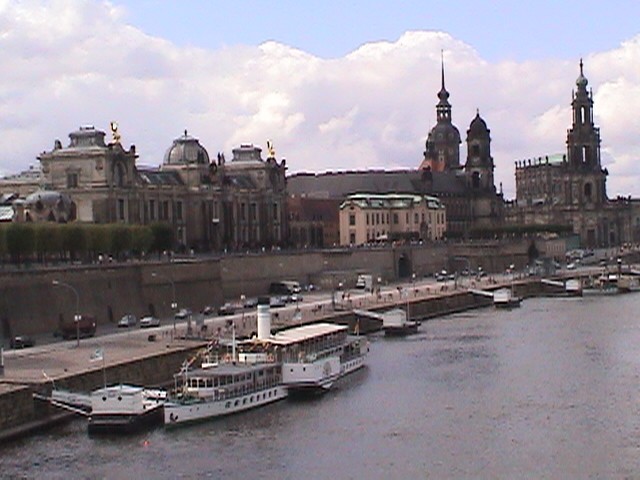
| Dresden was called "Florence of the North" until allied fire-bombing destroyed most of the city in 1945. Restoration was slow, because Dresden became part of East Germany. That government favored leaving many of the ruins alone as a war memorial. But now glorious Dresden is back, as shown by this famous vista of the historic district. |
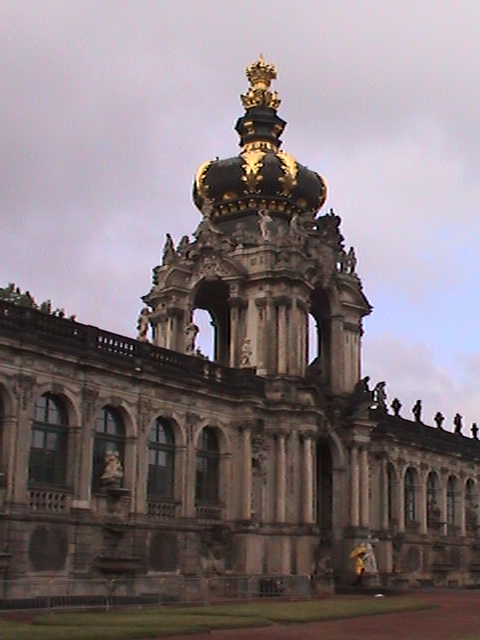
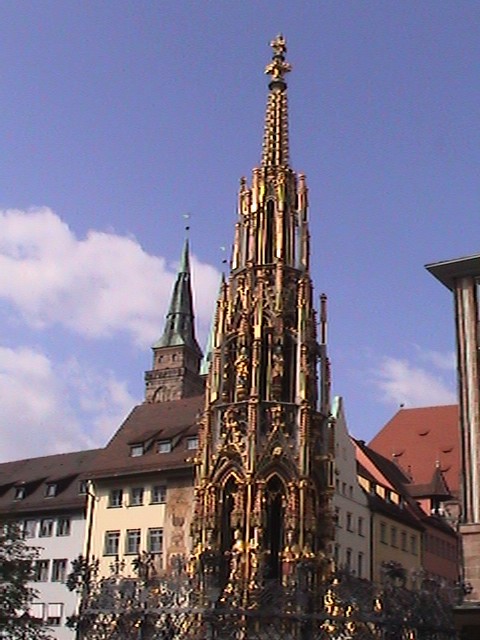
| On the left, a portion of Dresden's Zwinger, a huge royal baroque structure famous for its courtyard and housing five museums. On the right, from Nuremerg's old town, the recreated 14th century Beautiful Fountain. |
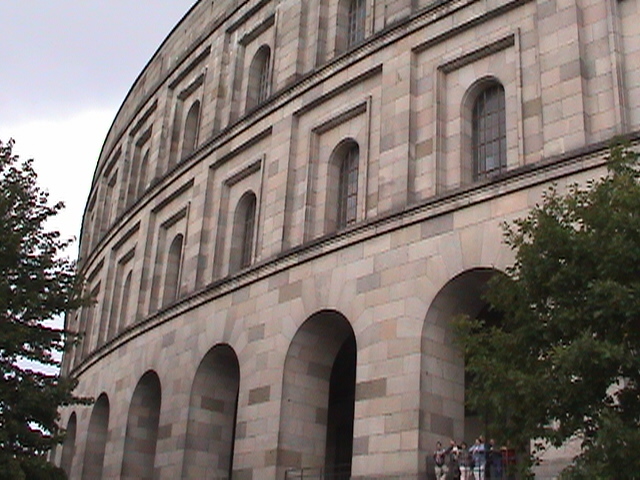
| Nuremberg was the main site for Nazi rallies. Hitler planned for massive buildings in Nuremberg and elsewhere to outshine prior civilizations. This unfinished Congress Hall, intended as a larger version of the Roman Colosseum, has survived. It now houses a museum to teach Germans about Nazi and World War II horrors. There was a huge poster on the building which read in German "Nuremberg says No to the Nazis". |
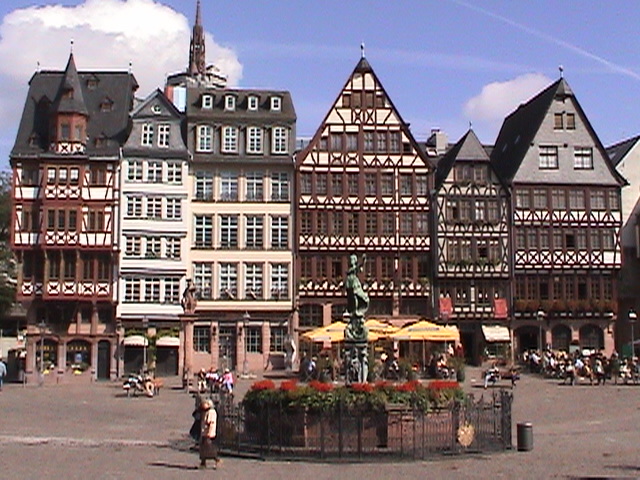
| Frankfurt's historic city center, the Romerberg, has been restored to its 14th and 15th century appearance. The rest of Frankfurt is often compared to Manhattan, with its forest of high rise buildings. |
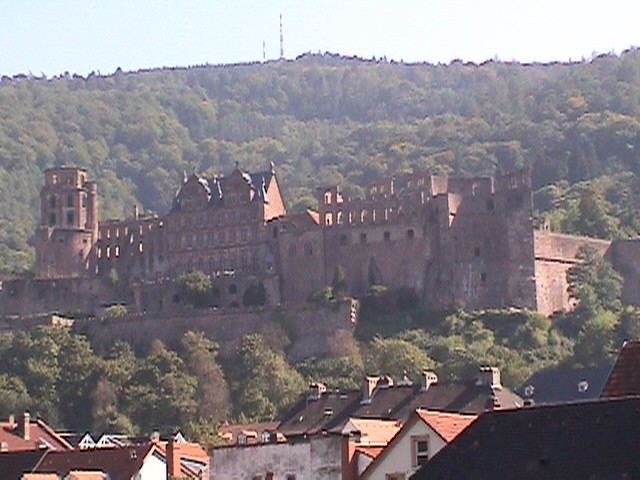
| Heidelberg's castle dates from the 13th century. It was not a military success story. After being captured by the enemy and heavily damaged, the Germans simply abandoned it. The historic ruin, high on a hill, still dominates the city and remains the primary symbol of Heidelberg. |
 |
 |
| If you have a high speed internet connection, watch the Intrepid Berkeley Explorer's new film on Germany "Septemberfest" or the 1990 video "Berlin and Paris" by clicking on AdventurePics.com . |
 |