| Berlin, continued |
 |
 |
 |
 |
 |
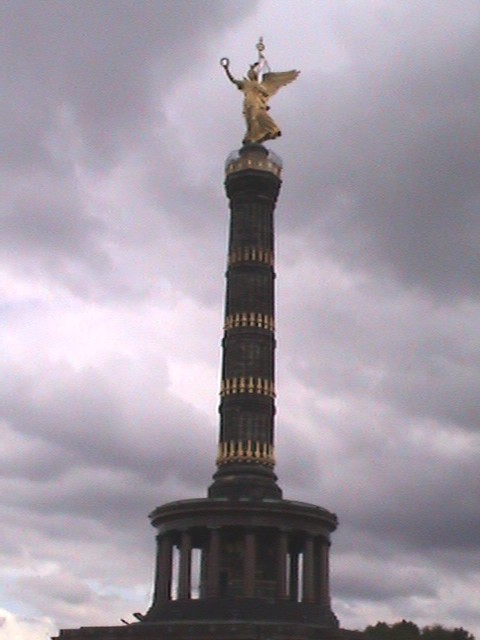 |
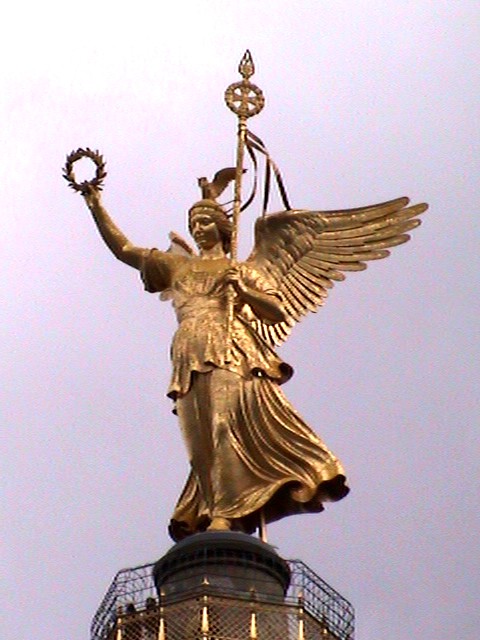
| The Victory Column (Siegessaule), built in 1873, commemorates Prussia's military conquests under Kaiser Wilhelm I that created the nation of Germany. Atop the column is a guilded statue representing victory. |
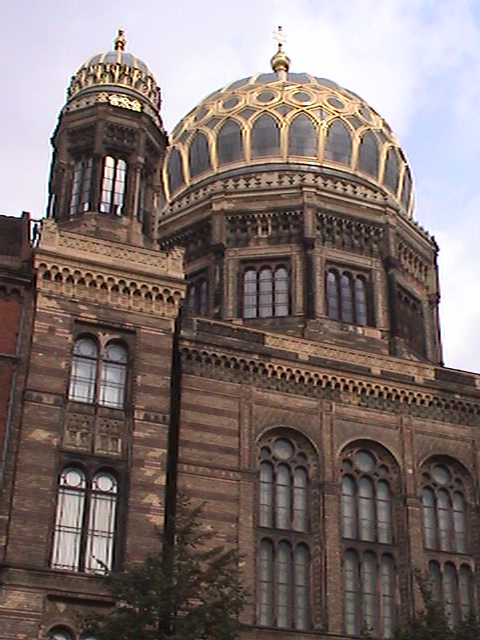
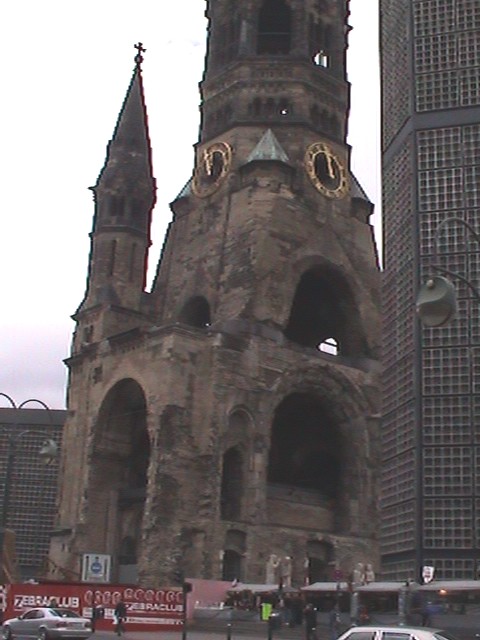
| On the left, unrestored ruins of the Kaiser Wilhelm I Memorial Church (1895), showing the damage from allied bombing in World War II. It serves as Germany's symbol of defeat and the horrors of war. On the right, the restored New Jewish Synagogue, originally built in 1866. Both are now museums. |
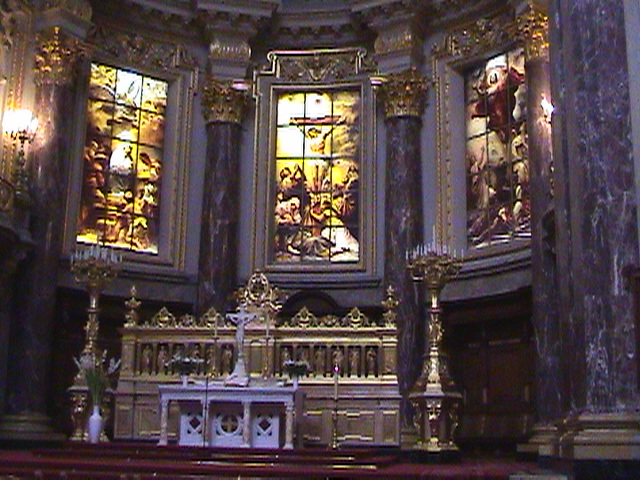
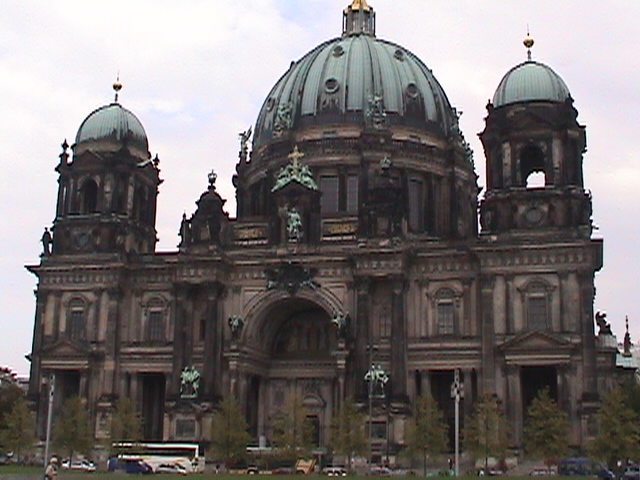
| The Berliner Dom (Berlin Cathedral, 1905) is Lutheran, and the former royal church where Prussian kings are buried. Heavily damaged by World War II bombing, restoration took decades. |
| Neither the Dom's interior nor exterior reflects a traditional, sparse, Lutheran style. This church design is neo-Renaissance. |
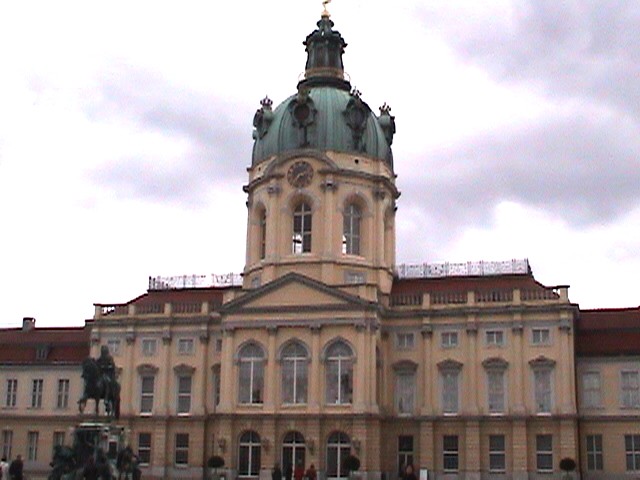 |
| The 17th century Schloss Charlottenburg is Berlin's only remaining imperial palace. The others fell victim to allied bombing and East Germany's policy of destroying, rather than restoring, Berlin palaces under its control. However, in Potsdam, near Berlin, East Germany restored and maintained the beautiful palace complex that includes Frederick the Great's Sanssouci. |
 |
|
 |
| If you have a high speed internet connection, watch the Intrepid Berkeley Explorer's brand new film on Germany "Septemberfest" and the 1990 video "Berlin and Paris" by clicking on AdventurePics.com . |