| Sancta Sophia |
| The Greatest Church in Christendom - Byzantine Empire, 548 AD - 1453 AD |
 |
| Constantinople/Istanbul |
 |
 |
 |
 |
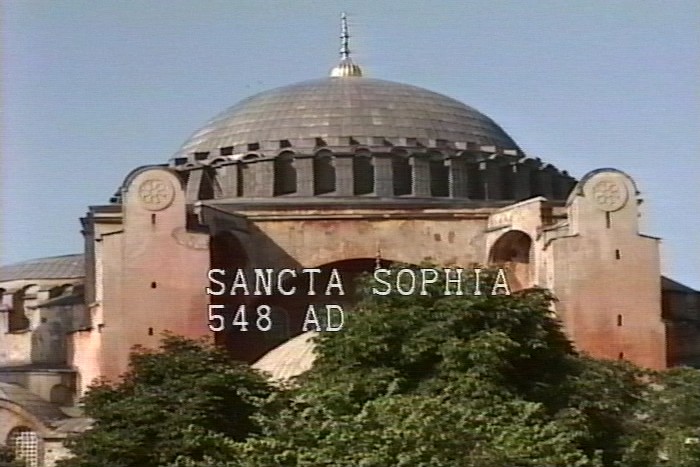
| The Roman Emperor Constantine had both created the new eastern capital, which took his name, and brought Christianity to the Empire. This eventually led to both a political and religious division of the Roman Empire. Constantinople, also known as Byzantium, was the new Rome, later capital of the Byzantine Empire. And its great domed edifice, Sancta Sophia, became the central shrine for the Eastern Orthodox Church, which broke with the Pope and the Roman Catholic Church, a schism that never healed. |
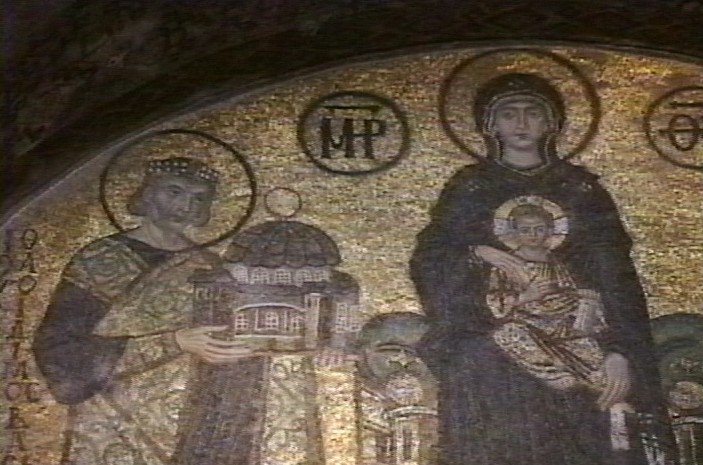 |
| The Emperor Justinian merely wanted to build the greatest Christian Church in the world, and this mosaic shows him presenting Sancta Sophia to Mary and Jesus. It's name means Church of the Divine Wisdom in Latin. However, the Byzantine Empire would replace Latin with Greek. |
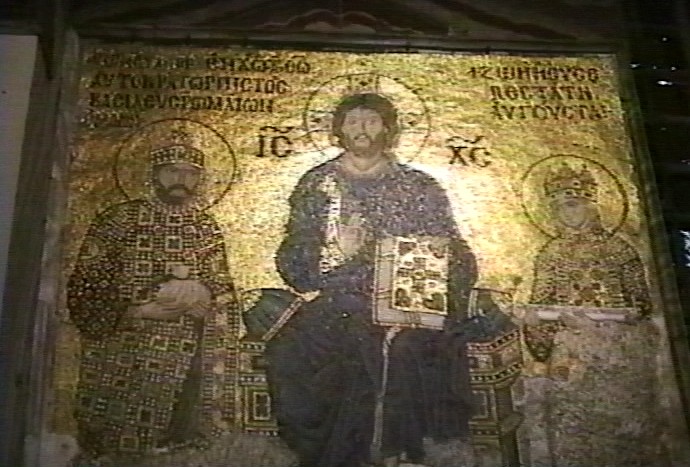
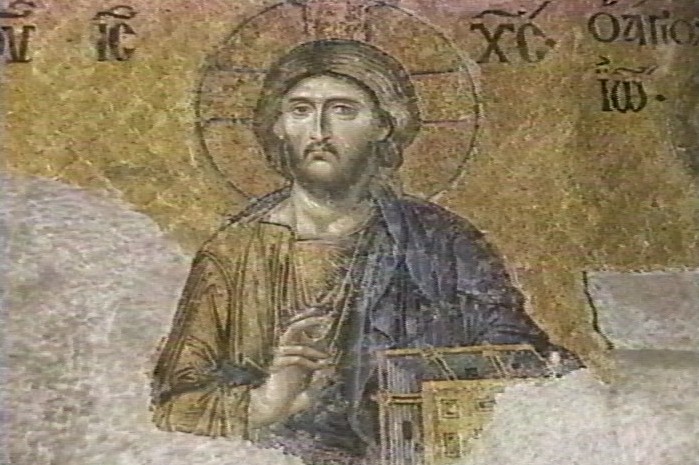
| The interior of Sancta Sophia contains numerous golden Byzantine mosaics, which are being restored. |
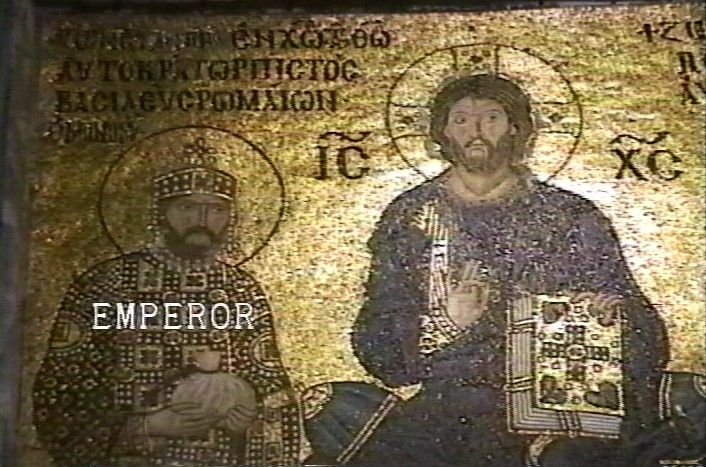
| In this close-up, the Byzantine Emperor places himself on the right side of Jesus. The Empress is on the other side. No separation of church and state in the Byzantine Empire. |
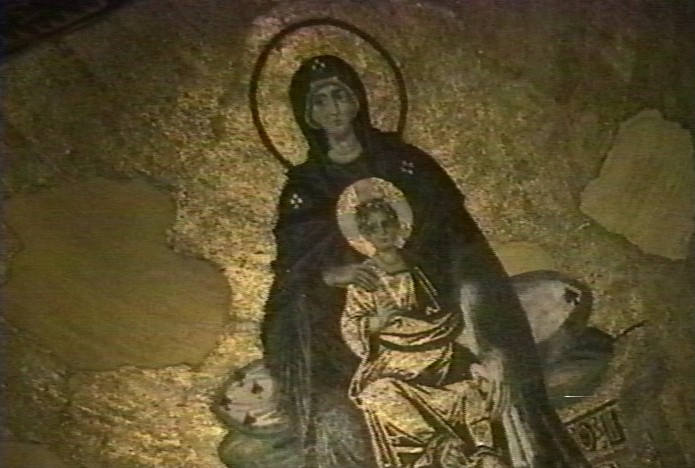
| The ceiling and walls of Sancta Sophia were covered by religious art works, such as this Madonna and Child. |
| Much restoration was still underway when I visited in 1998. Scaffolding greatly limited interior photography. |
| If you have a high speed internet connection, watch the Intrepid Berkeley Explorer's free video of this trip, "What the Sultan Saw", by clicking on AdventurePics.com . |
 |
 |
 |