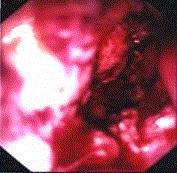
There are two main types of Pancreatic cancers formed by tumors. The exocrine cells are responsible for one type, and the endocrine for the other. The most common type of Pancreatic tumor cancers are of the exocrine. Most of the time, the cancer developes within ducts of the pancreas. Sometimes, however, the affected cell is an acinar cell, which produce the pancreatic enzymes.
The other type of Pancreatic tumors are the endocrine tumors. These tumors are reffered to as islet cell tumors, as groups of endocrine cells form "islets". These tumors are usually benign, meaning that they are almost harmless. A small minority are harmful, however.
The type of treatments used on Pancreatic cancers are usually based on the stage of the cancer, so it is important to know what stage the cancer is in. One of the most commonly used stage systems is the TNM system, which stands for T-tumor, N-lymph nodes, and M-metastasis. Below is how each stage is defined:
T1: The cancer is contained strictly to the pancreas, and is smaller in size than two centimeters.
T2: The cancer is only in the pancreas, but is larger in size than two centimeters.
T3: The cancer has infected nearby tissue mass, but has not yet contacted the blood stream.
T4: The cancer has spread into the blood stream.
N0: As of now, no lymph nodes have been infected.
N1: Lymph nodes near the pancreas have been infected.
M0: No distant lymph nodes are invovled.
M1: Distant lymph nodes have been infected.