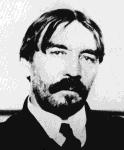
THORSTEIN BUNDE VEBLEN
Thorstein Bunde Veblen was born in Cato, Wisconsin in 1857 into a family of Norwegian immigrants. His family moved to Minnesota when he was eight. Veblen's father, Thomas Veblen, was a farmer who put a great value on education. He managed to save enough money to send his quite gifted son to Carleton College in Northfield, Minnesota. Thorstein Veblen later on studied at Johns Hopkins, Yale, and Cornell universities.
There seems to be little question that Veblen had an a grasping and intelligent mind; as a young man he read ferociously. But, Veblen proceeded in life as an isolated figure; his mind unpenetrable by others; and his personality matched his physical appearance, -- strange. Veblen soon shook the Lutheran institution by showing an intellectual curiosity along with his agnostic beliefs. "He walked through life as if he had descended from another world, and the goings on which ... appeared to him as piquant, exotic, and curious as the rituals of a savage community ... [he was] a mass of eccentricities."
Veblen then went on to Cornell before coming, along with his mentor J. Laurence Laughlin, to the University of Chicago. In time Velben found himself teaching at the University of Chicago, a university that was well funded (Rockefeller) and had determined to corner the entire intellectual market, even if it meant that the university was to end up with such a strange individual in its stable, as undoubtedly Thorstein Velben was.
Unable to attain a teaching position, he spent seven unhappy years at home in Minnesota before resuming his academic career. From 1892 to 1906 he taught political economy at the University of Chicago, gaining a reputation as a brilliant, eccentric thinker and innovative teacher. Veblen's teaching methods were such that they drove students away: "He mumbled, he rambled, he digressed." (Heilbronner in his The Worldly Philosophers (New York: Simon & Schuster, 1953) Veblen's gruff manner and unconventional personal life also garnered notoriety. The Chicago administration forced him out in 1906 following an extramarital affair. He taught economics at Stanford University from 1906 to 1909 only to be expelled again for personal reasons. He then teached at to the University of Missouri from 1911 to 1918. In 1919, he became a founding member of the New School for Social Research in New York. He was on the staff of the New School for Social Research, in New York City, from 1919 to 1926, when he retired. Thorstein Veblen died on August 3, 1929.
At the University of Chicago he wrote his classic work, The Theory of the Leisure Class. It came off the presses in 1899. In it, Veblen set forth his corrosive view of society. Veblen was a non-Marxist critic of capitalism who coined the phrase "conspicuous consumption." His work was a dead serious, and often amusing, examination of consumption. It was first written in such a polysyllabic manner that the publisher had to get Veblen to re-write it several times. "For most people the book appeared to be nothing more than just ... a satire on the ways of the aristocratic class, and a telling attack on the foibles of the rich. ... Although Veblen might stop along the route to comment on the more striking local scenery, his interest lay at the terminus of his journey, in such questions as What is the nature of economic man? How does it happen that he builds his community that it will have a leisure class? What is the economic meaning of leisure itself?" (Heilbroner, op. cit., p. 216)
Veblen's theory of the leisure class is to be compared to that of Marx's theory. Marx was of the view that the upper class were at "swords points" with one another and the inevitable historical outcome would be the violent overthrow of the upper classes. Veblen, however, was of the view that the lower classes were not out to overthrow the upper class; but, rather, strived to climb up to it. Its presence, indeed, served the larger community by setting the example and giving the working class purpose. In his works, Veblen fiercely assailed the influence of laissez-faire economics and big business in shaping modern society and culture.
"The standard of living of any class, so far as concerns the element of conspicuous waste, is commonly as high as the earning capability of that class will permit- with a constant tendency to go higher. The effect upon the serious effects of men is therefore to direct them with a singleness of purpose to the largest possible acquisition of wealth, and to discountenance work that brings no pecuniary gain."
Veblen described society as divided into a "predator," or "leisure," class, which owns business enterprises, and an "industrious" class,which produces goods. He criticized business owners for what he considered their "pecuniary" values. In his most famous work, The Theory of the Leisure Class (1899), he characterized the leisure class as parasitic and therefore harmful to the economy. In this work, he introduced the phrase "conspicuous consumption," later used to describe the competition for social status among Americans.
He felt that the process of consumption is an orchestrated ritual, which binds individuals to a system that is designed to uphold the status quo. At the top of the heap sits the "leisure class" who are the most useless and parasitic of all. What Veblen felt it was this class that created a vision of the idealized American which the middle and lower class sought to emulate.
Veblen lived in the time of speculative boom and like Joseph Conrad saw the accumulation of power and wealth as an example of naked aggression. Veblen's reading of history saw it as a struggle between vested interests and the common man. He felt that the emerging ruling class benefited by a set of values that were ground in the 18th century and had no relevance to today.
Yet, in the meantime, he felt that these interests are only too happy for common folk to hold onto these beliefs. Think for a second and ask yourself this? When corporate America asks for a bailout from government, they are asking the market to intervene in the free market system. But when people ask for, say national health insurance, they are tampering with the laws of the market.
He felt this immunity allowed the vested interests to pursue their own consumption without recourse from the other classes, which is by the way most of us. He felt that society was being hijacked and held hostage by the empty values of the moneyed class masquerading as heroes. To Veblen, the fact that technology was devoted, not the betterment of man, but to those who do not produce anything but wealth for themselves wasted the world's needs. Those at the bottom were left with some vague promise that someday this will spill over to them.
Veblen maintained in other writings that the economic system of his day was based on price fluctuations and suggested that the inefficiency of the system be corrected by placing experts in charge of production and distribution. Throughout his work was an underlying concern with business enterprise and its power; his ideas influenced the development of economic policy and particularly the policy trend toward more social control or governmental activity in the economy at a time when business enterprise dominated the economy. His other writings include The Theory of Business Enterprise (1904), The Instinct of Workmanship (1914), The Place of Science in Modern Civilization (1919), and The Engineers and the Price System (1921).
Intending to integrate political economy into the general movement of science, Veblen discussed the evolution of the scientific point of view, the place of science within the framework of civilization, and the function of evolution within political economy. Although Veblen was strongly impressed by the doctrine of evolution, he was opposed to the simple application of the evolutionary principles to the study of social phenomena. He was also strongly opposed to positivism, and relied more upon German idealism and romanticism. He sometimes flirted with theorists of racialism like Gobineau and H.S. Chamberlin, and, if not influenced by Georges Sorel, he came in his own way very close to the latter's standpoint. Both Sorel and Veblen were inspired by Marx and criticised him by similar arguments. Both were enthusiasts of the idea of promoting industrial production by social political changes. Also, both considered the capitalist unfit to achieve technical progress and they advocated recruitment of industrial leaders from the classes of salaried technicians and workers.
Veblen argued that a fundamental conflict exists between the making of goods and the making of money. In The Theory of Business Enterprise (1904), he argued that the entrepreneur is a reactionary predator whose perspective is diametrically opposed to that of the engineer or industrialist. Veblen's businessperson makes profits not by providing an outlet for the forces of industrialization and social evolution but by distorting them: by engaging in monetary manipulations, by restricting output to keep prices artificially high, and by interfering with the engineers who actually produce goods and services. The founder of the so-called institutionalist school, Veblen believed that economics must not be studied as a closed system but rather as an aspect of a culture whose customs and habits constitute institutions that are rapidly changing.
Veblen's violent attacks on the business class and its ideology have caused violent controversies in America. In Europe Veblen remained nearly unknown. Brought up in a clannish community of immigrants from Norway, Veblen never became completely at ease with the American way of living. He had no talent for teaching, and his academic career was hampered by the troubles of his private life. But his writing, especially his first and principal book Theory of the Leisure Class, had a fermenting effect on economic and social thinking in America.
Thorstein Veblen is to economics what Jonathan Swift is to English literature: a master of the art of satire. Is is essential to effective satire that its message be ambiguous: the reader should never be sure whether the author is absolutely serious or just pulling his or her leg That quality is certainly present in Swift's Gulliver's Travels and it is also present in Veblen's Theory of the Leisure Class (1899), The Instinct of Workmanship (1914), Imperial Germany and the Industrial Revolution (1915), TheHigherLearninginAmerica (1918),Absentee Ownership (1923), and his many essays. In fact, it is there in everyt}ung he wrote except The Theory of Business Enterprise (1904), WhiCh iS as near as he ever came to writing a conventional academic book.
No matter which of these books we open, we find the idea that life in a modern industrial community is the result of a polar conflict between 'pecuniary employments' and 'industrial employments', between 'business enterprise' and 'the machine process', between 'vendibility' and 'serviceability'-in short, between making money and making goods. There is a class struggle under capitalism, not between the bourgeoisie and the proletariat, but between businessmen and engineers. Pecuniary habits of thought unite bankers, brokers, lawyers and managers in a defence of private acquisition; in contrast, the discipline of the machine unites workers in industry and more especially the technicians and engineers who supervise them.
It is in these terms that Veblen describes modern industrial civilisation. As we read him, we have the feeling that something is being explained. And yet in the end the ambiguity of the message remains. He appears to offer a fundamental critique of the market mechanism and a call for something like a technocratic revolution, but Veblen warns us specifically against the belief that the engineers are capable of taking over and running the system, which leaves us wondering just what he is saying. But perhaps the desire to pin him down precisely misses the point: it is, after all, satire and is designed to open your eyes, not to close your mind.