FRITHJOF SCHUON
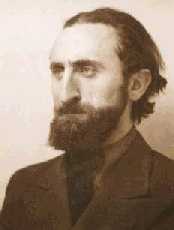
Frithjof Schuon is best known as the foremost spokesman of the religio
perennis and as a philosopher in the metaphysical current of Shankara and
Plato. Over the past 50 years, he has written more than 20 books on
metaphysical, spiritual and ethnic themes as well as having been a regular
contributor to journals on comparative religion in both
Schuon was born in 1907 in
From his youth, Schuon's search for metaphysical truth led him to read the
Upanishads and the Bhagavad Gita. While still living in
Schuon journeyed to
Following World War II, he accepted an invitation to travel to the
American West, where he lived for several months among the Plains Indians, in
whom he has always had a deep interest. Having received his education in
While always continuing to write, Schuon and his wife have traveled
widely. In 1959 and again in 1963, they journeyed to the American West at the
invitation of friends among the Sioux and Crow Indians. In the company of their
Indian friends, they visited various Plains tribes and had the opportunity to
witness many aspects of their sacred traditions. Schuon and his wife were
solemnly adopted into the Sioux family of James Red Cloud in 1959, and years
later they were similarly adopted by the Crow medicine man and sun dance chief,
Thomas Yellowtail. Schuon's writings on the central rites of Indian religion
and his hauntingly beautiful paintings of their lifeways attest to his
particular affinity with the spiritual universe of the Plains Indians. Other
travels have included journeys to
Through his many books and articles Schuon became known as the leader of
the traditionalist or perennialist movement, and during his years in
The dominant theme or principle of Schuon's writings was foreshadowed in
his early encounter with a Black marabout who had accompanied some members of
his Senegalese village to
"He feeds my soul ... as does no other living religious
writer." -- Huston Smith, author of The World's Religions
"If I were asked who is the greatest writer of our time, I would
say Frithjof Schuon without hesitation." -- Martin Lings
Spiritual Perspectives and Human Facts
The habitual limitations of current modern thought are quickly dispersed
and the spiritual perspectives normal for mankind are clearly set forth in
this, Schuon's second book. An extraordinary breadth of subjects rendered in an
aphoristic style makes the wisdom of these reflections accessible to a wide
range of readers. The "spiritual contours" of various traditions are
seen in the light of their necessary divergences, Schuon's emphasis always
being on the one hand the essential nature of things and on the other the great
question of knowing what aspect of Truth or Reality it is that motivates the
entire being of a given individual. For, as the author says, "metaphysical
knowledge is one thing; its actualization ... quite another." Of particular
interest here is a commentary on the interplay between knowledge, love and
virtue in spiritual life.
Survey of Metaphysics and Esoterism
"This book is a veritable summa of traditional doctrines at the
heart of which stands metaphysics. It is in a sense a synthesis of the works of
the author written over the past half-century and casts a light of exceptional
intensity upon complex metaphysical issues, various facets of man's inner life
and the spiritual significance of existence itself in relation to the Supreme
Principle. [S. H. Nasr, University Professor of Islamic Studies,
From the Divine to the Human
. . . our position is well known: it is fundamentally that of
metaphysics, and the latter is by definition universalist,
"dogmatist" in the philosophical sense of the term, and
traditionalist; universalist because free of all denominational formalism;
"dogmatist" because far from all subjectivist relativism, we believe
that knowledge exists and that it is a real and efficacious adequation and
traditionalist because the traditions are there to express, in diverse ways,
but unanimously, this quintessential position -- at once intellectual and
spiritual -- which in the final analysis is the reason for the existence of the
human spirit. [author's preface]
Esoterism As Principle and As Way
The prerogative of the human state is objectivity;the essential content
of which is the Absolute. There is no knowledge without objectivity of the
intelligence; there is no freedom without objectivity of the will; and there is
no nobility without objectivity of the soul . . . Esoterism seeks to realize
pure and direct objectvity; this is its raison d'etre. [author's preface]