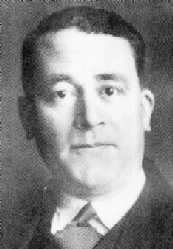
CARL SCHMITT
Carl Schmitt's critiques of liberalism have increasingly been drawing the attention of philosophers and political scientists. The surge of interest in the political philosophy of Carl Schmitt over the past few years has introduced some of the thorny questions that continually surround discussions of Heidegger. Just as many see Heidegger as a quasi-official philosopher of the Nazis, many have felt that Schmitt was the legal-theorist counterpart. Like many of his conservative contemporaries Schmitt's disdain for Weimar democracy and political liberalism led him to support the Nazi Party. Schmitt believed that the chaos of the Weimar period could only be normalized through the strength and charisma of one leader who could provide the people with a unifying vision and a commonality of purpose. Though initially resistant to Hitler, Schmitt recognized that his popularity could not be denied and filled some of the most crucial qualifications for leadership. Many recognize Schmitt's political philosophy and attacks against pluralism as brilliant but also suggest that the spirit and tone of his work can be inflexible, harsh, and divisive, in other words, qualities that run afoul of modern political liberalism. Yet, it is precisely because his political philosophy so boldly and so frankly challenges assumptions of liberal/pluralistic societies that his philosophy is so compelling to contemporary theorists. Moreover, recent developments in the former Soviet-bloc and questions about the role of the state in the West have given Schmitt's understanding of the idea of the public sphere, constitutionalism and democracy, pluralism, and political conflict over fundamentals, further appeal to thinkers on both the left and the right.
Carl Schmitt's thought serves as a warning against the dangers of complacency entailed by triumphant liberalism. His conception of politics is a sharp challenge to those who believe that there is a third way between the left and right and that the increasing moralization of political discourse constitutes a great advance for democracy. Schmitt reminds us forcefully that the essence of politics is struggle and that the distinction between friend and enemy cannot be abolished.
The writings of Carl Schmitt form what is arguably the most disconcerting, original, and yet still unfamiliar body of twentieth-century political thought. In the English-speaking world, he is terra incognita, a name associated
with Nazism, the author of a largely untranslated oeuvre forming no recognizable system, coming to us from a disturbing place and time in the form of fragments. Schmitt’s Weimar writings confront the role of technology as it finds expression through the principles and practices of liberalism. Contemporary political conditions such as disaffection with liberalism and the rise of extremist political organizations have rendered Schmitt’s work both relevant and insightful.
In 1928, Carl Schmitt published The Concept of the Political. It quickly became one of the most influential works of political philosophy published and remains a classic. It is an attempt to define exactly what politics is and how it relates to the philosophical tradition and to modern society. Taking Hobbes's "war of all against all" as his inspiration, Schmitt challenged contemporary liberal society's unwillingness to admit that politics was literally "a matter of life and death." Schmitt argues that liberalism's basis in individual rights cannot provide a reasonable justification for sacrificing oneself for the state. Schmitt's had a intellectual journey through the turbulent period of German history leading to the Hitlerian one-party state. Carl Schmitt is probably the major twentieth-century political theorist whose work remains internationally unknown.
The relationship between economic and political thinking has reached a crisis at the end of the 20th century. Already at the beginning of this century, in Roman Catholicism and Political Form, Carl Schmitt juxtaposed a juridical interpretation of religion oriented to the political sphere to Max Weber's sociological interpretation oriented to the economic sphere in The Protestant Ethic and the Spirit of Capitalism.
As is often cited in the growing secondary literature concerning Carl Schmitt, he is not the easiest thinker to pin down. There is the problem of his political views, specifically his support of the Nazis and his role as advisor to Goering, which has clouded the debate about how diligently his writings should be read. Moreover, his ideas were constantly in flux as he revisited his views, responding to changing political and intellectual forces. Schmitt cannot easily be placed in one political camp as his work does not emphasize such tenets of twentieth century conservative political thinking as the free-market, the collapse of traditional values, or culture, instead he "revelled in ironic inversions of liberal and left-wing theories." Schmitt’s, while nominally a legal theorist, also wrote extensively on politics, aesthetics, history, and other philosophers, much in the tradition of his contemporaries Adorno and Benjamin. Schmitts life has to be considered within the context of his times, specifically how World War I, Germany’s defeat, and the chaos of Europe during the interwar years led him to reject the classical state-centered theories that were at the heart of European political thinking.
Within Germany, Carl Schmitt ranks as a political thinker alongside Hobbes whom he follows in advocating a strong state as the guarantor against civil war. But despite his experience of the Weimar Republic and his subsequent collaboration with the Nazi regime, Schmitt never advocated totalitarianism. Instead he made a dual affirmation of a strong state coexisting with a free economy, an idea that has been propelled to the centre of discussion in recent years with the demise of the welfare state and the rise of neo-conservatism and authoritarian liberalism in countries such as Chile and Singapore.
Schmitt assesses liberalism's failure to govern and how technology had infiltrated modern democracies.
Carl Schmitt's oeuvre, which lends itself to manifold interpretations, has been the subject of heated debates in all parts of the world in recent years. In spite of the fact that he backed Nazism at a decisive moment Schmitt's work has not just been a goldmine of ideas for all kinds of reactionary movements after 1945 but has also met with the interest of leftist intellectuals. In recent years, the "concept of the political" propagated by Schmitt has become the focus of attention against the backdrop of the dominance of economic considerations in the age of "globalism". Schmitt's thought has its roots in the conflicting ideas of the Weimar Republic.
Thus the interest in Schmitt has been accompanied by an interest in his antagonists in that period in history. The most important one was the Austrian legal theoretician Hans Kelsen. He opposed Schmitt's contempt of the idea of parliament and his opposition to the legal system with the civilizational idea of the legalization and the value of parlamentary democracy. The conflict between Schmitt and Kelsen was based on profound differences in Weltanschauung. Against this intellectual history backdrop Kelsen's work, which contributes significantly to socio-philosophical and political thought, must be rediscovered.
German legal theorist Carl Schmitt (1888-1985[!]) has enjoyed a widespread following among European academics and among that part of the European Right that is most resistant to Americanization. In the U.S. it is a different matter. Outside of the editors and readers of Telos magazine, which has heavily featured his work, Schmitt's American groupies are becoming harder and harder to find.
Schmitt is properly criticized for having joined the Nazi Party in May 1933. But he clearly did so for opportunistic reasons. Attempts to draw a straight line between his association with the Party and his writings of the twenties and early thirties, when he was closely associated with the Catholic Center Party, a predecessor of the Christian Democrats, ignore certain inconvenient facts. In 1931 and 1932, Schmitt urged Weimar president Paul von Hindenburg to suppress the Nazi Party and to jail its leaders. He sharply opposed those in the Center Party who thought the Nazis could be tamed if they were forced to form a coalition government. While an authoritarian of the Right, who later had kind words about the caretaker regime of Franco, he never quite made himself into a plausible Nazi. From 1935 on, the SS kept Schmitt under continuing surveillance.
There are two ideas raised in Schmitt's corpus that deserve attention in our elite-decreed multicultural society. In The Concept of the Political (a tract that first appeared in 1927 and was then published in English in 1976 by Rutgers University) Schmitt explains that the friend/enemy distinction is a necessary feature of all political communities. Indeed what defines the "political" as opposed to other human activities is the intensity of feeling toward friends and enemies, or toward one's own and those perceived as hostile outsiders.
This feeling does not cease to exist in the absence of nation-states. Schmitt argued that friend/enemy distinctions had characterized ancient communities and would likely persist in the more and more ideological environment in which nation-states had grown weaker. The European state system, beginning with the end of the Thirty Years War, had in fact provided the immense service of taming the "political."
The subsequent assaults on that system of nation-states, with their specific and limited geopolitical interests, made the Western world a more feverishly political one, a point that Schmitt develops in his postwar magnum opus Nomos der Erde (now being translated for Telos Press by Gary Ulmen). From the French Revolution on, wars were being increasingly fought over moral doctrines - most recently over claims to be representing "human rights." Such a tendency has replicated the mistakes of the Age of Religious Wars. It turned armed force from a means to achieve limited territorial goals, when diplomatic resources fail, to a crusade for universal goodness against a demonized enemy.
A related idea treated by Schmitt is the tendency toward a universal state (a "New World Order"?). Such a tendency seemed closely linked to Anglo-American hegemony, a theme that Schmitt took up in his commentaries during and after the Second World War.
German historians in the early twentieth century had typically drawn comparisons between, on the one side, Germany and Sparta and, on the other, England (and later the U.S.) and Athens - between what they saw as disciplined land powers and mercantile, expansive naval ones. The Anglo-American powers, which relied on naval might, had less of a sense of territorial limits than landed states. Sea-based powers had evolved into empires, from the Athenians onward.
But while Schmitt falls back, at least indirectly, on this already belabored comparison, he also brings up the more telling point: Americans aspire to a world state because they make universal claims for their way of life. They view "liberal democracy" as something they are morally bound to export. They are pushed by ideology, as well as by the nature of their power, toward a universal friend/enemy distinction.
Although in the forties and fifties Schmitt hoped that the devastated nation-state system would be replaced by a new "political pluralism," the creation of spheres of control by regional powers, he also doubted this would work. The post-World War II period brought with it polarization between the Communist bloc and the anti-Communists, led by the U.S. Schmitt clearly feared and detested the Communists. But he also distrusted the American side for personal and analytic reasons. From September 1945 until May 1947, Schmitt had been a prisoner of the American occupational forces in Germany. Though released on the grounds that he played no significant role as a Nazi ideologue, he was traumatized by the experience. Throughout the internment he had been asked to give evidence of his belief in liberal democracy. Unlike the Soviets, in whose zone of occupation he had resided for a while, the Americans seemed to be ideologically driven and not merely vengeful conquerors.
Schmitt came to dread American globalism more deeply than its Soviet form, which he thought to be primitive military despotism allied with Western intellectual faddishness. In the end, he welcomed the "bipolarity" of the Cold War, seeing in Soviet power a means of limiting American "human rights" crusades.
A learned critic of American expansionists, Schmitt did perceive the by-now inescapably ideological character of American politics.
In the post-Cold War era, despite the irritation he arouses among American imperialists, his commentaries seem fresher and more relevant than ever before.
A legal theorist of international stature, Carl Schmitt (1888-1985) enjoyed his greatest fame in the inter-war period. It was then that his constitutional commentaries, expositions on the nature of sovereignty and original contribution to an understanding of political life, The Concept of the Political (1927), made Schmitt one of the most provocative and courted intellectuals of Weimar Germany.
Originally identified with the Catholic Rhenish culture into which he had been born and the University of Bonn, where he taught in the early twenties. Schmitt then became associated with political celebrities in Berlin. Among those seeking his legal counsel were German President Paul von Hindenburg, Chancellor Heinrich Bruening and General Kurt von Schleicher. Schmitt's firm belief in executive sovereignty put him at odds with the Weimar Constitution, which divided power between the President and the Reichstag; after the onset of the Depression and the political unrest to which it gave rise, he urged Hindenburg to rule by executive decree. Schmitt also supported the suppression of the National Socialists and other parties committed to the overthrow of the German state. The accession of Hitler to power in January 1933 left Schmitt at the mercy of a man and movement he had outspokenly opposed. Seeking to protect himself, once he had decided not to emigrate, Schmitt joined the Nazi Party in May and became identified for a time with Hitler's reconstruction of the German state. Note that though Schmitt initially defended Hitler's legal revolution, his own documented criticism of Nazi ideology aroused the regimes suspicions. From 1935 on he was kept under S.S. surveillance and his Serb wife accused of spying for the enemies of the Third Reich.
After the war Schmitt suffered successive humiliations: being gaoled (but then released for lack of proof) as an abettor of Nazi imperialism; exclusion from German academic life; and the denunciations by "liberal democratic" critics as a totalitarian anti-liberal. Unable to recover his professorship at the University of Berlin, he retired to his home at Plettenberg in the Sauerland. There he wrote and received guests, as he himself observed, "in exile", until his death. His post-war magnum opus, Nomos der Erde in Voelkerrecht des jus publicum europaeum (1950) re-established Schmitt's reputation as a scholar of international law and of the evolving European state system. It also contained his ideas about the prospects for international order beyond the disintegration of the nation states, and it stressed the modernity of the state itself as a political entity characterized by united sovereignty and by national particularity.
The writings of Schmitt are of special interest and significance because of his brilliant analysis of state of emergency and exceptional situations in contemporary political reality and the necessity of a decision to preserve the national existence of people. People exist politically only if they constitute an independent political community/entity and only if they as an entity oppose other political entities in order to preserve its understanding of the cultural specificity of its own community. The theory of exceptional circumstances and with it related theme of decision are of paramount importance for us today, because we are now in such historical juncture of the history of Russian people and Russian state in which the state of emergency has become a natural state of our nation, permeating and constituting the Being of our nation. For Schmitt the political identifies the essence and existence of community. Political sovereignty is an existential question because it concerns the resolution of an existential conflict. Not only does every politically-existing people decide on the question of its own political existence and any possible danger to it; it decides also on whether an existential question actually exists- a question which is political by its very nature. Since for politically-existing people there is always the possibilities of an existential conflict, the question of sovereignty, i.e. the ultimate existential decision, always remains open. «Every existing political unity has its value and existential justification not in the rightness or usefulness of norms but in its existence. Juridically considered, what exists as apolitical force has value because it exists. From this stems its ‘right to self-preservation’, the presupposition of all further considerations; it seeks above all to maintain its existence , it protects its existence, its integrity, its security, and its constitution - all existential values» (Carl Schmitt, Verfassungslehre)
Carl Schmitt points out that «as long people exists in the political sphere, it must itself make use of the distinction between friend and enemy, at the same time reserving it for extreme conjunctures which it itself judges as such. This is where the essence of its political existence lies. From the moment it lacks the capacity or the will to use this distinction, a people ceases to exist politically...If the people should no longer have the strength or the will to continue in the political sphere, this is not the end of politics in the world. It is only the end of weak people...If the state refuses or is unable to make a decision in an exceptional situation, it inevitable runs the risk that other forces will make one in its place and establish their norms.»( Carl Schmitt, The Concept of the Political)
Named the 'Donoso Cortes' or the 'Thomas Hobbes of the XX century' , Carl Schmitt (1888-1985) remarked himself as the author and promoter of one of the most fundamental concepts of the philosophic - politic ideas of the contemporany epoch . He is the first philosoph who will apply to the sphere of the politic the 'friend-enemy' criterion , notion that will be used after that also by Hans Morgentau and other important thinkers of the XX century. For Schmitt the most evident example (from an historical point of view) of the 'friend-enemy' criterion is represented through the anti-thesis of Karl Marx : - the burgeois society and proletariat - , anti-thesis that contain in itself all the antagonisms of the whole history , representing the last fight against the last enemy of humankind. It is also Carl Schmitt who offered to the philosophy of the politic the most coherent critic at the address of the liberal institutions , a critic based entirely on the metaphysical and cultural ideas. In many essays published before and after the WWII , Schmitt critics both the burgeois values and the liberal faith reflected in the progress and technology of the XX siecle. Soon , his cultural critic will be replaced with a critic of the reason , that , linked the ideals of the german liberalism with what he described as the 'politic romanticism' . But , beside all these fundamental theories to the philosophy of the politic , Schmitt is most recognized as the initiator of the concept of theology implicated in the politics . The politic theology represent an reaction (from a political-juridical point of view) of the Catholic Church to the consolidation of the modernism , in general , and to the liberalism , in special . Even before the XX century , the Catholic Church take position against of diverse tendencies of the political currents , but in special , against the liberalism , whose ideal was the separation of State from Church , to put a barrier to the authority of the Church in society , and in the final , to deny the authority of the Divine ; to all of these problems Carl Schmitt responds with his fulminatory theories on the relations between theology and politics. Along with Martin Heidegger , Schmitt is , without any doubt , one of the most controversial thinkers of this century . And , of course , his youth 'sins' was not forgotten by the 'guardians of freedom' , even now his work being 'hidden' and accused of grave things... But , beside this , a fundamental work , coming from one of the most noble spirits of the Secret Europa .