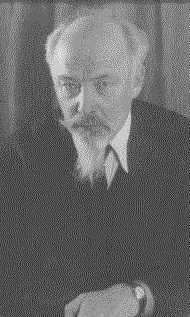
HERMANN KEYSERLING
Herman Keyserling was born on July 20, 1880 , in Konno (Lithuania) into a family with a strong traditon in the germano-baltic aristocracy . He usually was saying that he comes from the ancient baltiks .Hermann Keyserling was a heriditary Count from the Baltic country of Estonia. His families position and estate in Estonia went back centuries, to the early days when Estonia first became a province of Germany. One of his ancestors is the Count Keyserling who commissioned Bach to create the Brandenberg concertos. Count Hermann Keyserling lost his estate and family fortune in 1905 as part of the Bolshevik revolution. For two years he thought he was penniless, only to be surprised by a reversal in political fortune in 1908 and inheritance of his families estates. In 1911 he spent the year travelling around the world, and for the next six years wrote about his experiences in what was later to be called, Travel Diary of a Philosopher. His was a spiritual journey, in his words:
'When I shall have perceived all the co-ordinates, I ought also to have determined their center. I ought then to have passed beyond all accidents of time and space. If anything at all will lead me to myself, a digression round the world will do so.' (Hermann Keyserling)
In 1918 the Russian Revolution again suddenly deprived Count Keyserling of his estates and fortune. After years of travel and quiet study, he had to flee his homeland of Estonia. A poor refugee in Germany, he was still a very sophisticated person of intellectual bent. Having no business experience outside of running a traditional country estate, out of financial desperation, he turned to writing to support himself. The world had never seen writings from a mind like that before. The highly educated, noble elite had rarely written commercially. They shunned all public communications, and were only known in small private circles. The Count considered himself way ahead of his time and was shocked to watch his Travel Diary of a Philosopher become an instant best seller. The public responded to his writings in an amazing way. The Count was soon a famous author of philosophy books sold throughout the world. In 1919 he married the granddaughter of the then most important and powerful man in Europe, the German leader, Chancellor Bismarck. After graduating the russian school in Permau , he it's invited to study the history of science in Geneva and Dorpat (1898-1900) ; gravly wounded in a student fight ; he continue in studying the geology at Heidelberg , taking his license at the Universty from Viena, in 1902 ; after that , it follows some long trips and journeys in Paris and in England , in 1903 ; then , he began to study the philosophy in Berlin , between 1906-1908.
In 1911 , he begins a journey around the world , after which , he will return to Raykull , a place received as heritage from some members of the family and where he will stay till the end of the WWI . In 1919 , the place from Raykull it's taken back by the gouvern , motif which makes him to migrate in Germany , at Darmstadt. Here , he will put the base at 23 november 1920 of the School of the Wisdom , which was the last european bastion of the tradition in practising the philosophy in the old greek sense , of love for the knowledge and wisdom. Well recognized european personality , he will continue to travel through Europe , being acclaimed and welcomed in every country he goes ( in Romania , he is welcomed by the whole intelligentia , and especially by the intellectuals and the generals and captain of the Iron Guard ) ; Not very liked by the national-socialist regime from Germany (even if a lot of german personalities of the Third Reich gouvern were influenced by his works ), he will be forced to live under a constant eye keeped on him from the german authorities . Later , his articles , his favorable articles on the fascist Italy and in general on the cultural , spiritual and traditional part of the fascism , brings him more problems in the next years , thing that will contribute in the end with his 'erasing' from the 'official' history of Europa.
'Europa will not re-born due to the pan-european mouvement , but because , this current - as all the others of this direction - it's possible , because it represent a living tendency which it's already born . Europa it is possible because what now it is common to all the europeans it's more important then what split them . Europa it's more a unity of style. A style which determine people and countries. For me , Europa was from the beginning a unity .' (Hermann Keyserling)
In a epoch in which the aristocracy was living its last days , Hermann Keyserling it's an unique and irreducible exponent of the aristocratic and noble european spirit ; in the decades when the intellectuals of Europa were oscillating between the shadows of the communism enrolling and the false myths of the anti-traditional capitalism , Keyserling represent a true adept of the european spiritual ecumenism and in the same time a strong supporter of the responsabilities of this ecumenism , in the conditions and times of the so-called 'revolt of the telluric forces' , which were representing the pragmatism , the lack of tradition and magic from these times of Europe.
Keyserling was more than a simple representant of the traditional , irational and anti-liberal european currents ; the critic (but not a critic from a political point of view , but from an antropologic one ) of the intellectualism and of the mecanism of the modern world was always present in its works ; the anallys of the souls of all the european countries , all of them looked through a whole process of new spiritualisation and a new umanism based on the traditional , ancient feelings of Europe .
To describe his essence was as hard as trying to describe the essence and the shades of a living fire , which , even if it is always the same , it is in a continously change of colours and forms , with a part burning you , other warming you and the last one enlightening you with knowledge. When you were walking in front of the Keyserling Count , you could not run from the thought that you were not only hearing and watching a man , but that you were in front of a man that you could not include him in any race that you know . (Ernst Wilhelm Eschmann)
April 26, 1996 marked the 50th anniversary of the death of Hermann Keyserling. A ceremony was held at his grave site in Salzburg, Austria, where his preserved brain was returned to the rest of his physical remains. (Explanation to follow!) The event was attended by the President of Austria and other political dignitaries, the Keyserling family, friends and students. Count Keyserling's brain had been preserved and on display in a museum in Berne, Switzerland, with that of other great minds of the 20th century since the time of his death in 1946. At the request of the family in 1996 his brain was returned and buried with the rest of his remains. This was a symbolic gesture of some significance. It represents the death of the archaic science and misguided world view which led to the separation of his brain from his body at death in the first place. Persuasive scientists in 1946 convinced the Keyserling family that important knowledge might be gained by studying his brain. The scientists actually thought that the body, particularly the brain, was the source of the human spirit, of human intelligence. For that reason they took the brains of a lot of great men who died at the time - the forties through the sixties. They thought that they could learn something of value by studying the "gray matter" left behind. This field of scientific inquiry produced very few results. The brains of the great, like Count Keyserling, seemed the same as the mediocre. Indeed, today we know they were looking in the wrong place. The seat of human intelligence lies in the spirit, and the energy fields surrounding the body, not the body itself. Hermann Keyserling himself knew this - his life stood for a unity of mind and body - a unity misunderstood and betrayed by the separation and display of his brain in a jar in a museum. The error of the family to allow this separation, this glorification of a body part, has now been corrected. The physical remains are now whole. The body is together where it belongs after death - in the Earth, not on display on a museum. The Spirit of the founder of the School of Wisdom, after 50 years of unrest, is now at peace.
'The idea of internationalism must not triump. How paradoxal might sound this , this is the first condition for Europa to not be born already dead. Contrary ,if we think at the sake of Europa , it is neccesary that the supra-national element to triump over the national element. This is the only chance for Europa to maintain herself above the other superpowers from Orient and Occident. (Hermann Keyserling)
Works :
Unsterblichkeit (1907)
Prolegomena zur Naturphilosophie (1910)
Das Reisetagebuch eines Philosophen (1919)
Politik , Wirtschaft , Weisheit (1922)
Das Okkulte (1923)
Das Ehebuch (1925)
Die neuentstehende Welt (1926)
Das Spektrum Europas (1928)
La vie intime (1933)
La revolution mondiale (1934)
Betrachtungen der Stille und Besinnlichkeit (1941)
Das Buch vom Ursprung (1947)
Reise durch die Zeit (1948)