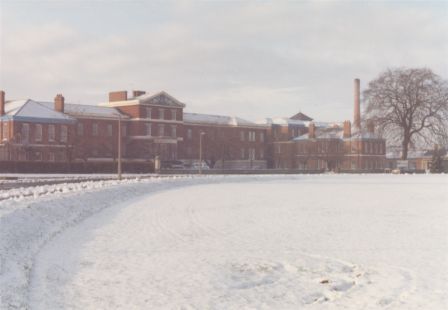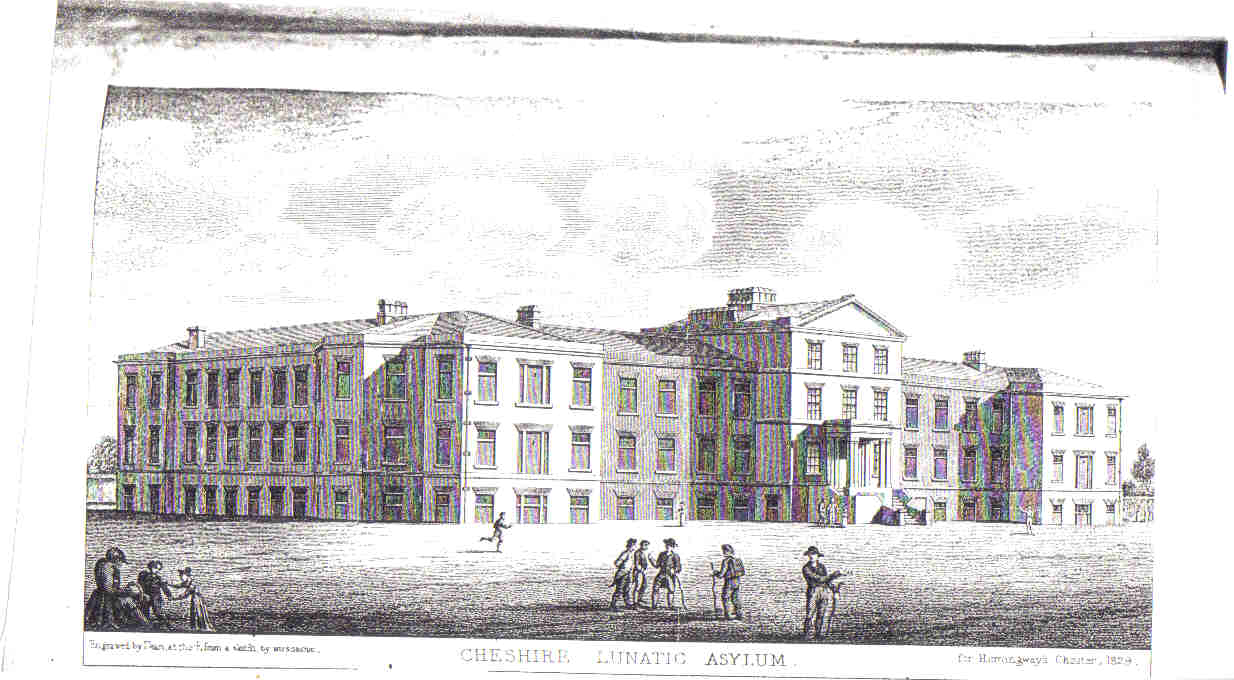
The county architect responsible for building the asylum was William Cole Junior who had suceeded the renowned Thomas Harrison, the designer of Chester Castle and the wide-spanned Grosvenor Bridge. Cole was, in fact, one of three who completed the bridge after Harrison's death and it has been suggested that, because of their long association, Cole included at the asylum, a classical portico in the Harrison tradition. This consists mainly of the long front we still see today, and the two return wings at the back, on either side. There was a courtyard in front, and round this were situated various service departments such as stables, repair shop, and a mortuary. At the entrance to this area was a porters lodge.
The building was designed to accommodate 90 patients, with apartments arranged 'to contain 20 patients of better class, who can afford to pay for their own maintenance'. The remainder was devouted to pauper patients, to be kept by their respective townships and parishes.