Th |
|
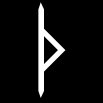
| At first glance the word Thorn appears to denote sharpness and pain,
but it can equally be regarded as a protective shield or a warning.
In this sense, the exact interpretation of this rune depends on the
surrounding ones. The symbol of the rune resembles a hammer. In ancient
Norse Mythology, the protective God Thor carried a hammer, called Miollnir,
and it was common for the ancient Germans to wear a small hammer around
their neck to invoke His protective power. This rune can denote great strength and good luck if the surrounding runes are helpful, and possible delay if they are unhelpful. On the one hand, it can mean that the moment holds great danger and that care must be taken. On the other hand, it may denote a warning, and often shows in readings when the querent has become overconfident or his or her own capabilities and is riding for a fall. There is a strong element of luck associated with this rune, although it may appear in different guises. The saying “a thorn in my side” can be understood to indicate an irritation, but in the context of this rune the thorn is the obstacle that, once overcome, allows inner growth. The rune may also represent a test, because it may be by “grasping the nettle” that progress can be achieved. Reversed, this rune indicates that the querent, faced with a difficult
situation, is unlikely to be able to make good. It signifies an obdurateness
that only makes the situation worse: all advice is studiously avoided
and any helping hand ignored. Alternatively, the rune may show that
lick has evaded the querent – perhaps more a comment on the querent’s
inner strength than on the situation. The querent’s weakness and
lack of dynamic allows matters to drift out of control. |