|
11.2 Long-term Perception of Poverty
and Satisfaction with Life
Poverty, of itself, is not usually directly associated with subjective well-being, although
people from wealthier countries do report higher levels
of well-being than those in poorer countries (Myers,
1993). Recent research in the slums of Calcutta,
for example (Biswas-Diener, & Diener, 2001) found
that the extremely poor are more satisfied than might
be expected - with social relationships playing a large
part in reducing the effects of poverty.
Where differences in SWL could play a more significant
role in the present sample of women might be identified
in terms of theories of social comparison. Relative deprivation, where
feelings of satisfaction with life depend on who or
what we are using as a comparison, may come into play
in an area like Inishowen. Here, the border with Northern
Ireland and feelings of being on the margins of both
the County and the Country could combine to worsen perceptions
of rural isolation and deprivation. The norms
(standards) that exist in relation to production and
consumption in societies today need a great deal of
further research if the true picture of the relationship
between SWB and money is to be properly understood (Diener
& Biswas-Diener, 2002).
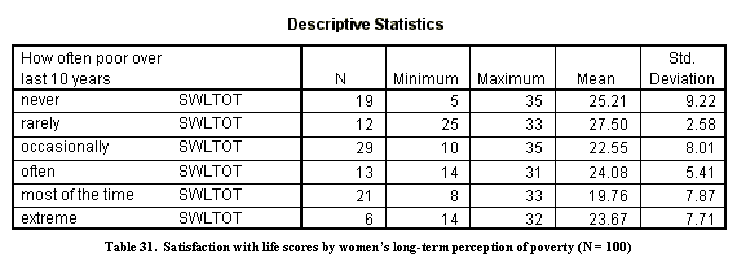
With specific
reference to long term perception of poverty, meaning
over the last ten years, Table 31 illustrates the fact
that the lowest SWL scores were reported by those women
who felt that they were poor for most of that time.
The columns headed "Minimum" and "Maximum"
record the highest and lowest scores obtained for any
individual in the relevant long-term perception of poverty
category, reading across and down in the table. The
highest levels of SWL, as might perhaps have been expected,
were reported by those who felt they were never, or
rarely, poor during that time. However,
the picture is less clear for the groups in between
and for those who suffered extreme variations in their
experience of poverty in the past; no identifiable pattern
emerged here.
|
|