| Chemists in a Big World Ellen Henrietta Swallow Richards By Sam Ingersoll |
|||||||||||||||||||||
![]() |
|||||||||||||||||||||
| www.chemheritage.org/women _chemistry/health/richards.html (Right) http://www.inventions.org/culture/ science/women/richards.html (left) |
|||||||||||||||||||||
![]() |
|||||||||||||||||||||
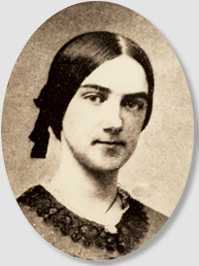
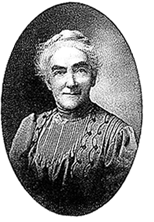
| Ellen Henrietta Swallow Richards not only had a very interesting life she was also one of the most influential women in the subject of chemistry. She was one of the biggest people in the women's rights movement and also helped with water sanitation and food standards. Ellen was born on December 3, 1842 in Dunstable Massachusetts. Her mother was Fanny Taylor and her father was Peter Swallow. For her parents education was easily one of the most important things. She tutored, cleaned and saved money for years until she was finally able to get $300 which allowed her to enter Vassar College in 1868. After earning her bachelor�s degree two years later, she tried to find a job as an industrial chemist but wasn�t able to find a suitable one. One of the most impressive and notable accomplishments of Mrs. Richards is that she was the first women to go to school at MIT. She started her bachelor�s degree on December 14, 1870 and 3 years earned it for her thesis �Notes on Some Sulpharsenites and Sulphantimonites from Colorado.� She also got her Master of Arts degree from Vassar for her thesis on the chemical analysis of iron ore. She continued to study at MIT and would have gotten its first doctoral degree but because she was a women the college wouldn�t and it wasn�t until 1886 that the first doctoral degree was given. |
|||||||||||||||||||||
![]() |
|||||||||||||||||||||
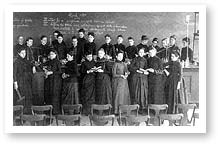
| Ellen Swallow Richards (left rear) with women students at MIT in 1888.
http://www.chemheritage.org/classroom/chemach/environment/richards.html |
|||||||||||||||||||||
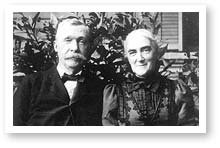
| Ellen Swallow married Robert Richards, the chairman of Mine Engineering at MIT, in 1875 and became Ellen Henrietta Swallow Richards. He helped her continue working with MIT and she was able to contribute $1000 a year to help make programs for female students. In 1879 Ellen became an assistant instructor in the first MIT Women�s Laboratory which she greatly helped create. In 1883 MIT began accepting women to the college and started giving them degrees. Throughout the rest of her life she focused on chemistry and ended up making some great discoveries. | |||||||||||||||||||||
![]() |
|||||||||||||||||||||
| Ellen Swallow Richards later in life with her husband Robert H. Richards. http://www.chemheritage.org/classroom/chemach/environment/richards.html |
|||||||||||||||||||||
| In 1887 she studied water quality in Massachusetts using over 20,000 samples and it was the first study of its kind. Because of it Massachusetts made the first water-quality standards in America and made the first sewage treatment plant. Because of her research much of our sanitary achievements were made possible. She also helped in the process of making drinking water safe to drink because of her sanitation efforts. She then worked with groceries which eventually led to state drug and food standards.
Although Mrs. Richards main contribution was her involvement in women�s rights she also helped establish the standards for some of the most essential things to use such as water and food. Without her it could have taken much more time to be able to perfect the system we use now for water and food and could have greatly hurt us. |
|||||||||||||||||||||