
2nd batch Training programme at CFC
The training for the second batch of artisans began on 12
May 2003 and concluded on 12 July 2003. A total of 33 participants attended
the programme. They were from the same AHVY/ UNDP clusters as in the first
batch and the breakup of the batch was as follows:
1. Syntien Cluster, Mawsynram under ROILANG 12
2. Syntien Cluster, Mawsynram under INGON 8
3. Nengsangre AHVY Cluster, Williamnagar under INGON 2
4. Sohra Cluster, Cherrapunjee under MEGHALOOM 6
5. Jowai Cluster under ROILANG 1
6. Local participants 4
______________________________________________________
Total 33
The tasks given for the project included: Imparting training
to a group of artisans to develop a range of specified products with
emphasis on finish and quality using industrially developed tools,
techniques and technology provided at the CFC. The product category
included:
1. Tea bags
2. Napkin Holders
3. Packaging for cosmetics and wine
A routine and structure of the training for the two months
was prepared by the designer in consultation with the Chief Functionary,
Ms.Hasina Kharbhih and were prepared as follows:
ROUTINE
10:00 – 10:30 Attendance and discussion of the day’s assignment
10:30 – 12:00 Training
12:00 – 1:00 Lunch recess
1:00 – 3:00 Training
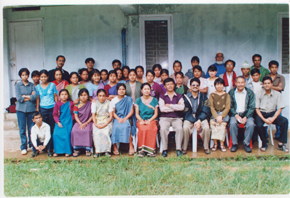
Group photograph with Officials
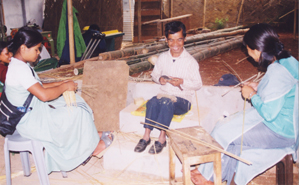
Group members working
COURSE STRUCTURE
WEEK TASK
1
SAMPLE DEVELOPMENT – Weave
patterns/ traditional products
2 PRODUCT DIVERSIFICATION
3 JIGS/ PRODUCTION TECHNIQUES/ WORKSHOP SKILL
4 - 8
PROTOTYPE DEVELOPMENT -Working with specifications
PROCEEDINGS
The Trainees:
The second batch was a mix of skilled as well as unskilled individuals. The
ones from Mawsynram were the more skilled while the rest were part time
artisans or totally new to basketry. To enable better learning
andparticipation among them, the following procedure was implemented:
• Identification of skill- the participants were categorized into three
categories of
Experts: Mastercraftspersons or artisans with exceptional abilities and skills. (7)
Skilled: Craftpersons who are skilled and have the ability to developfurther. (12)
Unskilled: People who are learning the craft.
(10)
Among them seven Experts, twelve Skilled and ten unskilled were identified.
• Formation of seven groups, each group consisting of
members from the three categories.
• Allocation of specific tasks for group members.
The unskilled members began with preparing the material; preparing the
splices- maintaining size and finish
The skilled were given prototypes to be developed while the Experts were
given the task of making the specified products and also to guide the other
members of the group.
A final evaluation of the groups was made on the basis of performance of
each participant. The Performance was divided into
• Status
• Skill
• Dedication to the work
• Understanding
• Interaction/Participation
• Progress
On the whole the performance of the batch has been very
good. They were hard working and very enthusiastic about new products. Some
of them are very skilled and need to focus on conceptual skills while others
need to work more. What was seen as the only drawback was the sharing of
ideas which was less prevalent in the entire two months.
The Products
In all a total of 221 complete products were made during the
two months of training. During the training a number of products were either
sold or sent for display to the Harrogate Fair in the UK and also to the
deputy Commissioner of Handicrafts in Delhi as prototypes. The development
of the prototypes was divided into three stages:
1. Concept development - various concepts were explored regarding the
specified products. Different weaving
techniques and material combination were explored. Here the
progress was step by step approach. A concept
leading to the development of the next until a desired state
was reached and was finalised for the next stage.
2. Development of Jigs - Once the concepts were finalized,
appropiate jigs were developed by the craftsmen
themselves for the next stage. There were four main jigs that
were developed.
3. Prototype Development - Using the prepared jigs, the actual prototypes
were developed.
The final prototypes were of 8 types with variations.
Product Variations
Tea bags
1
Napkin Holder 2
Wine bottle bags 2
Cosmetic Packaging 2
Handbags
3
Spectacle case 1
Wallet
1
Dry food basket 1
The number of Final prototypes are quite less compared to the amount of products that have been produced. The reason for this was that even after specific instructions were given not all the participants were able to come up with the given requirements. This can be attributed to several factors:
Skill - physical as well as conceptual: finding difficulty
with new products, tools and techniques Material - material being different
from one available in the respective villages
Machinery & tools - difficulties with usage
Material: The bamboo used in the training was suitable for the artisans as it was of the same species they use in the village. The Artisans were asked to procure the material by themselves as they know how to choose the most suitable ones. Due to environmental conditions ( climate, geography, etc...) and the usage of the material by the artisans, the main problem with the material was the treatment. The bamboo which is used in the green stage tends to mould. This would require either pre-treatment of the bamboo before using it or at the final stage when the product is complete.
Machinery & Tools
The machinery and tools provided at the CFC are very useful
if used properly. They have been designed to perform specific functions,
most importantly to ease the workload of the craftsman. Almost all of the
bamboo machinery at the CFC are in working condition. The ones that are
working need more adjustments and maintenance to ensure better performance.
What is really required is a workshop or technical training on these
machines that have been installed to test the machines on the amount of
possibilities they offer and the proper use and maintainance that is
required for them.
The tools can be divided into two types:
Power tools: Electrically operated, these tools come in a variety from ones that can handle heavy work to small compatible ones. They are very useful as they ease and speed up the work to be done and are relatively easy to understand as to how they are to be used.
Hand Tools: These tools come in a Kit designed at IDC
Mumbai. The kit has been specifically designed for bamboo work and contains
a variety of tools that are very helpful. Not all the tools were used at the
training programme except for the ones that the artisans felt the need for.
According to the trainees some of the tools were not useful, for they did
not suit their style of work. An interesting obsevation was that some of the
tools were used effectively but not as the intended function of the tool.
The Tool Kit is very useful as it has tools that take details into
consideration. It would take some time to get used to the tools as the
artisans make use of only two tools in their work, an axe and a knife which
are multi purpose.
The Training concluded with the distribution of certificates to the participating artisans. It was attended by members of the various organizations directly or indirectly involved with the CFC The Chief Guest for the occassion was Mr. S Dkhar, Assistant Director, Development Commissioner of Handicrafts (NER). The training ended with tea being served and participation in a group photo session of everyone who were present on that day.

 Back
Back 