General
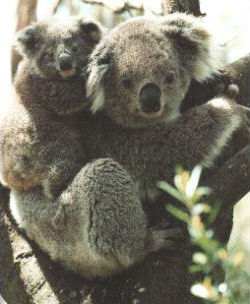
The koala is a small bear-like, tree-dwelling, herbivorous marsupial which averages about 9kg (20lb) in weight. Its fur is thick and usually ash grey with a tinge of brown in places.
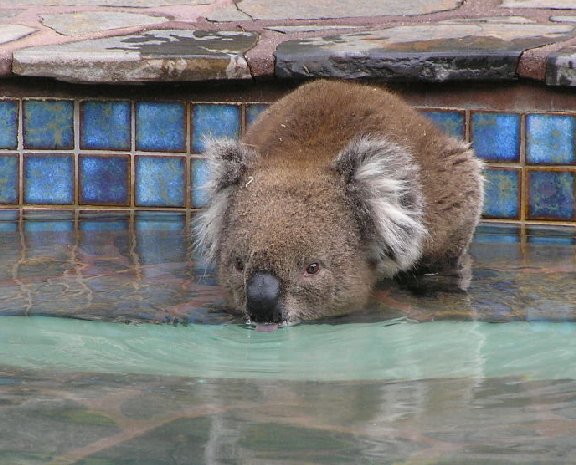
The koala gets its name from an ancient Aboriginal word meaning "no drink" because it receives over 90% of its hydration from the Eucalyptus leaves (also known as gum leaves) it eats, and only drinks when ill or times when there is not enough moisture in the leaves. ie during droughts etc.
The koala is the only mammal, other than the Greater Glider and Ringtail Possum, which can survive on a diet of eucalyptus leaves.
|
|
|
Diet
Koalas eat eucalyptus leaves, but their preferred eucalyptus species vary from region to region. On Phillip Island, koalas prefer Tasmanian blue gum (Eucalyptus globulus), Gippsland manna gum (Eucalyptus pryoriana), manna gum (Eucalyptus viminalis), and swamp gum. (Eucalyptus ovata)
Koalas have occasionally been observed eating wattle, tea tree, paperbark, and pine species. The nutritional value of these alternative foods and what causes koalas to abandon their normal diet are not understood
|
Breeding
Koalas mate at a time which allows the young to emerge from the pouch when quality food is abundant. In southern Australia, most births are from December to February.
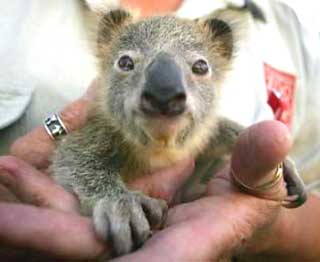
Koalas are born 34 to 36 days after conception. They are about 19 millimetres in length and weigh approximately half a gram (about the size of a jelly bean). They are very underdeveloped. Only the forelimbs (vital for the climb into the pouch) and lips (vital for suckling once in the pouch) are well developed.
|
|
|
Habitat
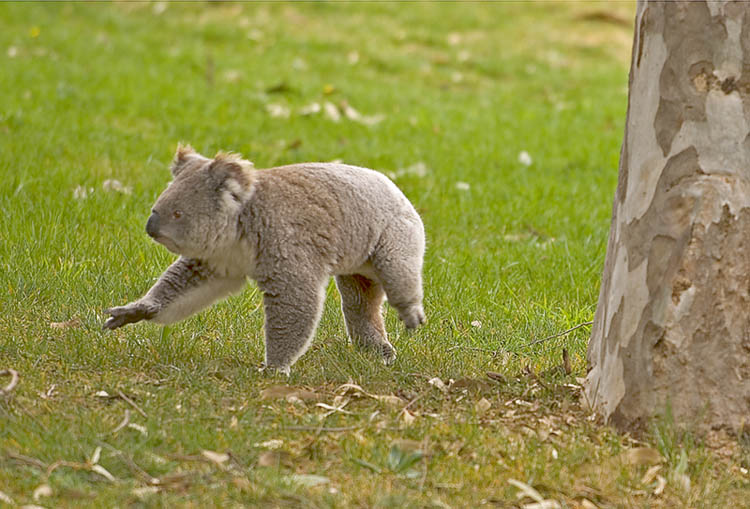
A ‘home range' consists of a number of ‘home range trees' and ‘food trees' which comprise the long-term territory of the individual koala. These trees provide the koala with food, shelter and places for social contact which will support it for the term of its natural life (assuming there is no habitat clearing).
A home range varies in size depending on the habitat quality of bushland. Habitat quality can be measured in terms of the density of key food trees. "Home range trees" define the boundaries of the individual koala's home range and can be likened to surveyors pegs marking the extent of a property.
|
Save me
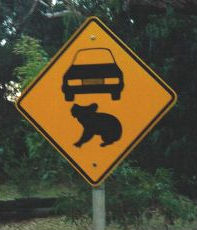
Many koala populations, including Phillip Island's, are under threat from habitat loss, dog attacks, and cars. As many populations decline, others, such as those on nearby French Island, are at risk through overpopulation of their limited habitat. This leads to over-browsing and destruction of the trees, threatening the koalas with starvation
|
|
|
Save the Koala day
The aim of Save the Koala Day is to raise awareness of the plight of the koala and to educate people.
The Australian Koala Foundation raises money with sales of stickers, special Koala Day
gifts,items and donations.
The money contributes to the long term survival of Australia's wild koalas and
their habitat. Koalas in the wild face problems as their habitat is cleared.
To the left are some sites with information about Koala's, and the last link is a link to help save the koala from being an endangered species.
|