 |
 |
 |
 |
 |
nflation:
You may have heard your grandparents or relatives talk about the 'good old days', when you could get an ice cream for a nickel or a movie ticket for a quarter. They weren't kidding. Prices really were much lower years ago. On the other hand, although prices have generally risen, wages have risen, too. If you asked your older relatives how much they earened when they were young, you might find that it was difficult to scrape up that quarter for that movie ticket.
Josephine and Jack Barrow have owned the same house for 50 years. Recently, they had a real estate agent estimate the house's present value. The Barrows were astounded. They had bought the house for $12,000, and now it is worth nearly $150,000- a rise in value of more than 1,100 percent! How could the value of the house increase that much? The main reason is inflation. Over the years prices rise and fall, but in the american economy, they have mostly risen. Since wold war II real estate prices have risen greatly.
Another way to look at that Barrows' situation is that inflation had shrunk that value, or purchasing power, of the Barrows' money. As Prices rise, the purchasing power of money declines. Thats why $12,000 can buy much less now than it could 50 years ago.
Side note: Purchasing power is the ability to purchase goods and services.
Side note: Inflation is a general increase in prices.
Housing costs are just one element that economists consider when they study inflation. The economy has thousands of goods and services, with millions of prices. How do economists compair the changes in all these prices in order to measure inflation? The answer is that they do not compare individual prices; instead, they compare price levels. To help them calculate price level, economists usually turn to a price index.
A price index produces an average that economists can compare to earlier averages to see how much prices have changed over time.
Side note: Price levels is the cost of goods and services in the entire country at any given point in time.
Side note: A price index is a measurement that shows how the avg. price of a std. group of goods changes.
Price Indexes and the Inflation Rate:
Economists also find it useful to calculate the inflation rate, or percentage rate of change in price level over time. Although there are other price indexes, the CPI (Consumer price index) is the index you will most oven hear about. How does that BLS determine the CPI and use it to caltulate inflation rate?
Determining the CPI:
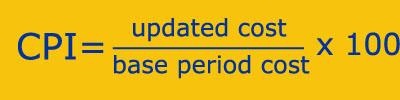
To determine the CPI, the BLS establishes a base period to which it can compare current prices. Currently, the base period is 1982-1984. The cost of the market basket for that period is assigned the index number 100. Ever month, BLS representatives update the cost of the same market basket of goods and services by rechecking all the prices. Each updated cost is compared with the base-period cost to determine the index for that month. As costs rise, the index rises. This formula is the basic forumla for determining the CPI: