 |
|
|
|
|
|
|
|
|
|
|
|
|
|
|
|
|
|
|
|
|
|
|
|
|
|
Mughal Emperors |
|
|
|
 |
|
|
|
 |
|
|
|
|
|
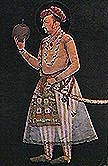
Babur was the founder of the Mughal Empire. He ruled from 1526-1530, only four short years. His love for nature lead to the creations of beautiful gardens. These soon became part of every Mughal fort, palace and tomb. |
|
|
|
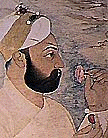
Humayun was Babur's son. He ruled from 1530-1540, when he was defeated by Sher Shah Suri. Although before his death he managed to conquer his father's territories for his empire.�� |
|
|
|
|
|
 |
|
|
|
 |
|
|
|
|
|
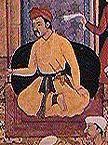
Akbar reigned from 1556-1605. He defeated the Afghans and established the Mughal Empire in northern India. He was considered one of India's greatest rulers. He respected everyone, no matter what caste or creed. He employed many people and allowed them to show their traditional skills to create works of art for him. |
|
|
|
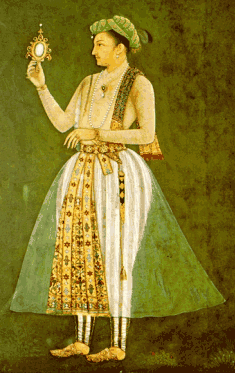
Jehangir ruled from 1605-1627. During his reign there was not a lot architectural activity. Although the use of semi-precious became more popular.� |
|
|
|
|
|
 |
|
|
|
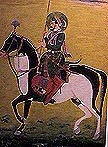
Shah Jahan was emperor from 1628-1658. He had a great love for the arts. He liked to blend the Persian and Indian traditions. While he was emperor, a lot of structures were created in Agra and Delhi, such as the Taj Mahal, the Muthamman Burg (Jasmine Tower), the Moti Masjid (The Pearl Mosque). Also the use of white marble became very popular during this period. |
|
|
|
Home |
|