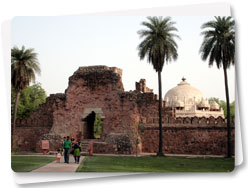
Humayun's Tomb
This tomb, built in 1570, is of particular cultural significance as it was the first garden-tomb on the Indian subcontinent. It inspired several major architectural innovations, culminating in the construction of the Taj Mahal.
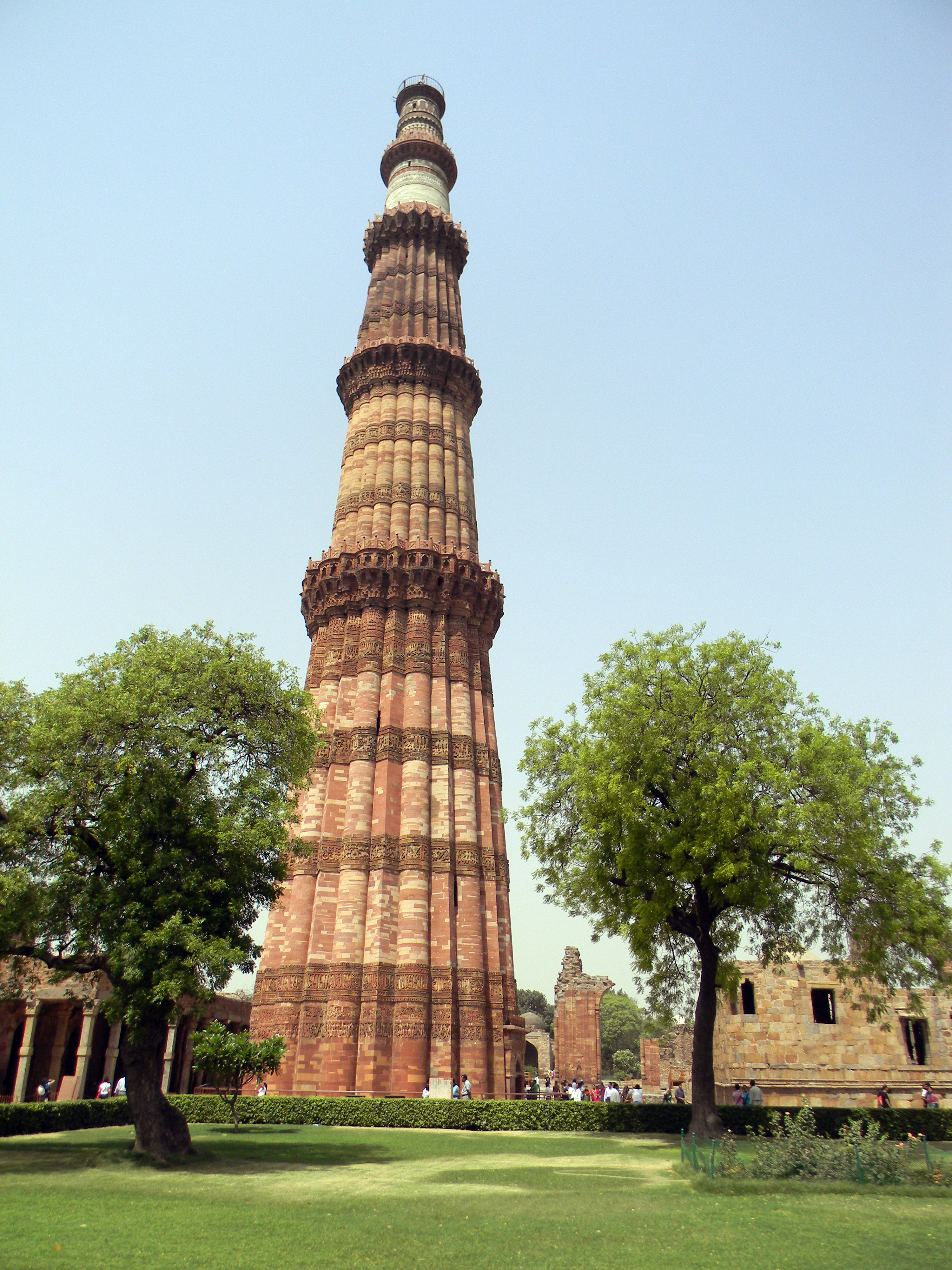
Qutab Minar
Built in the early 13th century a few kilometres south of Delhi, the red sandstone tower of Qutab Minar is 72.5 m high, tapering from 2.75 m in diameter at its peak to 14.32 m at its base, and alternating angular and rounded flutings. The surrounding archaeological area contains funerary buildings, notably the magnificent Alai-Darwaza Gate, a masterpiece of Indo-Muslim art (built in 1311), and two mosques, including the Quwwatu'l-Islam, the oldest in northern India, built of materials reused from some 20 Brahman temples.
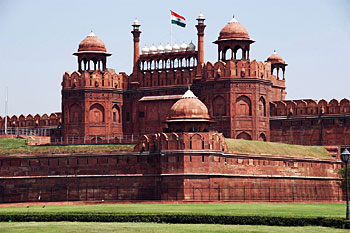
Red Fort
The Red Fort Complex was built as the palace fort of Shahjahanabad - the new capital of the fifth Mughal Emperor of India, Shah Jahan. Famed for its massive enclosing walls of red sandstone, it is adjacent to an older fort, the Salimgarh, built by Islam Shah Suri in 1546, with which it forms the Red Fort Complex.The Red Fort is considered to represent the zenith of Mughal creativity which, under Shah Jahan, was brought to a new level of refinement. The planning of the palace is based on Islamic prototypes, but each pavilion reveals architectural elements typical of Mughal buildings, reflecting a fusion of Persian, Timurid and Hindu traditions.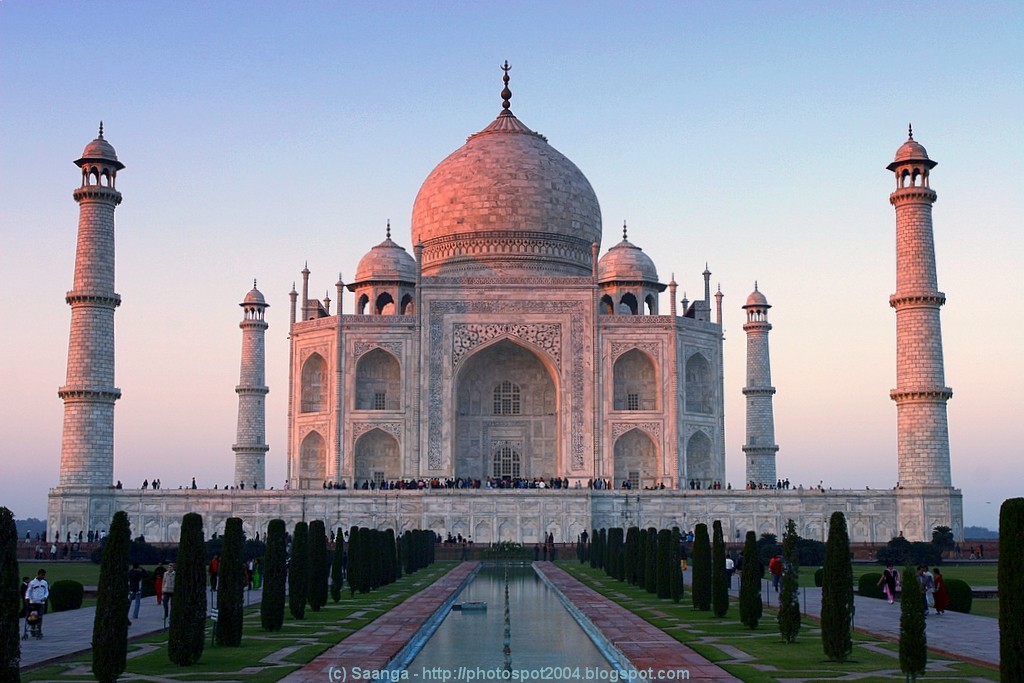
Taj Mahal
The Taj Mahal, ultimately from Arabic,"crown of palaces", pronounced "the Taj") is a white marble mausoleum located in Agra, Uttar Pradesh, India. It was built by Mughal emperor Shah Jahan in memory of his third wife, Mumtaz Mahal. The Taj Mahal is widely recognized as "the jewel of Muslim art in India and one of the universally admired masterpieces of the world's heritage".
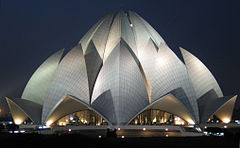
Lotus Temple
The Lotus Temple, located in New Delhi, India, is a Bahá'í House of Worship completed in 1986. Notable for its flowerlike shape, it serves as the Mother Temple of the Indian subcontinent and has become a prominent attraction in the city. The Lotus Temple has won numerous architectural awards and been featured in hundreds of newspaper and magazine articles.
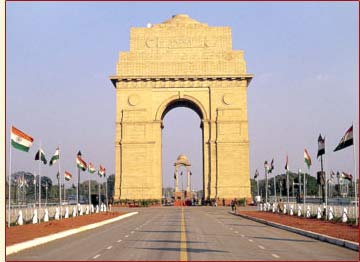
India gate
The India Gate is the national monument of India[citation needed]. Situated in the heart of New Delhi, it was designed by Sir Edwin Lutyens. It commemorates the 70,000 Indian soldiers who lost their lives fighting for the British Army during the World War I. The memorial bears the names of more than 13,516 British and Indian soldiers killed in the Northwestern Frontier in the Afghan war of 1919. The foundation stone of India Gate was laid by His Royal Highness, the Duke of Connaught in 1921. The monument was dedicated to the nation 10 years later by the then Viceroy, Lord Irwin.