|
|
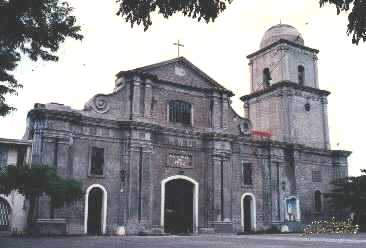
The first parish priest of Imus was an Agustinian Recollect, Friar Francisco Santiago, (October 1, 1795 - December 31, 1796). However, the interim parish priest prior to the creation of the Imus Parish was a secular Filipino priest, Padre Ferrosa, who served from 1775 up to 1882 on which latter year, Padre San Luis relieved him of his duties but also in acting capacity unitl October 1, 1695. From thereon, a succession of appointments of parish priests all belonging to the Agustinian Rocollect Order ensued, the last of which was Friar Victor Oseos (1898). The first Filipino priest of Imus Parish was Padre Fruto Satorre, a native of Imus. It is to be noted that Pilar Masonic Lodge of Imus was named after the patroness of the parish, "Nuestra Sra. del Pilar". It was in Imus where the revolutionists on September 3, 1896 led by Gen. E. Aguinaldo defeated the Spanish forces who attempted to capture the Casa de Hacienda, and hte seat of the civil government, earlier taken by the Filipinos. The victory of the Filipino insurgents further inspired the liberation movement which by then involved not only Cavite province but also Luzon.
The advent of the American occupation resulted in an orderly transition of govermental functions to the civil authorities with the concomitant separation of the church and state. Also, the friar lands which were purchased by the United States were parcelled out in small units and resold to the occupant-tillers. Historically, it was in Cavite, particularly Imus, where the land reform movement began.
In April 1962, Imus became the seat of the Ecclesiastical Province of Cavite, know as the Diocese of Imus.
Home |
|