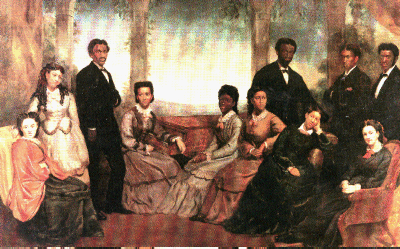
"In terms of musical history, the primary significance of the Jubilee Singers is that they introduced to the world for the first time a magnificant body of folk music -- slave songs, spirituals -- which celebrated life, survival, victory." (www.mtsd.edu/~baustin/jubilee.html)
The group was given their name by director George L. White. He used historical references to the Bible, because in the Old Testament, each fiftieth pentecost was followed by a "year of jubilee". This year basically represented the freedom of slavery by Hebrew Law.
In 1871, the Jubilee Singers of Fisk University was put together. The name seemed appropriate being that slavery had just become emancipated at this time, and most of the singers had been slaves.
In 1871, these students also began fund raising to get money for the school.
At the time most of Black music's best was being performed by white minstrel musicians. The Jubilee Singers from Fisk University received attention and great esteem from the world in their very professional concerts, performing Negro Spirituals.
At first this group was composed of a pianist. Her name was Wells. It also contained two quartets.
"Over the next decade they had toured most of the northern states, had performed at the White House, toured England and much of Europe and had played for Queen Victoria." (www.mtsd.edu/~baustin/jubilee.html) |