|
For the complete article, click here.
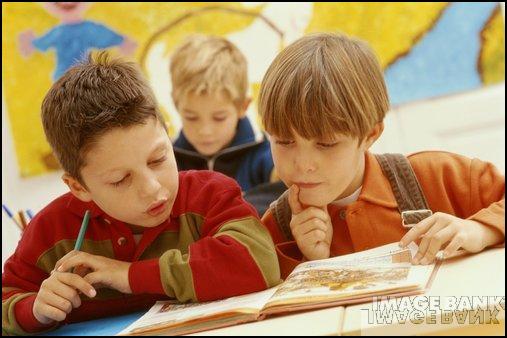
How Can I Teach a Child to Read? When we set out to teach a child to read, we are embarking upon perhaps the most important thing the child will ever learn. In the past, when it was time to teach a child to read, parents either took on the task themselves or sent their little ones to a local school. In more recent years, the belief has taken hold that only professionals can teach a child to read. There have been conflicting opinions on the best way to teach a child to read, whether through whole word learning, phonics, or other methods. Today we know that anyone can teach a child to read and the best way to go about the process is by using phonics. Teaching a child to read often begins long before she or he is old enough to understand letters and sounds. Parents will give children a head start if they begin reading to them as infants. A baby will become familiar with the sound of reading and will take pleasure in hearing his parent�s voice. By the time a child begins to walk, he will enjoy looking at picture books and having someone read to him. Two and three-year-old children who are accustomed to having someone read to them will often entertain friends and relatives by �reading� one of their favorite books. They sometimes memorize entire children�s books, even turning the pages at the right times. When you begin the formal process to teach a child to read, she will benefit from the years of being familiar with books and knowing the enjoyment they bring. To teach a child to read, always begin with phonics. After she knows her alphabet well, present to her all the phonetic sounds of the alphabet, one by one. There are many wonderful books and curriculums designed to teach a child to read; simply choose the best one that works for you, or create your own. Once the child understands and recognizes all the phonetic sounds, she will be ready to learn short words. She will thrill at her new ability to read simple words, and if not pushed, will long to learn more. Continue reading to the child. Even after you teach her to read simple words, read her books above her age level so her vocabulary and comprehension will grow. Her ability will eventually catch up. There is no magic age when one can teach a child to read; while some children are ready in Kindergarten, others, especially boys, may not be ready until age eight or nine. Traditional schools have programs and quotas which expect them to teach a child to read the basics by the end of the first grade, but many children simply are not ready. A child should not be pressured or berated if he struggles in reading; he should simply be helped along at his own learning pace. If a child still cannot read by the beginning of 3rd grade, parents might consider homeschooling so they can teach the child to read at his own pace without the pain of peer pressure. |
Relation to text There are two ways to teach children how to read. One is called the phonics approach and the other is called the whole-language approach. In the phonics approach, children are required to learn the sounds of each letter before they began to decipher simple words. While in the whole-language approach, langauage is considered an entire set of skills-- talking and listening, reading and writing.
Teachers should use various methods in teaching children how to read. Phonics should be part of instruction, but other aspects of literacy taught in other ways, are important as well.
|
|
