ABSOLUTE VALUE FUNCTION
Absolute Value:
A real number (rational and irrational numbers) can be represented by a position on the number line. Absolute values will be the distance from the origin (zero) to the numbers.
Example 1:
x = |3|
Go 3 units to the left and 3 units to the right from the origin in the number line.
x = - 3
x = 3
Example 2:
| x – 5 | = 2
(x – 5) will go 2 units to the left and 2 units to the right from the origin.
|
x – 5 = - 2
|
x – 5 = 2 |
|
x = 3 |
x = 7 |
Example 3:
| x – 4 | > 7
(x – 4) will go more than 7 units to the left and more than 7 units to the right from the origin.
|
x - 4 = - 7
|
x – 4 = 7 |
|
x = - 3 |
x = 11 |
Example 4:
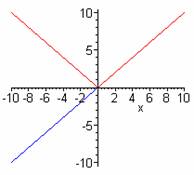
Graph f(x) = |x|, x € R
First graph f(x) = x
Then reflect the portion of the graph below the x-axis in the x-axis as illustrated below:
Example 5:
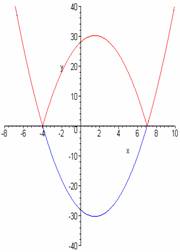
Graph y = |x2 - 3x - 28|
First graph y = x2 - 3x - 28
Then reflect the portion of the graph below the x-axis in the x-axis as illustrated below:
Example 6:
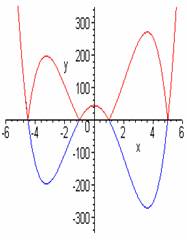
Plot |2x4 – x3 - 47x2 + x + 45|
First graph y = 2x4 – x3 - 47x2 + x + 45
Then reflect the portion of the graph below the x-axis in the x-axis as illustrated below: