TRANSPORT DATABASE MANAGEMENT FOR
LOCAL AUTHORITIES IN MALAYSIA
ASSOC.PROF. DR
AHMAD HILMY ABDUL HAMID
AHMAD FAIRUZ OTHMAN
Faculty of Civil Engineering,
UiTM Pulau Pinang
INTRODUCTION
The movements of people and goods reflect the economic activities of any locality. High volumes of traffic indicate a vibrant economy while low volume traffic shows the lack of economic attractiveness of an area. The general public expects local authorities whether they are city councils, town councils or district councils to provide a reasonable standard of service for their transport system. Any discussion on transport will inadvertently include road traffic, pedestrian needs, public transport and parking facilities.
The challenge for any local authority is to provide the various transport requirements of traffic in their area or jurisdiction within the expectations, if not better, of their clients, transport facilities are being strictly adhered to. Developers now need to provide reports of traffic impact due to their proposed development. The Government meanwhile is pushing for a shift towards public transportation in terms of transport policy. The onus of implementing such policies falls flatly on local authorities.
THE NEED FOR TRAFFIC DATA
Local authorities are agents for the well being of the general public. The tasks of local authorities are many and varied. The needs of the public must be balanced by each local authority’s ability to provide. Amongst the most important and demanding of these task is the provision of good road infrastructure and acceptable traffic management schemes. Traffic movements are individually random but as a group exhibit observable patterns on a daily, weekly, monthly and yearly basis. The occurrences of peak periods themselves follow a certain routine. The actual hour of peak traffic however may vary from place to place (in terms of towns and cities) and point to point (in terms of road location). Knowing where, when and how much traffic there is in an area will provide a strong basis for making the appropriate decisions. Not knowing this information will render the person or the department in charge clueless as to how to manage their local traffic.
In order to provide the most appropriate or suitable traffic facilities for the public, a local authority need to keep abreast of the actual needs of their road and transport users. These needs can only be gauged from actual data collected on site either through manual counting, questionnaire survey or system monitoring through close circuit television cameras (CCTV) or other survey devices. Data may also be obtained through data mining activities using sources not directly concerned with traffic movements themselves. Data from relevant agencies, government or private, also provide information on traffic in an area. Historical data from previously made studies for various reasons may also be used to identify patterns of demand on traffic and its facilities from the public. Figure 1 shows the links between various data sources to satisfy the need for traffic information for a local authority.
It cannot be stressed enough as to the importance of gathering, obtaining and analyzing traffic data for a local authority that is serious about managing their town and area traffic well. The public looks to their local authority to provide a balanced infrastructure between individual and public mobility. The attitude of neglecting public transport in Malaysian towns is over with the new government policy on transportation. But questions arise as to when and how much to provide for this public transportation needs. The answer can only be given if we first know what our road traffic is doing, when and where.
Traffic data collection is not difficult but tedious. Serious data collection exercises require proper tools, equipments and personnel organization. A routine timetable of traffic data collection is not only useful in the long run but also deemed necessary if proper traffic management is the goal. It is generally observed that equipments, personnel and routine timetable are the most lacking feature of a traffic unit, if any, of most local authorities. Admittedly, these items for data collection incur cost that may not appeal to most local councilors. After all, traffic data collection is not a tangible item which cannot be displayed as a trophy or presented on financial papers as an asset.
DATA COLLECTION METHODS
Various data collection methods are available either from the Traffic Engineering approach or in terms of commercial equipments provided by suppliers in the industry... Table 1 lists the various data acquisition methods that are available to local authorities to implement.
i) Manual Counting
The simplest way of gathering traffic data is to stand by the roadside and count the number of vehicles that pass that point. This may not be the most popular assignment for any staff to do but it is surely not boring only tiresome. Nowadays, though local authorities are presented with many technologically based approaches that helps reduce manpower requirements for traffic data collection.
The call for the ‘Safe-city’ approach for crime prevention and incident detection had led many authorities to implement or contemplate to implement closed-circuit television cameras (CCTV) at strategic locations in their towns and cities. These are ready-to-use facilities that can be adapted to collect traffic information. Traffic movements may be observed ‘live’ or replayed from recordings. Utilising an originally single purpose camera to a multi purpose use may reduce the budget constraint of most local authorities.
TABLE 1. Traffic Data Acquisition Methods
|
Acquisition Method |
Advantages |
Disadvantages |
Cost Category |
|
Manual Counting |
- Cheap - Versatile - Mobile |
- High Manpower requirements |
Low |
|
Video Based |
-Automatic counting
-Good storage media - Data Review - Incident detection |
- Site Specific -Require maintenance -Require central control
|
High |
|
Loop detectors |
-Automatic counting - Low maintenance |
-Data transfer required - Inaccurate data |
Medium |
|
Infra-Red Detector |
-Automatic counting - Low maintenance |
- Limited range - Site specific |
Medium |
|
Secondary data from Traffic Impact Assessment Reports |
- Readily available - Recent updates - Historical data provides travel pattern |
- Data mining required - Data reconciliation maybe necessary |
Low |
ii) Video based Traffic Data Collection
The Video Detection system operates on standard existing video signals, either analog or digitally encoded. The detection units can be located either on site at the camera pole, in a hub or at the Traffic Control Centre. The systems architecture is flexible and some systems offer a wide range of communication solutions. Interfacing with existing traffic management supervision is based on IP communication protocols and windows based applications.
More specialized systems are also available in the market for the more affluent authority who can afford a ‘traffic management’ budget of their own. These systems not only collect traffic data but also provide analysis facilities to help with decision making. Figure 1 shows the automatic traffic counting process in the video data collection system.
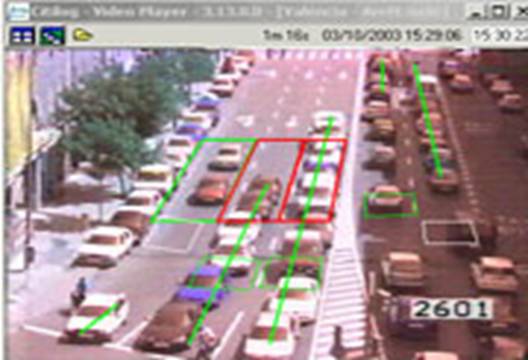
Figure 1. Automatic Traffic counting from Video Display
Improvised systems may also be used to keep track of traffic behaviour for an area. These are a combination of simple data collection using loop counters as those found with traffic light systems and periodic manual analysis by specially designated officers.
iii) Data Collation from Traffic Impact Reports
The collation of traffic impact reports from would be a developer is another way of gathering and mapping out traffic patterns for an area. As all those Traffic Impact Assessment (TIA) reports contain actual updated data on traffic volumes, road links and recommendations, they make a source for developing a Transport Database Management System (TDMS). Whatever the method used and the approach applied, the paramount issue is the collection of traffic data for decision making. The availability of a database would enhance a local authority’s capability in addressing issues on traffic management and the planning of future road and transport facilities.
TRANSPORT DATABASE MANAGEMENT SYSTEM (TDMS)
Local authorities must coordinate transport data collection activities and maximize available technical resources. Integrating collected data sets such as traffic counts, vehicle mixes, roadway characteristics, functional classifications, employer statistics, and land use information is vital for assessment of transport projects. Combining data with analytical tools and providing access to all users enhances the success of programs such as air-quality control, employer trip reduction, management system development and other mandated requirements of our transport policy.
Utilizing Geographic Information System (GIS) technologies will allow transportation professionals to efficiently store, display, query, analyze and disseminate information. The TDMS should include a graphic user interface which allows both inter- and intra-agency users to employ an integrated modeling environment in support of transportation planning and programs. These GIS based systems may be developed by the local authority’s in-house or using third party contractors. Figure 2 shows a sample screen display from a transport management system called Transmodeller which is available commercially. Figure 3. Shows a screen shot taken from ArcView. This first screen shot shows traffic volumes on a road system. Streets with thicker lines typically have greater traffic volumes than streets with thinner lines. Figure 4 shows a screen shot of the road conditions, specifically the base failure rate of certain roads in the sample area. Roads with thicker lines have a higher base failure rate than roads with thinner lines.
CONCLUSIONS
With the road and transport infrastructure under strain, there is a need to collect and analyze traffic volume, vehicle classification, and weight data in an integrated manner. Some local authorities do make an effort to collect and ensure quality of data but give little emphasis if any on an integrated traffic data management system. Most local authorities however are still unconcerned with the gathering of transport and traffic information. The design of an integrated traffic data management system that allows for editing, storage, and reporting of traffic volumes, vehicle classification, and vehicle weight along with quality assurance of data is highly recommended for proper transport system maintenance in the future. The sooner this effort is ventured into, the better prepared will a local authority be in facing the issue of balancing the demand and supply of transport system and traffic facilities.
Local authorities should begin to collect the huge transport data that is growing daily and formulate a database for their traffic management strategy and programs. Over the next few years, the local authorities should be producing maps of collisions, volumes and road conditions for many different internal and external projects. In order to gain a better understanding of the current state of congestion and trends over time in their area, additional analysis will be required. Some of the most significant challenges to this effort are related to the availability, coverage, quality, and consistency of traffic data within a local authority’s jurisdiction. The development of a Transport Database Management System should be an integral component of a local authority’s management and implementation plan.