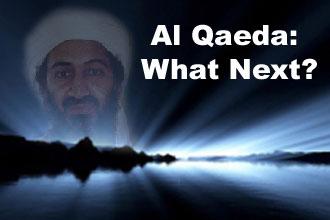
- American intelligence has discerned that al Qaeda is rebuilding in Pakistan’s tribal areas and that a new generation of leaders has emerged under Osama bin Laden.
This ominous development raises several pertinent questions. Among them: what do we really know about al Qaeda? We had very little knowledge of the terrorist organization before 9/11; how much has our understanding of al Qaeda really changed since 9-11? What have we learned since? And how has what we learned changed our understanding of and dealing with the enemy?
To discuss these questions with us today, Frontpage has assembled a distinguished panel. Our guests are:
Dr. Rohan Gunaratna, the author of Inside Al Qaeda: Global Network of Terror. He is Head of the International Centre for Political Violence and Terrorism Research at the Institute of Defence and Strategic Studies in Singapore.
Andy McCarthy, a former federal prosecutor and a senior fellow at the Foundation for the Defense of Democracies. He prosecuted the Blind Sheik and his organization for seditious conspiracy in 1995.
and
Thomas Jocelyn, an expert on the international terrorist network. Named a Lincoln Fellow by the Claremont Institute in 2006, much of his research has focused on the role that nations such as Saddam's Iraq and the mullah's Iran have played in providing support, training and funding for terrorist entities such as al Qaeda, al Qaeda's affiliates, Hamas, Hezbollah and other terrorist groups. He has written extensively about these connections for the Weekly Standard and other publications.
FP: Dr. Rohan Gunaratna, Thomas Jocelyn and Andy McCarthy, welcome to Frontpage Symposium.
Thomas Jocelyn, let’s begin with you. What do you think are some of the key elements that need emphasis to serve as a foundation for a discussion on diagnosing al Qaeda?
Jocelyn: Thanks, Jamie. With respect to diagnosing al Qaeda, I think there are three key observations:
(1) Prior to 9-11, the West, and the U.S. in particular, understood very little about al Qaeda. Our intelligence agencies simply did not know much about how al Qaeda was structured, financed, or plotted attacks. Out of this ignorance many misunderstandings about our terrorist enemies took root.
(2) After 9-11, America’s civilian intelligence agencies and military scrambled to understand an enemy that caught them sleeping. To their credit, and with the help of key allies around the globe, al Qaeda’s network was substantially degraded. A majority of al Qaeda’s top operatives at the time of 9-11 have been killed or captured. Despite numerous tactical successes, however, many of the misconceptions that were born prior to 9-11 have lived on.
(3) In the last three years, it has become more and more clear that al Qaeda is regrouping. New leaders have emerged and the terror network is evolving in ways we do not yet fully comprehend. Al Qaeda’s new leaders, as well as the leaders that survived the post 9-11 crackdown, have regrouped in northern Pakistan and Iran. Other al Qaeda affiliates fight on in Iraq and select hotspots around the globe. Throughout all of this, our understanding of the enemy has been clouded by mistaken impressions from the past. And it makes the fight ahead much more difficult.
Let me offer a few examples of what I mean.
During the early to mid 1990’s, a prominent group of officials inside the American intelligence community viewed our terrorist enemies as merely an “ad hoc” collection of extremists who just happened to come together to attack targets around the globe. Not all of our analysts viewed the enemy this way. But the idea that al Qaeda’s terrorists were not part of an organized terrorist network became fairly commonplace.
Influential analysts at the CIA, in particular, consistently misdiagnosed the enemy. In 1993, terrorists executed the first attack against the World Trade Center and were plotting a series of follow-on attacks against landmarks in the NYC area. Despite the fact that the terrorists involved had extensive ties to foreign Islamic terrorist groups, particularly Egypt’s Islamic Group and other allies of al Qaeda who were then operating out of Sudan, the CIA dismissed the notion that we faced an organized terrorist network. As late as 1998, as Rohan Gunaratna points out in his seminal book Inside al Qaeda, CIA analysts were arguing that the 1993 plotters “did not belong to a single cohesive organization, but rather were part of a loose grouping of politically committed Muslims living in the New York City area.” The CIA could not have been more wrong. (For an excellent write-up on the 1993 terror plots and the terrorists’ ties to the global terror network then centered in Sudan, see Andrew McCarthy’s 1998 Weekly Standard piece “The Sudan Connection,” which is reproduced here.)
But the CIA’s mistaken paradigm for understanding al Qaeda’s terrorist network has, amazingly, lived on. Immediately following 9-11 no one would really argue that our terrorist enemies were only an “ad hoc” group of hijackers. It was clear that a sophisticated and well-trained network of evildoers had forged a professional terrorist network. But as more time passed, the old paradigm made a comeback. After the March 11, 2004 train bombings in Madrid and the July 7, 2005 bombings in London, for example, many Western analysts were quick to conclude that the perpetrators were merely inspired by al Qaeda’s ideology and did not really belong to an organized network of terrorists. (See here and here, for example.) Not all of Europe’s investigators fell into this trap. For example, some of Spain’s judicial investigators did exemplary work in tying the 3-11 bombings to al Qaeda. But they were the exception.
It has become only more and more clear that the terrorists responsible for the 3-11 and 7-7 bombings were directly affiliated with the global, organized network of terrorists, which includes al Qaeda. The evidence is simply overwhelming. But throughout much of the investigations into these plots, many investigators simply assumed that the attacks weren’t really the work of al Qaeda or its allies. Therefore, once again, Western intelligence services initially misdiagnosed the source of major terrorist attacks.
All of this, of course, has made diagnosing al Qaeda more difficult. More than five years after 9-11 many investigators still do not fully understand the hallmarks of al Qaeda’s terrorism or the basics of how the organization operates. As the terrorist organization’s structure continues to evolve, this problem will only become greater. There are many other myths from the past that have lived on, but the inability to recognize and deal with the basics of al Qaeda’s terror remains a fundamental problem.
Read all of it.