| ALL SAINTS MISSION ELEMENTARY SCHOOL
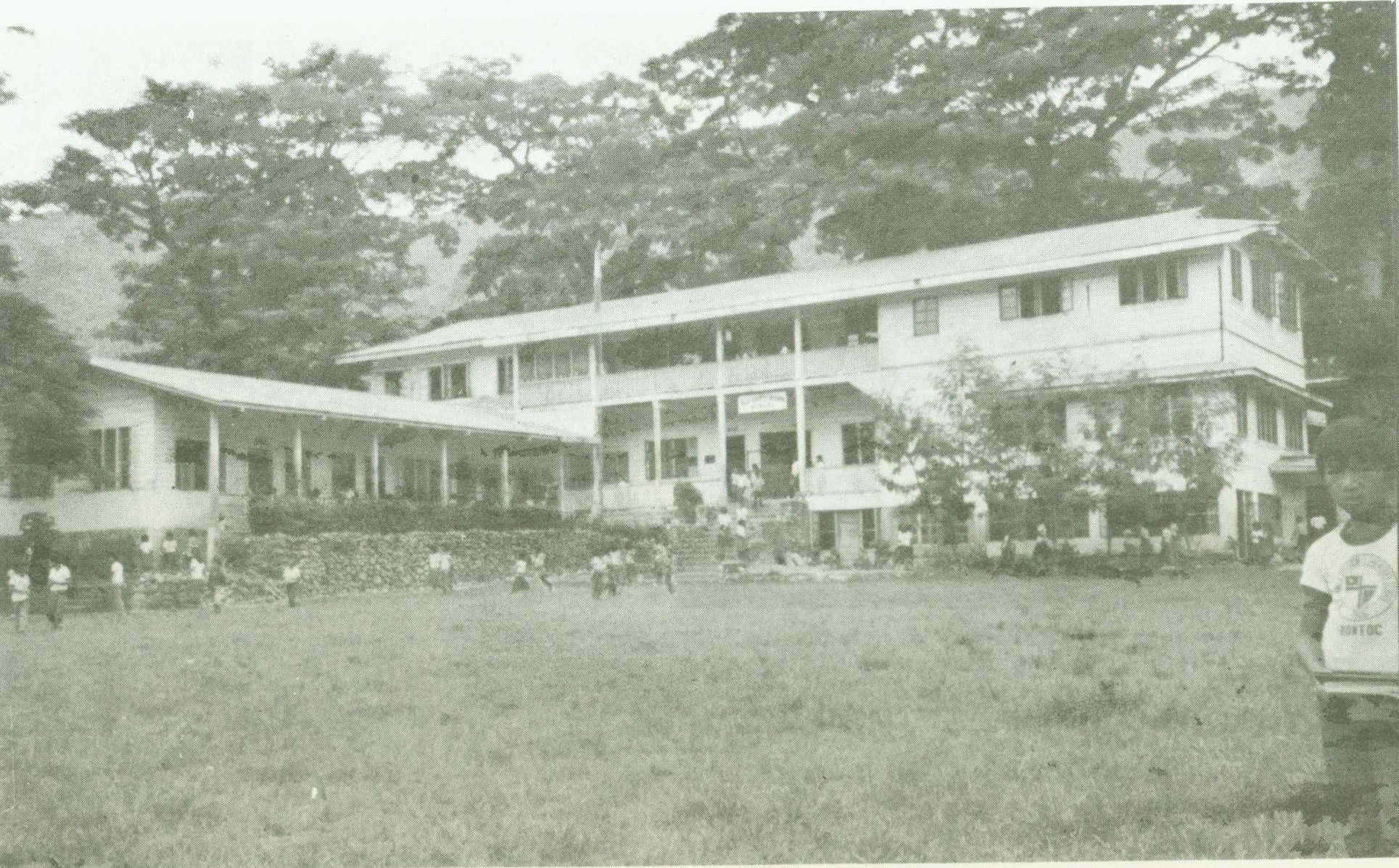
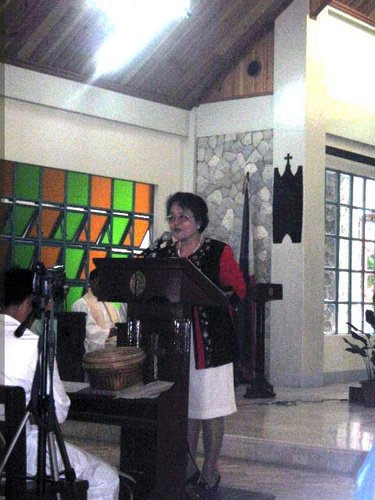
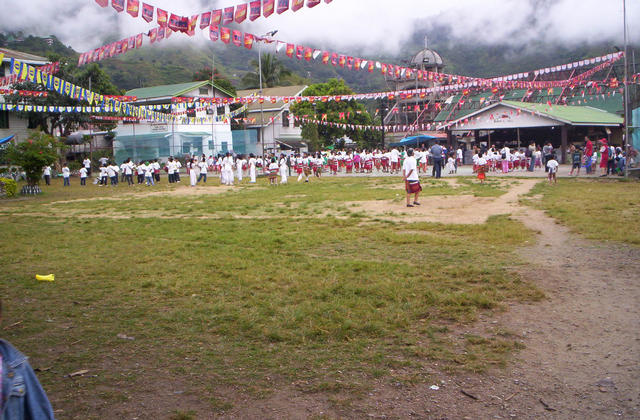
CENTENNIAL ALUMNI HOMECOMING Kate Chollipas Botengan, Ph.D. (Delivered as a homily during the Alumni-sponsored Mass in celebration of the ASMES Centennial anniversary at the Episcopal Cathedral in Bontoc, Mountain Province, Philippines on 29 October 2006, 9:00 am.) Greetings and acknowledgements: Chair of the Board / Diocesan Bishop Rt. Rev. Edward Malecdan Members of the Board Teacher-in-Charge Mrs. Lubang and other School Officials Teachers and Staff of the School Dean of the Cathedral Rev. Daniel P. Carino Members of the Clergy ASMES-PTA Officers and members ASMES Alumni President Atty. Florence Taguiba and other Officers Fellow Alumni Friends, Gentlemen and Ladies INTRODUCTION Today, we have all �come home� to honor and praise God for the 100 years that our Alma Mater had rendered in the Christian education of Igorots, not only from Mountain Province but from other places as well. It is my single honor to have been called to give the homily for today�s observation or celebration of that momentous day a hundred years ago, when the American Anglican missionaries started the school we now know today as the All Saints Mission Elementary School. Whatever criteria was used to choose me, I only pray that I will be able to live up to them. I am grateful and humbled by such bestowal of the honor of being the speaker this morning. Looking around, I see many fellow alumni, former teachers, friends, and supporters who have �come home� from all parts of the world to share in this joyous celebration. WELCOME HOME TO US ALL. Please turn to your right, your left, front, and back, shake hands, and greet each other HAPPY ANNIVERSARY! Now that we have greeted each other properly, allow me to tell you a story, entitled �The Answer is in your hands,� in an attempt at answering the question as to WHY we are gathered today. A story is told of a smart little boy who wanted to test the wisdom of his Grandfather. He went up to his grandfather one day and asked him to answer just one question. The grandfather acceded and listened. The boy held out his right hand, with a small bird held firmly. �Grandfather,� he said, �I will put my hand with the bird behind my back. You tell me if the bird is alive or dead when I show you my hand.� The grandfather looked at him steadily but kindly and said: �Grandson, the answer is in your hands.� Would that all the Alumni, Teachers, Management, and friends keep this in mind as we need to ponder the future of our school, now that it has turned a hundred years old with the turn of the century. � Where should ASMES go from here?� �What should it be now that it is a hundred years old, in the light of the impact of information technology and communications which has literally transformed the world into one small village?� SCAN OF THE HORIZON 100 YEARS AGO An appreciation of today, I believe, can best be done in the context of our historical background. It was to a land of the wilds which Bishop Brent, accompanied by Fr. Walter Clapp, arrived in 17 February 1903 to follow his vision to open up mission work among the pagans of the wilds living in the folds of the Cordillera Central in North Luzon. Allow me to quote the section on Bontoc from the historical coffee table book on the Episcopal Church in the Philippines, entitled :Transformed by the Word; Transforming the World,� which was written in 2001 by yours truly on instruction of Prime Bishop Soliba, as part of the celebration of the centennial year of the Episcopal Church in the Philippines (pages 15 to 16). Thus: Bishop Brent and Father Clapp traveled from Manila in mid-January of 1903 to explore the Igorot territory. They traveled mostly on foot, sometimes on horseback, up and down the mountain ranges for about two weeks through many villages, including Sagada which was a trade route from the Mountain Province to the lowlands. On 17 February 1903, Bishop Brent, Fr. Clapp, and party arrived in a village which was in a narrow valley and along the bank of a winding river. This was Bontoc, home of some of the Igorots well known for their bravery and fierceness in warfare. The decision was then made to start the first Episcopal mission in Bontoc. A lot was purchased and a small house built. The choice of Bontoc proved to be wise later on as Bontoc was chosen to be the capital of the Mountain Province. Fr. Clapp returned to Bontoc in June of the same year to live and work with the Igorots. It was in June of the same year, 1903, that the Mission of the Holy Comforter (renamed All Saints Mission in 1908 when it was transferred to where it is now) was opened by Bishop Brent and Fr. Clapp. The trust that Bishop Brent and Father Clapp showed to the Bontoc Igorots perhaps paid off in the long run considering that just some seven years earlier, the same people had vigorously collected no less than 70 heads in the course of their headhunting tradition which continues in some parts of the region to this day. By 1909, Fr. Walter C. Clapp and Fr. A.E. Sibley had an established Mission Center in All Saints with 60 baptized members and a satellite outstation in Tukukan, a barrio eight kilometers north of Bontoc, described by Fr. Clapp as �that wholly heathen place.� Miss Margaret P. Waterman, appointed in 1902, took care of �a crowd of the little unwashed, uncombed, Igorot girls�. To my mind the most attractive element of the community�.� Miss Edith B. Oakes, appointed in 1903, now Mrs. Clapp, took care of the dispensary. Miss Lizzie H. Whitcombe, appointed in 1908, took care of the girls in the dormitory and altar work as well as act as the Treasurer, accountant, types and transcriber of Igorot translations! This team with all-around responsibilities would be increased with new additions. Deaconess Kate Shaw, the sister of Fr. Sibley, arrived to join the team and was assigned to Tukukan. Meanwhile, some schooling activities had been started as soon as Fr. Clapp started his mission work. It was, however, only in 1911 that a formal Girls School started with Miss E.J. Whitcombe as in-charge and a Boys Dormitory with Fr. E. A. Sibley as in-charge. There was in practice what Fr. Clapp referred to as the �rice Christianity� because part of the reason the children stayed on in the school and dormitory was they were being fed their portion of daily rice. The girls were taught in the mission school. This was the forerunner of the All Saints Mission Elementary School of today which is co-educational. While the boys stayed in the dormitory, they went to the public school.� One cannot help but admire the faith of the early missionaries in their Lord and God to bring them through. One cannot help but believe in divine destination which led our forebears to be accepting of the white people with the long noses. One raises possibilities of growth and development for ASMES with a motivation for its stakeholders to project new directions or re-directions for the school. One cannot help but wonder where we, the present generation of Igorots would be, had the situation been otherwise. Perhaps a reference to other groups of cultural ethnic communities elsewhere in the country can provide us with an inkling of our possible condition had developments been otherwise. I recall, for example, my reaction during my first visit and encounter with the Mangyans of Mindoro. I had then felt transported back in time as if I was actually living the scenes portrayed by the pictures taken of people and material culture when my mother was a 10-year old girl attending school in the All Saints Mission Elementary School. I remember asking myself: where have these people been these past 100 years! It only takes a visit to these other groups to appreciate what missionary work through the church and school had done for us as a people. FAST FORWARD TO 2006 Regardless as to what year we reckon the �birth� of the school since every Mission Center that was established then by Bishop Brent had a 3-fold Ministry: evangelism, education, and medical, the formal school we know today as All Saints Mission Elementary School or ASMES, is a century old institution. From an institution serving a handful of girls only, our Alma Mater currently is �home away from home� to a co-educational group of 350 boys and girls. Where there was only one room in the house of Miss Whitcombe, one of the missionaries, we now have several buildings on campus, with some other additional ones, I dare say because of the multi requirements of a fast changing world. Whether we like it or not, ASMES cannot afford the comfort of being removed from the hustle and bustle of urban areas. We, the alumni now living comfortably in all parts of the world and working as proficient professionals because of our good educational foundation we received from ASMES, cannot afford to let our school not be responsive to change. Fellow alumni, it is now �pay back� time don�t you think ? It tickles the mind just to wonder why the name �Mission of the Holy Comforter� was changed to �All Saints Mission.� Our school would then be known as the �Holy Comforter Mission Elementary School!� Historical records read over so far has not indicated to this writer the reason for the change. Perhaps it was a matter of preference by Fr. Clapp, the priest in-charge; the same way that �St. Mary the Virgin� in Sagada was the preference of Fr. Staunton. Be that as it may, I would like us, at this point to reflect on the occasion on hand, the reason why we are here. We are here to celebrate an ANNIVERSARY. An anniversary is a COMMEMORATION of an important event. And indeed, our CENTENNIAL ANNIVERSARY is our COMMEMORATION of the start of the educational services rendered to the Bontoc Igorots 100 years ago, with the indelible imprint of quality foundation education that has enabled all of us to hurdle requirements of higher education and the global challenges of our professions wherever we now live. We only have to look at our parents and grandparents who were the initial beneficiaries of the educational program of the early missionaries to realize the impact of education. THE NAME AS A PROPHESY Having traced a bit the historical horizon of our Alma matter, it seems to me that the choice of the name ALL SAINTS MISSION given 100 years ago was a positive portend to what has now been attained. Perhaps it would do us good to focus and reflect on the word SAINT. At first blush and in general conversation, a person referred to as a SAINT is one who has all the virtues of a religious and godly person. Indeed, the existence of the word CANONIZE tell us that this concept is accepted by the church. Saints, according to some theologians, �are persons who make it easier for others to believe in God.� Another said that �Saints are ordinary people who are able to do unusual, special things through the grace of God, not being a perfect being but as an instrument that God uses for the redemption of the world.� Would that Fr. Clapp and the other missionaries had this wish in mind, if only for an earthly source of strength to do their mission work? Was it that the words ALL SAINTS MISSION, like a banner furled ahead of a column of the soldiers of Christ, served as a beacon for work that needs to be carried out in an environment of darkness? The faith of these few early missionaries, guided by the words seemed to have rubbed off on the young people who passed through their tutelage, to become Saints in their own special ways. Have not been taught a hymn which declares that �� and one was a soldier and one was a priest; and one was a shepherdess on the green, they were all of them Saints of God and I mean, God helping to be one too.� Indeed, if we look around us we see ordinary people who in their own ways, with God�s help, strive for that perfectness to be able to do unusual and special things as God so commands. Was this probably what the early missionaries had in mind when they gave the name ALL SAINTS to the school? Was perhaps the �heathen background and environment of the people they came to serve, to introduce the Christian religion to,� such a challenge that the use of the name was needed as a �talisman� of sorts? And why not, one could ask. Psychology tells us of the principle called �the Self-fulfilling Prophesy.� The number of graduates who have imbibed the Christian teaching of All Saints and handed down from generation, are countless. On top of that, the alumni are all over the world in many varied professions and vocations, being examples of the Christian way of life, imperfectness and all. No alumni will, I am sure, deny that ASMES contributed to formation of what we are today. At this point, please allow me the luxury of telling you another story entitled �The Most Valuable Acquisition.� The story is told of a wise old King who was sickly and desirous of learning what values his sons hold as a guide for him to make an important decision relative to how he was to assign responsibilities to his three sons. He called the sons together one day and instructed them to go out into the world, travel around for a year, and return to the kingdom to submit to the King their most valuable acquisition. True to the timetable set by their father, the sons arrived back and waited one at a time for their audience with the King. The first one reported to his father and showed his most valuable acquisition � a beautiful perfectly round pearl. The second did likewise and showed a beautiful perfectly cut diamond. The third son had nothing but a piece of parchment paper which he proceeded to read to his father. It was a Diploma from the All Saints Mission Elementary School ! CHALLENGES TO THE ALUMNI Our gathering today reminds us that we came together in remembrance and to have communion and fellowship with each other, while at the same time holding those who have gone ahead in memoriam. We recall old memories, renew friendships, renew and strengthen or fellowship as in the �communion of the saints� which we repeat every time we recite and renew our expression of faith through our creed. The education we received during our elementary school years, undergirded by Christian values, no doubt now enable us to live our life to our fullest capabilities and satisfaction. Perhaps we should ask ourselves: (1) what have we done to make it easier for other people to believe in God�s work of love and redemption? (2) what have we earned and experienced from our present field of endeavor and experiences that we can bring back to inspire and or strengthen the work and mission of our Alma Mater ? (3) What should the hundred years of existence and ministry of ASMES in the education field in a fast internationalizing culture raise to us in terms of directions to be taken and possible programs that should be undertaken ? In short, after 100 years, what follows next ? Where do we go from here ? I would like to pose these questions not only to my fellow alumni but just as necessary to the Management and Teachers at ASMES. Fellow Alumni: What have we brought to offer before the altar of God today? KATE CHOLLIPAS BOTENGAN Grade VI Class of 1954 � 1955 and Grade VII Class of 1955 � 1956. |
 |
   |
 |
 |
 |
 |