Benjamin Franklin, born January 17, 1706, was the 10th son, and 15th child, of 17
children in the Josiah Franklin family. Josiah was a soap and candlemaker, who lived in Boston,
Massachusetts with his second wife, Abiah Folger. Although Franklin learned to read at an early
age, he only attended grammar school for two years. By the time he was 10 years old, Franklin
was working for his father. However, he did not enjoy the candlemaking profession, and two years
later, Franklin was apprenticed to his brother James, a printer.
For five years, Franklin sought to master the printers' trade. During this time, he also strove
to improve his education. Franklin read numerous classics and perfected his writing style. One
night, Franklin slipped a letter, signed "Silence Dogood," under the door of his brother's
newspaper, the New England Courant. That letter and the next 13 written by Franklin were
published anonymously. The essays were widely read and acclaimed for their satire.
After a quarrel with his brother in 1723, Franklin left Boston for Philadelphia, where he again
worked in the printing industry. He established a friendship with the Pennsylvania governor,
Sir William Keith, and at Keith's suggestion, Franklin decided to go into business for himself.
Keith offered to arrange letters of credit and introduction for Franklin's trip to London to
purchase equipment. Unfortunately, Keith proved unreliable, and Franklin arrived in London with
no means. However, he quickly found employment in two of London's largest printing houses, and a
fter two years, earned enough money to return to America.
Franklin returned to Philadelphia in 1726 and resumed his trade. By 1730, Franklin had his own
business. That same year, he married Deborah Read, a woman he met before his trip to England.
Together they had a son, who died at four years of age; and a daughter, who survived them both.
Franklin's business ventures included the purchase of the Pennsylvania Gazette, which, after his
improvement, was considered one of the best colonial newspapers; Poor Richard's Almanac, written
under the pseudonym, Richard Saunders, and published from 1732 to 1757; and the printing of
Pennsylvania's paper currency. In 1731, Franklin founded what is considered the first public
library. During the next several years, Franklin was instrumental in establishing the first fire
department, a police force, and the Academy of Philadelphia, which became the University of
Pennsylvania. Around 1744, Franklin invented a stove which reduced excessive chimney smoke. The
Franklin stove is still in use today.
In the 1740's, Franklin began experimenting with electricity, which led to the invention of the
lightning rod. By 1748, Franklin had sold his printing business to devote himself to his
scientific experiments. His famous electricity experiment, which included flying a kite during a
lightning storm took place in 1752. In addition to his science projects, Franklin was elected to
the Pennsylvania assembly and held the post for 14 years. In 1753, he was appointed deputy
postmaster general. The following year, Franklin became a Pennsylvania delegate to the
intercolonial congress, which met in Albany. His suggestion to unite the colonies as a defense
against the French and natives was considered premature and rejected.
In 1757, Franklin was sent to England to petition the king for the right to levy taxes. He
remained in England for the next five years, as the representative of the American colonies.
Franklin returned to England in 1764 as an agent of Pennsylvania, to negotiate a new charter.
He was able to secure the repeal of the Stamp Act, but Parliament continued to levy taxes on the
colonies. In 1775, with war seemingly inevitable, Franklin returned to America. Shortly
thereafter, he was made a member of the Second Continental Congress and helped draft the
Declaration of Independence. Thomas Jefferson supposed stated that the only reason Franklin didn'
t write the entire Declaration was because he would include too many jokes.
In December, 1776, Franklin, age 71, traveled to France to successfully negotiate a treaty of
commerce and defensive alliance. He remained in France for nine years, working on trade treaties
. Franklin became a hero to the French, and his company was sought by diplomats and nobility. He
was honored by Louis XVI, and his portrait was placed on everything from chamber pots to snuff
boxes.
Franklin returned to Philadelphia in 1785. Two years later, he became a member of the
Constitutional Convention. Franklin was bedridden during the final year of his life and died on
April 17, 1790. As one of his final public acts, he signed a petition to the U.S. Congress urging
the abolition of slavery, just two months before his death.
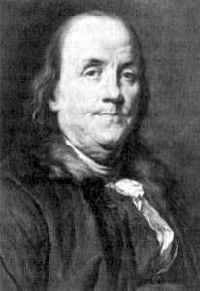 Benjamin Franklin, born January 17, 1706, was the 10th son, and 15th child, of 17
children in the Josiah Franklin family. Josiah was a soap and candlemaker, who lived in Boston,
Massachusetts with his second wife, Abiah Folger. Although Franklin learned to read at an early
age, he only attended grammar school for two years. By the time he was 10 years old, Franklin
was working for his father. However, he did not enjoy the candlemaking profession, and two years
later, Franklin was apprenticed to his brother James, a printer.
For five years, Franklin sought to master the printers' trade. During this time, he also strove
to improve his education. Franklin read numerous classics and perfected his writing style. One
night, Franklin slipped a letter, signed "Silence Dogood," under the door of his brother's
newspaper, the New England Courant. That letter and the next 13 written by Franklin were
published anonymously. The essays were widely read and acclaimed for their satire.
After a quarrel with his brother in 1723, Franklin left Boston for Philadelphia, where he again
worked in the printing industry. He established a friendship with the Pennsylvania governor,
Sir William Keith, and at Keith's suggestion, Franklin decided to go into business for himself.
Keith offered to arrange letters of credit and introduction for Franklin's trip to London to
purchase equipment. Unfortunately, Keith proved unreliable, and Franklin arrived in London with
no means. However, he quickly found employment in two of London's largest printing houses, and a
fter two years, earned enough money to return to America.
Franklin returned to Philadelphia in 1726 and resumed his trade. By 1730, Franklin had his own
business. That same year, he married Deborah Read, a woman he met before his trip to England.
Together they had a son, who died at four years of age; and a daughter, who survived them both.
Franklin's business ventures included the purchase of the Pennsylvania Gazette, which, after his
improvement, was considered one of the best colonial newspapers; Poor Richard's Almanac, written
under the pseudonym, Richard Saunders, and published from 1732 to 1757; and the printing of
Pennsylvania's paper currency. In 1731, Franklin founded what is considered the first public
library. During the next several years, Franklin was instrumental in establishing the first fire
department, a police force, and the Academy of Philadelphia, which became the University of
Pennsylvania. Around 1744, Franklin invented a stove which reduced excessive chimney smoke. The
Franklin stove is still in use today.
In the 1740's, Franklin began experimenting with electricity, which led to the invention of the
lightning rod. By 1748, Franklin had sold his printing business to devote himself to his
scientific experiments. His famous electricity experiment, which included flying a kite during a
lightning storm took place in 1752. In addition to his science projects, Franklin was elected to
the Pennsylvania assembly and held the post for 14 years. In 1753, he was appointed deputy
postmaster general. The following year, Franklin became a Pennsylvania delegate to the
intercolonial congress, which met in Albany. His suggestion to unite the colonies as a defense
against the French and natives was considered premature and rejected.
In 1757, Franklin was sent to England to petition the king for the right to levy taxes. He
remained in England for the next five years, as the representative of the American colonies.
Franklin returned to England in 1764 as an agent of Pennsylvania, to negotiate a new charter.
He was able to secure the repeal of the Stamp Act, but Parliament continued to levy taxes on the
colonies. In 1775, with war seemingly inevitable, Franklin returned to America. Shortly
thereafter, he was made a member of the Second Continental Congress and helped draft the
Declaration of Independence. Thomas Jefferson supposed stated that the only reason Franklin didn'
t write the entire Declaration was because he would include too many jokes.
In December, 1776, Franklin, age 71, traveled to France to successfully negotiate a treaty of
commerce and defensive alliance. He remained in France for nine years, working on trade treaties
. Franklin became a hero to the French, and his company was sought by diplomats and nobility. He
was honored by Louis XVI, and his portrait was placed on everything from chamber pots to snuff
boxes.
Franklin returned to Philadelphia in 1785. Two years later, he became a member of the
Constitutional Convention. Franklin was bedridden during the final year of his life and died on
April 17, 1790. As one of his final public acts, he signed a petition to the U.S. Congress urging
the abolition of slavery, just two months before his death.
Benjamin Franklin, born January 17, 1706, was the 10th son, and 15th child, of 17
children in the Josiah Franklin family. Josiah was a soap and candlemaker, who lived in Boston,
Massachusetts with his second wife, Abiah Folger. Although Franklin learned to read at an early
age, he only attended grammar school for two years. By the time he was 10 years old, Franklin
was working for his father. However, he did not enjoy the candlemaking profession, and two years
later, Franklin was apprenticed to his brother James, a printer.
For five years, Franklin sought to master the printers' trade. During this time, he also strove
to improve his education. Franklin read numerous classics and perfected his writing style. One
night, Franklin slipped a letter, signed "Silence Dogood," under the door of his brother's
newspaper, the New England Courant. That letter and the next 13 written by Franklin were
published anonymously. The essays were widely read and acclaimed for their satire.
After a quarrel with his brother in 1723, Franklin left Boston for Philadelphia, where he again
worked in the printing industry. He established a friendship with the Pennsylvania governor,
Sir William Keith, and at Keith's suggestion, Franklin decided to go into business for himself.
Keith offered to arrange letters of credit and introduction for Franklin's trip to London to
purchase equipment. Unfortunately, Keith proved unreliable, and Franklin arrived in London with
no means. However, he quickly found employment in two of London's largest printing houses, and a
fter two years, earned enough money to return to America.
Franklin returned to Philadelphia in 1726 and resumed his trade. By 1730, Franklin had his own
business. That same year, he married Deborah Read, a woman he met before his trip to England.
Together they had a son, who died at four years of age; and a daughter, who survived them both.
Franklin's business ventures included the purchase of the Pennsylvania Gazette, which, after his
improvement, was considered one of the best colonial newspapers; Poor Richard's Almanac, written
under the pseudonym, Richard Saunders, and published from 1732 to 1757; and the printing of
Pennsylvania's paper currency. In 1731, Franklin founded what is considered the first public
library. During the next several years, Franklin was instrumental in establishing the first fire
department, a police force, and the Academy of Philadelphia, which became the University of
Pennsylvania. Around 1744, Franklin invented a stove which reduced excessive chimney smoke. The
Franklin stove is still in use today.
In the 1740's, Franklin began experimenting with electricity, which led to the invention of the
lightning rod. By 1748, Franklin had sold his printing business to devote himself to his
scientific experiments. His famous electricity experiment, which included flying a kite during a
lightning storm took place in 1752. In addition to his science projects, Franklin was elected to
the Pennsylvania assembly and held the post for 14 years. In 1753, he was appointed deputy
postmaster general. The following year, Franklin became a Pennsylvania delegate to the
intercolonial congress, which met in Albany. His suggestion to unite the colonies as a defense
against the French and natives was considered premature and rejected.
In 1757, Franklin was sent to England to petition the king for the right to levy taxes. He
remained in England for the next five years, as the representative of the American colonies.
Franklin returned to England in 1764 as an agent of Pennsylvania, to negotiate a new charter.
He was able to secure the repeal of the Stamp Act, but Parliament continued to levy taxes on the
colonies. In 1775, with war seemingly inevitable, Franklin returned to America. Shortly
thereafter, he was made a member of the Second Continental Congress and helped draft the
Declaration of Independence. Thomas Jefferson supposed stated that the only reason Franklin didn'
t write the entire Declaration was because he would include too many jokes.
In December, 1776, Franklin, age 71, traveled to France to successfully negotiate a treaty of
commerce and defensive alliance. He remained in France for nine years, working on trade treaties
. Franklin became a hero to the French, and his company was sought by diplomats and nobility. He
was honored by Louis XVI, and his portrait was placed on everything from chamber pots to snuff
boxes.
Franklin returned to Philadelphia in 1785. Two years later, he became a member of the
Constitutional Convention. Franklin was bedridden during the final year of his life and died on
April 17, 1790. As one of his final public acts, he signed a petition to the U.S. Congress urging
the abolition of slavery, just two months before his death.
