 |
|
|
|
|
|
|
|
|
|
|
|
|
|
|
|
|
|
|
|
|
|
|
|
|
|
|
|
|
|
|
|
|
|
|
|
|
|
|
|
|
|
|
|
|
|
|
|
|
|
|
|
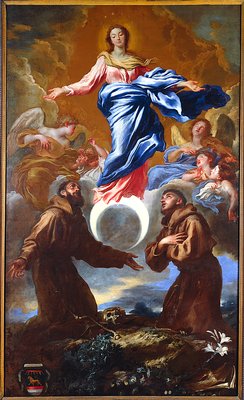
"The Immaculate Conception with Saints Francis of Assisi" |
|
|
|
 |
|
|
Fall 1999: Giovanni Benedetto Castiglione's painting was suffering greatly, structural and cosmetic.
STRUCTURAL DAMAGE: The lining fabric (which is attached by glue) isn't supporting the the painting. The canvas and lining fabric are separating do to deterioration. There are bulges because the canvas is sagging.
COSMETIC DAMAGE: The varnish (synthetic! *gasp*) and old retouchings are pulling away from the painting. The varnish is now grayish with dirt stuck in it. The gloss is bumpy, and the varnish isn't fully saturated with the paint. There are at least two generations of refilled paint, varnishes, concealings, and other disfigurements. Many colors don't match.
|
|
|
|
|
|
|
THE PROCESS |
|
|
|
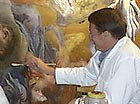
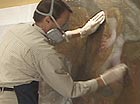
2. They remove the grime from the varnish by aqueous solutions. The discolored synthetic resin varnish is reduced with chemicals that won't harm the paint. Then the previous retouchings and synthetics resins are removed. |
|
|
|
 |
|
|
 |
|
|
|
|
|
1. First, a painting conservator thoroughly examines the painting and writes a report on the condition and what he hopes to achieve by restoring.
|
|
|
|
|
|
|
|
|
|
|
|
|
|
|
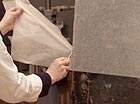
3. Then they replace the deteriorating lining fabric on the reverse of the painting, after first attaching a sheet of tissue to the original paint to protect it. |
|
|
|
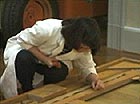
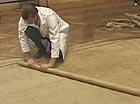
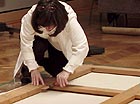
4. The wooden stretcher and lining fabric are removed, and the back of the canvas is prepared for its new lining. Also, they make whatever repairs to the canvas that are needed. |
|
|
|
 |
|
 |
|
|
|
|
|
|
|
|
|
 |
|
|
 |
|
|
|
|
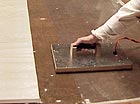
5. A new lining fabric is attached to the canvas with a non-penetrating, stable synthetic resin adhesive, by heated platens.. |
|
|
|
|
|
6. The painting is tightly reattached to the stretcher. No more sagging! |
|
|
|
|
|
|
|
|
|
|
 |
|
 |
|
|
|
|
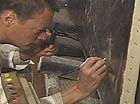
8. Spaces missing paint are filled in and texture to match its surroundings, using a stable, non-yellowing, non-discoloring synthetic medium. |
|
|
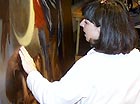
7. The tissue paper is now remove, and a non-yellowing, stable synthetic resin varnish is applied. |
|
|
|
|
|
|
|
|
|
|
|
|
 |
|
|
|
9. To keep out dirt and dust, a protective backing board is attached to the the stretcher, also making it more stable. The painting is then returned to its spot on the wall. |
|
|
|
|
|
 |
|
|
 |
|
|
|
|
|
 |
|
|
|
|
|
|