Gade.Karthik Pavan For THE ANDHRANEWS.INFO
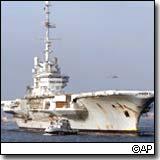
The workers at Gujarat's Alang ship-breaking yard are waiting with bated breath for the Supreme Court verdict on whether the decommissioned French warship Clemenceau would be allowed into Indian waters.
As matters now stand, the case will be taken up again on February 13.
Environment agencies led by Greenpeace have been monitoring the ship's progress ever since it was decommissioned in 1997.
This end-of-life ship is loaded with several hundred tonnes of asbestos, lead, mercury and other toxic chemicals. Asbestos, a known carcinogenic, causes lung impairment and a severe form of lung cancer.
Technopure, a French company which pulled out 70 tonnes of asbestos from the carrier, estimates there could be over 500 tonnes still left on the ship. Ironically, the contract with Technopure was terminated after charges that the company was "damaging the ship".
In reality, the more the ship is cleaned-up, the more ship parts and steel are removed, thereby reducing profit margins. The Clemenceau is expected to yield 22,000 tonnes of steel, thus making it a lucrative purchase for any recycling yard.
Ghost vessel
Even though the Basel Convention prohibits the export of hazardous waste from rich to poor nations, the shipping industry and the International Maritime Organisation (IMO) claim that these regulations don't apply to waste ships like the Clemenceau.
The French government on its part cleared the way for the Clemenceau to set sail. It argued that no civilian court within the country was competent to pass a judgement on a "warship" and that it was purely a "military matter".
Since India has one of the four surviving ship-breaking yards, a large number of the world's ocean-going ships end their sailing lives here.
It's a telling story of how considerations of economic gains have overtaken the larger, more serious issue of toxic pollutants making their way into developing countries like India.
These toxic behemoths ultimately end up in the hands of an ill-trained and vulnerable workforce, thus amplifying the human cost of tragedy.
According to estimates, 25 per cent of the workers at Alang ship-breaking yard are likely to contract cancer due to workplace poisons. This makes the case for strict environmental regulations even stronger.