Mill land case: Is Mumbai in for a makeover?
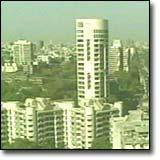
Mumbai’s skyline and landscape may never be the same again. With the Supreme Court paving the way for the development of 600 acres of mill lands, Mumbaikars can now look forward to more glitzy malls, spanking new offices and upscale apartments coming up in the metropolis.
In a significant judgement, the apex court has upheld the sale of mill land by National Textile Corporation (NTC). Setting aside a Bombay High Court order which had ruled the sale of surplus lands of NTC mills contrary to the BIFR scheme and apex court order, the Supreme Court in its final verdict gave the nod to development of property by mill owners.
The HC order had put a serious question mark over mega deals that had taken place between NTC and private developers.
End to bitter battle
The verdict brings to an end a long and bitter battle for Mumbai’s mill land between environmentalists and mill owners.
NTC, Apollo Textile Mills, Mumbai Textile Mills, Elphinstone Mills, Kohinoor Mills Number 3, Jupiter Mills, Bombay Dyeing and several others had challenged the HC verdict last year.
A writ petition filed by an NGO, Bombay Environmental Action Group (BEAG), had alleged that surplus lands were sold in violation of the rules.
BEAG had filed a PIL challenging the legality of the 2001 amendment to the Development Control Regulation (DCR) 58.
The DCR of 1991, governing the use of realty in Mumbai, had laid down the one-third formula.
According to this, the entire mill land had to be distributed as follows: one-third of the land was to be given to the BMC for open spaces; one-third was to be given to MHADA for public housing and the rest was to be used by the owner/developer for commercial development.
However, the March 2001 amendment to DCR 58 ensured that land on which there was construction would not fall under the one-third formula. In October 2005, the Bombay HC had struck down this provision, ruling that open lands would include lands after the demolition of structures.
The Supreme Court has upheld the amended DC Rule 58 as constitutionally valid. This essentially means that the mill owners will not be required to share all their land with Brihanmumbai Municipal Corporation (BMC) and Maharashtra Housing and Development Authority (MHADA) but only the existing vacant spaces.
Big win for builders’ lobby
While the apex court verdict is a shot in the arm for property developers and realtors, the biggest beneficiaries could be the aam janta constrained by sky rocketing real estate prices.
According to real estate consulting firm Knight Frank India, the financial capital of India has only 0.03 acres of open land per 1,000 people, which is one of the lowest in the world.
Experts feel that the latest judgement will be a big boost for foreign developers and investors who have been eyeing the Mumbai real estate market for quite sometime.
The areas of Parel and Lalbaugh in central Mumbai where most of the 58 mills are located are likely to be the 'hot' new destination for business.
However, affordable housing may still be a distant dream for the average resident of the metropolis. With the real estate market too overheated, it is unlikely that realty prices will come down soon.
More than anything else, the verdict has to be seen in the light of citizens' concern for environment, which seems to have not been given its due importance by the apex court.