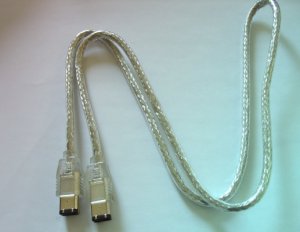
I use an older style HVEC at work for network backbones. It may be costly, but with a bandwidth of 50 gigabits, it was the best choice. The newer versions are capable of much higher speeds, the latest versions can reach 1 terabit.
On occasion I use HVEC's as power cables, the modular design of HVEC's is fantastic as it allows me to just plug in the adaptor I wish to use and the cable does whatever I want it to do. In most cases it is just a matter of plugging in the adaptors and using the cables the same way you would use a normal cable, however HVEC networking doesn't require any adaptors, just equipment that supports Net-HVEC. Naturally, you can use a HVEC as an ehternet cable, but you are limited to the speed of ethernet.
Programmable HVEC's (PHVEC) are fantastic, and my company are making the change to PHVEC. With PHVEC you can mix and match adaptors easily. For example you could have an IDE adaptor on one end and an USB adaptor on the other, and, with a bit of programming, use the IDE Drive (Hard Disk Drive, CD-ROM Drive, etc) as a USB device. The PHVEC have a special HVEC Microchip that perform all of the tranlating and other processing.
HVEC's generally come in a box with an instruction manual and two HVEC Interface Cards for networking computers with HVEC's.
Programmable HVEC's are the same, except that they also have a "Programming Programmable High Velocity Energy Cables" book and a CD with a cross platform PHVEC programming utlility.