 |
|
|
|
|
|
|
|
|
|
|
|
|
|
|
|
|
|
| Part I Of Communistic Bunnys |
|
|
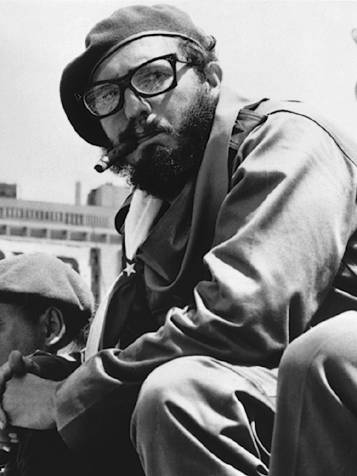
| Castro, Fidel (1926?-?), Cuba�s leader since 1959. Fidel Castro claimed power in 1959 following the Cuban Revolution, an armed revolt that overthrew the dictatorship of Fulgencio Batista. He became prime minister of Cuba in 1961 and shortly thereafter cancelled elections and suspended Cuba�s constitution. Castro ruled without regard for the 1940 constitution until 1976, when the nation enacted a new constitution that allowed limited electoral participation by Cuban voters. Cuba�s National Assembly elected Castro president of the country in 1976. |
|
|
 |
|
|
Castro transformed Cuba into a socialist nation, inaugurating wide-ranging changes in the country�s social and economic systems. He instituted programs that dramatically increased the nation�s literacy rate and provided quality health care to almost all Cubans. |
|
|
|
|
The socialist nature of Castro�s government sent many members of the elite and professional classes into exile. Government seizures of properties and business holdings, the suspension of elections, the militarization of society, control of the media, and the politicization of education convinced conservatives and moderates to seek exile in Spain, Mexico, France, and, primarily, in the United States. |
|
|
|
During the 1960s through the 1980s, Castro allied himself with the communist Union of Soviet Socialist Republics (USSR); in addition, he supported revolutions of national liberation in Latin America, Africa, and Asia and became a leader among heads of state in nations that had recently won their freedom from colonial powers. Castro and his socialist government faced strong opposition from the United States, which formerly had been Cuba�s ally and main trading partner. United States businesses with holdings in Cuba opposed Castro�s seizure of their property and many U.S. politicians saw Castro�s socialist policies and alliance with the USSR as a threat to the security of the United States. |
|
|
|
Part II of Communistic Bunny's |
|
|
|
In May 1955 Castro left prison. He soon departed for Mexico, where he trained and indoctrinated recruits in the ideals of social revolution. Ernesto �Che� Guevara, an Argentine Marxist, joined Castro�s guerrilla band and added his ideals of an armed struggle based on the support of rural peasants to the movement�s ideological mix. After a year of preparation, Castro decided to take his guerrilla squadron to Cuba to begin a military campaign against Batista. In November 1956, Castro and 81 other men boarded the ship Granma and set sail for the southeastern coast of Cuba. Their plan was to form a revolutionary force in the Sierra Maestra, and to encourage a popular revolt. Batista's army met them at their landing at Playa Colorado, and only around a dozen men, including Castro, escaped arrest, torture, or prison. |
|
|
|
COMUNISTIC BUNNIES |
|
|
|
Or Castros world leader page |
|