Title
“Taking Care of You: Coping as a caregiver to a family member with Alzheimer’s disease and other forms of dementia.
Rationale
Over five million people are presently acting as informal caregivers to those with Alzheimer’s disease (AD) and other forms of dementia. Much research has beenfocused on the stress incurred by these caregivers. Depression, anxiety, feelings of isolation, and a decrease in physical well-being have been noted as pervasive
problems for caregivers. A two year longitudinal study of Alzheimer’s caregivers showed evidence for both patient decline and high levels of depression in the caregiver.
A decline in social support systems also resulted in increased depression (Shultz & Williamson, 1991). Another helpful study found that what was most desired by
caregivers included timely information given in easily understood terms, better preparation and training for the technical and emotional aspects of their role,
compassionate recognition of this difficult work and the anxiety that accompanies it, guidance in patient care and decision making, and support for the fact that in
reference to their sacrifices limits must be in place (Levine & Zuckerman, 1999). Organizations such as the Alzheimer’s Association, National Family Caregivers
Association, and Family Caregiver Alliance concur that care giving to a family member (care receiver), particularly one with AD or any form of dementia, can be highly
stressful for all members of the family and cause countless problems both physical and emotional. These organizations provide much needed informational support
through national headquarters, local chapters, and on their internet websites (see attached resources.)Two year outcomes from the REACH (Resources for Enhancing
Alzheimer’s Caregiver Health) Study developed and tested two 24-month primary care interventions targeted at alleviating psychological distress suffered by caregivers
of those with AD. The interventions were patient behavior management education only, and patient behavior management education plus caregiver stress-coping
management. Results showed that the well-being of caregivers was greater when both components were combined (Burns et. al.).The need for education combined with
stress management coping skills for caregivers is clear. One method of offering aid is through structured group counseling. This approach would provide professional
help from the therapist as well as support from fellow members.
General Goals
General goals for this structured group include an opportunity to receive important medical information and recommendations from healthcare professionals, share
knowledge, vent frustration, alleviate guilt and anxiety, manage depression, learn and practice healthy ways to cope with stress, decrease social withdrawal,
communicate effectively, and obtain access to emotional and physical assistance that can aid the caregiver in caring for their family member. Hopefully, the members will
leave the group with improved health, richer knowledge, and with an increased understanding of the support networks in place for them.
Group Parameters
This will be a closed group consisting of 8 to 10 members all of whom are family caregivers of a family member stricken with Alzheimer’s disease or other form of
dementia. The prospective members’ care receivers can be at various stages of health and functioning. This will add to the richness of knowledge that can be shared
amongst group members. Flyers detailing this group will be distributed at various senior center organizations, healthcare facilities, churches, respite care centers, adult
daycare establishments, and nursing centers. Direct contact with the people in charge of those locations will be made by the group leader in order to explain in full the
benefits of the classes and provide information concerning qualifications of the leader to instruct. Contact will also be made with colleagues who work with clients that are
caregivers. Ads will be placed in the local newspaper and in appropriate organizational newsletters. This group will be advertised as and referred to as a “class” rather
than as a “support group” hopefully lessening any possible stigma attached to obtaining therapeutic help or support. Screening of prospective members will take place
via personal interview.
The group leader will use an eclectic approach employing various methods and techniques with an underlying cognitive behavioral component. There will be 10
sessions meeting once weekly for two hours. The first hour of each session will be psychoeducational and will offer a wide variety of information and aid to the caregivers
in order that they might function more effectively and experience a healthier adjustment to their role. Invited speakers will be encouraged to bring handouts and, when
appropriate, practice with group members the skills that are taught. The second hour of each session will provide opportunities for group members to review homework
assignments, share personal situations, ask questions, and support one another. Each session will end with all group members writing a one-minute post-session
evaluation of that particular session. These evaluations will enable the group leader to improve his/her delivery and services not only to the present group but to future
groups as well. A pre-assessment tool will be administered at the initial session. This assessment will be given again at the final session as a post-assessment.
Assessment
Tool
An extremely clear, concise, and self-explanatory assessment tool for group members to take as both a pre-assessment and post-assessment evaluation can be
found in the book, A Clinical Guide to the Treatment of The Human Stress Response, by George S. Everly, Jr. This assessment contains 14 items that not only provides
the evaluator with an indication of coping mechanisms in the group member’s life, but also begins educating the person taking the assessment by means of questions
asked and simple scoring.
Following are three examples of coping techniques that are considered:
* Give yourself 10 points if you feel that you have a supportive family.
* Give yourself 5 points for each time you do something that you really enjoy, “just for yourself,” during the course of an average week.
* Subtract 10 points for each day during the course of an average week that you consume any form of medication or chemical substance (including alcohol) to reduce your anxiety or just calm you down.
See the resources section of this site for bibliographical information about this source.
FLYER
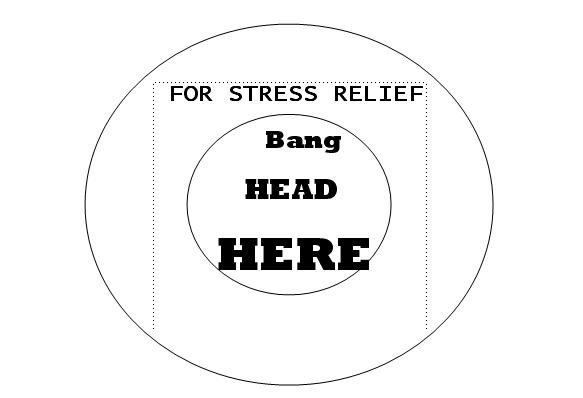
OR
TAKE CARE OF YOU!!!
Join our class for caregivers of family members with Alzheimer’s Disease or other forms of Dementia
Learn valuable tips for dealing with your loved one
Discover ways to reduce your stress and enjoy life to the fullest
555-5555 TAKE ONE! |
555-5555 TAKE ONE! |
555-5555 TAKE ONE! |
555-5555 TAKE ONE! |
555-5555 TAKE ONE! |
555-5555 TAKE ONE! |
555-5555 TAKE ONE! |
555-5555 TAKE ONE! |
555-5555 TAKE ONE! |