
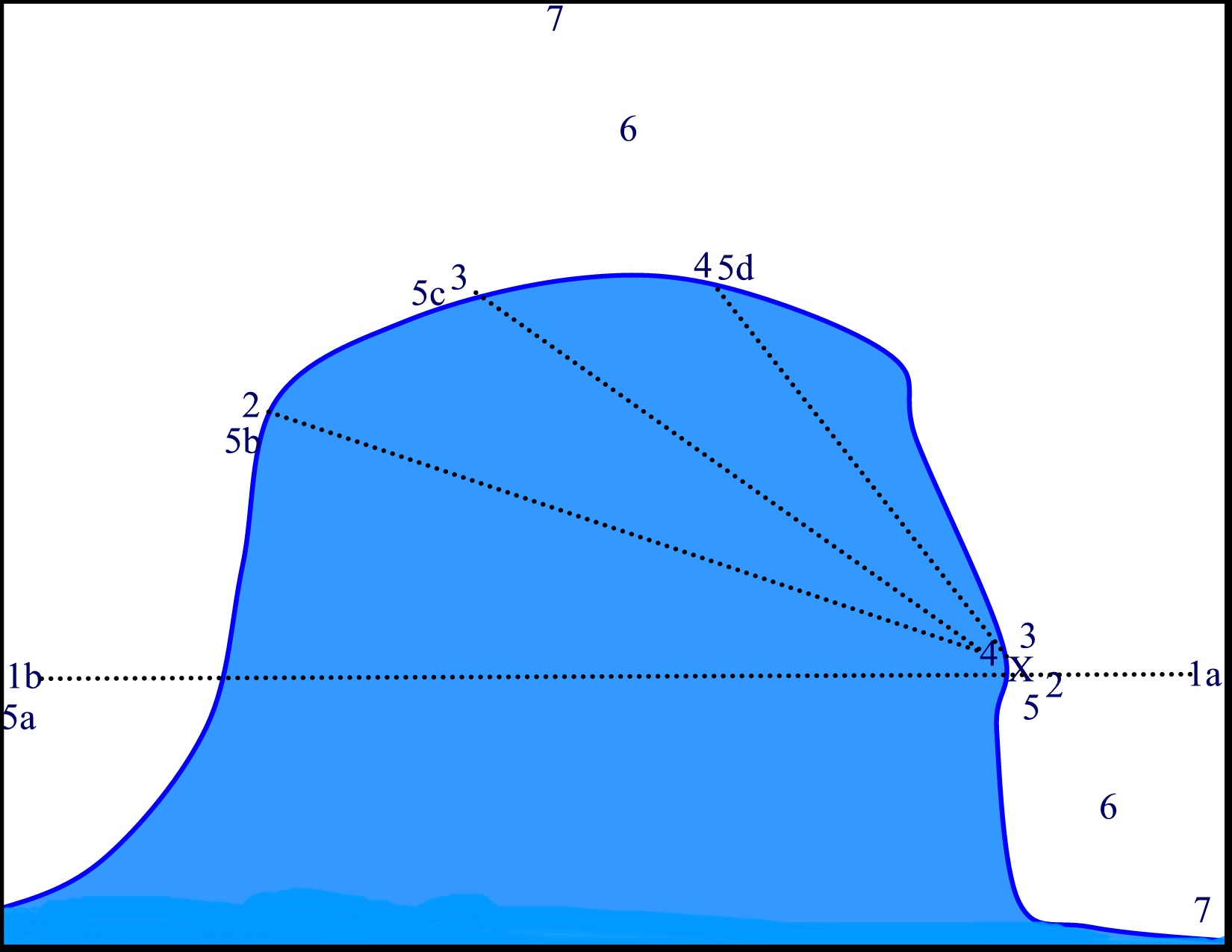
1. Begin by placing dog at a sit stay at position 1a (8 feet from waters edge), go to opposite position 1b (8 feet from waters edge) and call the dog with Here or Come command. If the dog begins to run the shore say, "No" begin walking around water and toward the dog, when you reach the dog take him by the collar and reposition at original sit stay 1a and return to handlers original position 1b . If the dog attempts to run around the bank again ... use the same procedure as before but position the dog closer to the bank, approximately 4 feet from the waters edge. This drill is made simpler by moving the dog closer to the waters edge and moving the handler closer to the waters edge. To make the drill more difficult moving away from the waters edge will intensify the desire to bank run. Move right down to the waters edge if necessary and continue to return the dog to the original area until he comes through the water in a direct route to you the handler. Repeat this position until the dog can do it from 8 feet away from shore. The dog should go directly into the water and exit directly in front of the handler. When this is accomplished successfully, switch sides and run the dog in the same way from opposite banks.
2. After successful completion of #1. the handler should move down and around the bank to a new position which is a bit more difficult for this concept. Remain close to shore and leave dog at original location which is now 2 (same as 1a but at the shoreline). Use the same procedure in description #1. to reposition dog at original location until the desired swim through the water is achieved. Reverse sides and run again until successful from both sides.
3. After successful complete of #2. the handler should move down and around the bank to a position even more difficult for the dog to "not" bank run, 3. Use the same procedure as in #1 and #2 steps above. Simply use voice to "No" the dog and calmly return dog to original location and retry the exercise. Do not become angry, remain calm and fair to the dog. This is a simple way to teach this concept and all that is required from the handler is a bit of walking and patience. A small price to pay for a good lesson.
4. Move to position 4 which will be a difficult slice of the corner of the water. When this is achieved, back up from the waters edge to positions 6 and 7 . Positions 6 and 7 add difficulty in concept by adding distance from the waters edge. Continue to correct with previous procedures, simply verbal "No" and return dog to previous start location.
5. This drill now changes to a "Marking" drill using a gunner to throw marks. Use the same procedures but instead of simply calling the dog to you, you are releasing the dog for a marked retrieve. Join your dog and send from your side now. Be sure to switch sides for marks as you did for recalls. Follow diagram for 5 to 5a-5d , and adding difficulty by moving away from shore on the narrow slice in 6 and 7 . On first mark thrown by gunner have the bird land in the water. If the dog is successful with this have the gunner throw the bird on land and then further away from shore...this makes the drill more challenging, change sides and repeat. Having the gunner on the shoreline side of the mark will also make this more difficult ... this will encourage the dog to run bank. You can switch which side the gunner is throwing from depending on how quickly the dog is learning.
COMMENTS REGARDING THIS DRILL!!!!!!
Poodle Page
