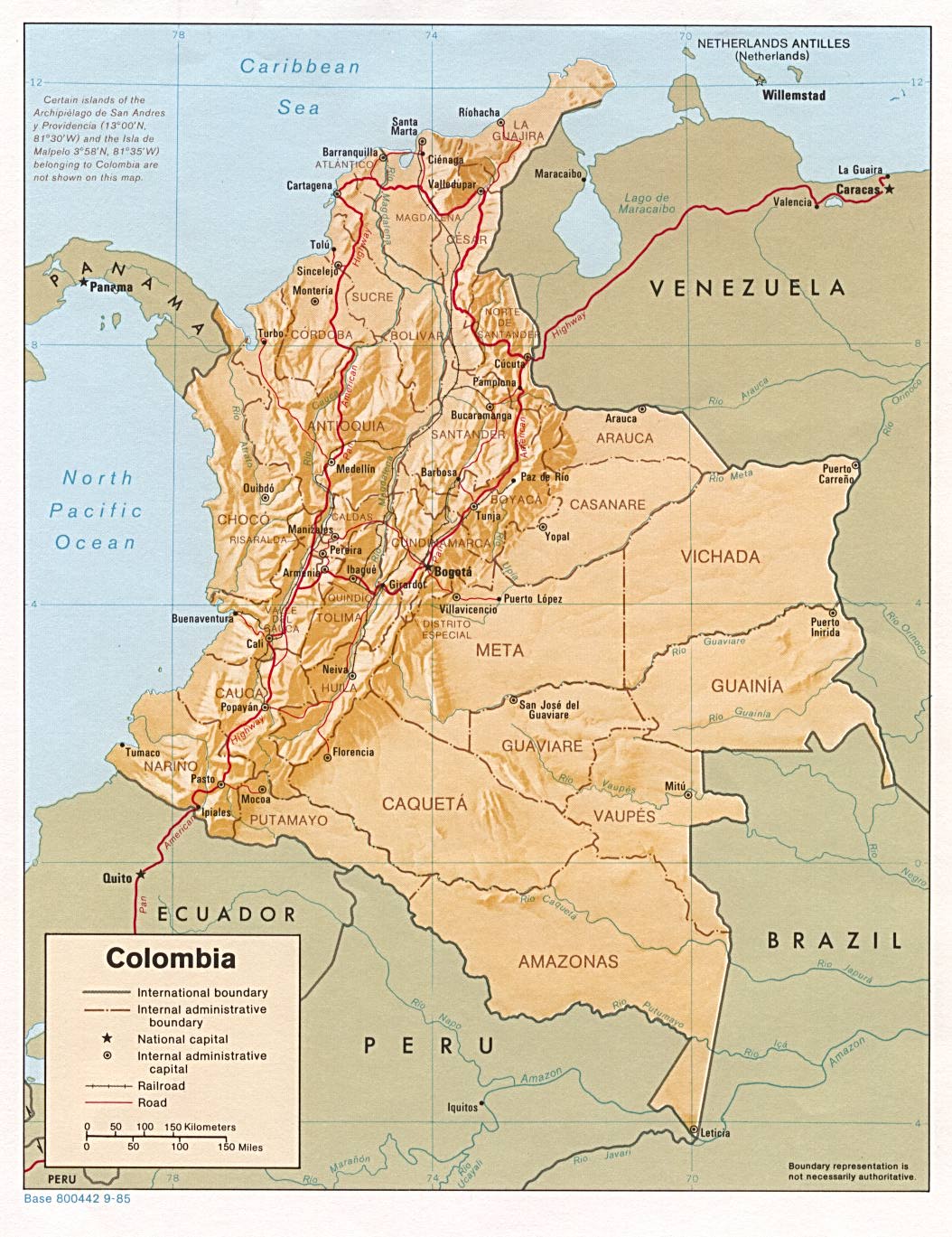
Information about the conflict and the state of human rights in Colombia
Earlier this year I attempted to sustain a list of the massacres that were occuring in Colombia from news reports, but very soon I found out that most of them just don't get reported. As the fighting goes on, the massacres have only become more frequent. They send waves of displaced refugees fleeing to the cities, where they live in extreme poverty and usually still endure the kind of violence that caused them to go there in the first place. The massacres have created an atmosphere of terror in which people are discouraged from speaking the truth and fighting for justice, because doing so endangers their lives. On top of all this, the United States is joining the conflict, ostensibly to fight drugs. In reality the aim of the United States is to crush Colombia's guerrilla movements and secure control over the country's resources (like Oil) for exploitation by US corporations. Essentially taking the same side as the death squads (as has often been the case with US activities in Latin America), the United States will only exacerbate Colombia's human rights crisis.
"U.N. human rights monitors said as many as 170 unarmed people had died in 26 massacres this month [January]." - Yahoo! News (article by Associated Press) - 1/19/01
About 1,226 people were killed last year by death squads
Carlos Casta�o is the leader of the main group of right-wing paramilitary death squads, the AUC (United Self-defense forces of Colombia, or Autodefensas Unidas Colombianas). Casta�o has called himself the "fighting arm of the middle class." Although there are about 22 warrants for his arrest, the government has not attempted to act on them. His group has about 11,200 fighters and is financed through the drug trade, by wealthy sponsors like corporations and drug lords who fear the guerrillas, and some say indirectly by U.S. aid that is obtained through the Colombian military.
Human Rights Watch states that paramilitary groups have been responsible for 78% of all human rights violations. Also, HRW states that by the end of 2000, "there continued to be abundant, detailed, and continuing evidence of direct collaboration between the [Colombian] military and paramilitary groups."
The FARC (Revolutionary Armed Forces of Colombia, or Fuerzas Armadas Revolucionarias de Colombia) is the most prominent revolutionary movement in Colombia. Commanded by Manuel Marulanda, they have about 17,000 guerrilla fighters, and control 40% of the country. Their principal sources of income are from kidnappings, and taxing crops in areas they control (these include coca, which is used to make cocaine). Their main areas of support are in the countryside, and they have not yet gained a foothold in the cities.
The ELN (National Liberation Army, Ej�rcito de Liberaci�n Nacional) is the second guerrilla movement, which has about 5,000 fighters and operates principally in the northern part of the country.
Colombia Popular - An information service from the Colombian insurgent movement
Andr�s Pastrana is the Conservative Party president of Colombia. His government has made efforts to further the peace process, but has failed to exercise sufficient control over the military, which continues to support the death squads that are commiting atrocities in the countryside. Pastrana has also failed to address the social problems in Colombia, which some contend are the real causes of the conflict. His government is accepting 1.3 billion dollars in mostly military aid from the United States, which is part of "Plan Colombia," an initiative, supposedly to eridicate drugs and maintain stability in Colombia.
Following the statement from Robert Zoellick, senior adviser to President Bush, that "we cannot continue to make a false distinction between counter-insurgency and counter-narcotics efforts ... the narco-traffickers and guerrillas compose one dangerous network", it seems the new US administration is setting its stall out early in escalating US aggression in Colombia (20,000 grams under the sea, G2, January 8).
Still, I suppose you've got to respect their odd kind of honesty. While the assertion that narco-traffickers and guerrillas represent one network is a total falsehood, at least the new administration has stopped pretending that the war is only about drugs, as Clinton's more touchy-feely office was prone to do. Typically, the Republicans are making no bones about the fact that this is a counter-insurgency war against the guerrilla forces; a war in which Washington has no legitimate involvement.
Similar to the US's other illegitimate acts of aggression against internal insurgency movements (Vietnam, Nicaragua, El Salvador etc), the guerrillas' main crime is not their acceptance of coca growing among peasants in regions under their "control" but the obstacle they pose to the exploitation of the vast mineral and oil resources by US and European mining and oil companies; unchecked mastery of the local economy that is deemed an unassailable right of multinational corporations.
The Bush administration will help escalate the civil war and the massacres and displacements: 2001 promises to be perhaps the most tragic year yet for the butchered, exiled and terrorised people of Colombia.
Matt Dykes
Colombian Peace Association
From:
Colombia: Another U.S.-Sponsored Killing Field
Colombia Report, December 18, 2000
The Colombia Plan is often justified through reference to the "drug war," but the drug war has little to do with the Colombia Plan, despite U.S. proclamations to the contrary. The $1.3 billion dollar emergency military assistance program directs 80% of the funding to the military end of the program, in other words to violence, 1% to the peace process.
There is a two-fold approach to the plan: one, increased military and paramilitary attacks in the regions under FARC control; and two, rather massive chemical and biological warfare campaigns, for example, fumigation with a Monsanto herbicide glyphosate product, "Roundup," and possibly the introduction of a highly mutating fungus. None of these attacks are directed against areas under narco-trafficker and paramilitary control, though Carlos Casta�o, leader of the paramilitaries, admits that up to 80% of the funds for the paramilitary units, i.e. U.S.-backed death squads, come from drug money.
Notice the probable effect of the two pronged approach: Increased military operations against FARC will force FARC to seek more funding to defend themselves and fight back, which means they will increase kidnappings and increase their reliance on coca money since coca is the crop with the most stable market and highest profit margin. So the amount of coca growing will increase and increased fumigation campaigns, i.e. chemical and biological warfare attacks, will displace more and more people. It will drive them further into the jungles and will increase the recruits for the FARC and ELN guerrillas, and for the paramilitaries, which will raise the level of violence further, which will raise the need for funds to fight "fire with fire" as the Financial Times described it, in a spiraling escalation of violence and drug production.
-Doug Morris, Co-director of the David Anderson Center for Peace and Justice
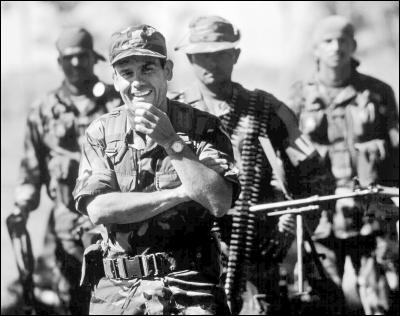
 Carlos Casta�o is the leader of the main group of right-wing paramilitary death squads, the AUC (United Self-defense forces of Colombia, or Autodefensas Unidas Colombianas). Casta�o has called himself the "fighting arm of the middle class." Although there are about 22 warrants for his arrest, the government has not attempted to act on them. His group has about 11,200 fighters and is financed through the drug trade, by wealthy sponsors like corporations and drug lords who fear the guerrillas, and some say indirectly by U.S. aid that is obtained through the Colombian military.
 The FARC (Revolutionary Armed Forces of Colombia, or Fuerzas Armadas Revolucionarias de Colombia) is the most prominent revolutionary movement in Colombia. Commanded by Manuel Marulanda, they have about 17,000 guerrilla fighters, and control 40% of the country. Their principal sources of income are from kidnappings, and taxing crops in areas they control (these include coca, which is used to make cocaine). Their main areas of support are in the countryside, and they have not yet gained a foothold in the cities.
 The ELN (National Liberation Army, Ej�rcito de Liberaci�n Nacional) is the second guerrilla movement, which has about 5,000 fighters and operates principally in the northern part of the country.
 Andr�s Pastrana is the Conservative Party president of Colombia. His government has made efforts to further the peace process, but has failed to exercise sufficient control over the military, which continues to support the death squads that are commiting atrocities in the countryside. Pastrana has also failed to address the social problems in Colombia, which some contend are the real causes of the conflict. His government is accepting 1.3 billion dollars in mostly military aid from the United States, which is part of "Plan Colombia," an initiative, supposedly to eridicate drugs and maintain stability in Colombia.