 |
|
|
|
|
|
|
|
|
|
|
|
|
|
|
|
|
|
|
|
|
|
|
|
|
HABIB'S STORY |
|
|
|
Ankara - Habib and his family fled to Turkey from Iraq a year ago, but their journey is far from over. |
|
|
|
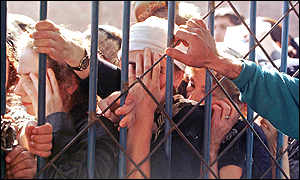
His savings spent paying smugglers to take them across the border, Habib, who asked that his last name not be used, is stranded between his homeland and "fortress Europe" increasingly loath to provide migrants refuge. Each year hundreds of thousands of people from poverty-stricken countries in the Middle East, Africa and Asia trek through Turkey's rugged mountains, reach its Mediterranean shore in rickety boats or arrive at airports to overstay visas. |
|
|
|
The final destination is seldom Turkey, their eyes cast on the nearby, more affluent European Union states. But Turkey's porous frontiers and ill-equiped border guards make it a convenient stop before a final push into Europe. Growing European anxiety over the influx has given nationalist parties with hard-line anti-immigration planks an edge in elections in Italy, Austria and Denmark. Far-right leader Jean-Marie Le Pen stunned France with his second place showing in the first round of presidential elections some time ago. |
|
|
|
 |
|
|
|
victory was a milestone in this "fortress Europe" |
|
|
Jean-Marie Le Pen's |
|
|
|
|
|
|
phenomenon, says Adem Arkadas of the Association for Solidarity with Asylum Seekers and Migrants in capital of Turkey, Ankara. |
|
|
|
ASAM |
|
|
|
|
|
"But the apparent rise of nationalism has not affected immigration so that we see shift here in Turkey". Official figures are still unavailable, but ASAM estimates Turkish police detained around 150.000 illegal migrants in 2001. It is difficult to distinguish between these masses and those facing oppression at home. Turkish law does not recognise non Europeans as refugees; complicated and lengthy procedures to resettle in a third country discourage many others. |
|
|
|
TOO CLOSE TO TURN BACK |
|
|
|
An Iraqi Christian, 45-year-old Habib worked as a cook for U.N. inspectors in the oil-for-food programme. In the months before he left he was detained repeatedly by Iraq's secret police. Habib says he was sodomised and his wife assaulted. Thugs broke his seven-year-old son's arm. When agents showed Habib his death warrant signed by Iraqi President Saddam Hussein, he gathered his wife and four children and 8,000 US $ and fled Baghdad. |
|
|
|
"I cry sometimes because I had a good life, a car, a house. I owned a market", he says. "Now I have nothing, only my hunger." Habib carries X-rays of his son's injuries in a plastic shoping bag, along with his family's papers, references from former bosses and old photographs of himself with the U.N.team - ready to plead his case to anyone who will listen. The United Nations High Commissioner for Refugees (UNHCR) rejected Habib's bid for asylum. As he waits out his appeal, he relies on handouts from a church, collects scraps from butcher to feed his family. His children do not attend school. |
|
|
|
Contine on next page |
|