 |
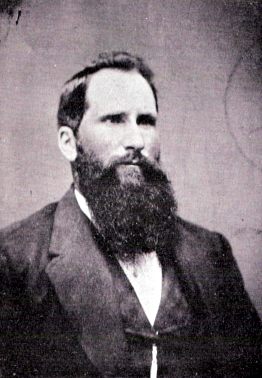
| James Huffman was the older brother of my great-grand father Martin Luther Huffman. Born in Virginia in 1840 he served with the 10th Virginia Infantry of the Confederate Army. He served with Stonewall Jackson and eventually was wounded and taken prisoner in the Wilderness campaign, May 10, 1864. He spent the last year of the war in a POW camp in Elmira, New York. Many years later he wrote his memoirs which were published as "The Ups and Downs Of A Confederate Soldier" |
| James Huffman |
| Another testimonial on Camp Elmira: Elmira Prison Camp Elmira, New York is about 5 miles from the Pennsylvania State line. In 1864 existing barracks on the Chemung River at Elmira was set apart to house as many as 5,000 Confederate soldiers transferred from other Northern prison camps. Colonel Seth Eastman was in charge. More than 10,000 Confederate prisoners were housed there only one month after it opened, and many Confederates had to sleep out in the open without blankets in deplorable conditions. The prisoners called the place Hellmira. This was a very unsanitary site, containing a one acre lagoon of stagnant water from backwash of the river. The pool, called Foster's Pond served as a latrine and garbage dump. The area flooded easily. Many prisoners came down with diseases. So many prisoners were housed at Elmira in such deplorable conditions that it was decided to ship some of them Southward. Colonel Benjamin F. Tracy, who had replaced Eastman, ordered the transferr. 12,00 prisonsers were sent to Washington. The doctors there reported "The physical condition of many of these men, he added, was distressing in the extreme, and they should never have been moved from Elmira." Surgeon C. F. H. Campbell wrote a letter to Colonel Hoffman, the Commissary General of Prisons, stating "These men are debilitated from long sickness to such a degree that it was necessary to carry them in arms of attentants from cars to the ambulances." The spectacle, he concluded, was "disgraceful to all concerned." In spite of all the outcry, "the grossest indifference on the part of the government" was carried out in an unhuman and cruel manner and the officers responsible remainded on their jobs. The first troops to serve as guards at Elmira were Negroes who had been lured North and organized into companies and regiments to guard their former masters. Townspeople set up two platforms outside the prison walls . For fifteen cents, spectators could view the prisoners as they suffered life within the prison pen. William Garner, a private in the Stonewall Brigade, was the first to die at Elmira. He died July 27, 1864. Elmira was in existence for one year. The doctor most singled out for condemnation by both the North and the South, was Surgeon in Chief D. L. Sanger. James Huffman, of the 10th Virginia insisted to his death that he overheard Sanger boast: "I have killed more Rebs than any soldier at the front." Many other prisoners also stated the accusations of sick prisoners being diliberately murdered by the surgeon was true. Elmira Prison Camp was the worst prison camp on either side. The prisons of the Confederacy could not take care of prisoners of war well, due to not having the resources. Its own citizens suffered horribly from the lack of food, medicine, clothing and other necessities of life. The North had plenty so we must conclude the deplorable treatment of Confederate prisoners was intentional. An observer who watched the survivors who stumbled out of Elmira at the close of the war, said "I speak in all reverence when I say that I do not believe such a spectacle was seen before on earth.....On they came, a ghastly tide, with skeleton bones and lustreless eyes, and brains bereft of but one thought, and hearts purged of but one feeling-the thought of freedom, the love of home." |
| Next |