
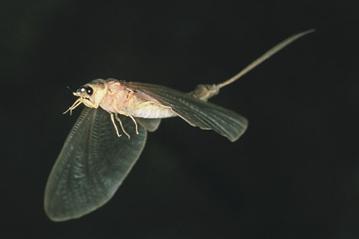
Photograph by J�zsef L. Szentp�teri
Racing to fulfill her life cycle, a female mayfly joins thousands in a compensation flight, a clever strategy to ensure the next generation. If females laid their eggs at the same spot on the river where they emerge and molt, the eggs could float downstream to an unfamiliar and possibly unsafe area. So females fly several miles upriver before releasing their eggs. Eventually, the eggs float down to the females' original natal site and sink to the bottom. After about 45 days the eggs hatch into larvae, which remain buried in the mud for three years until they emerge and molt into adults, the cycle begun anew.
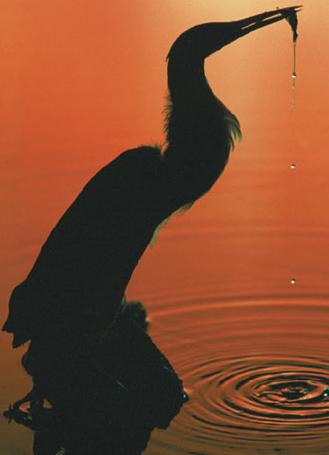
Photograph by J�zsef L. Szentp�teri
A little bittern feasts on mayflies emerging from the Tisza River. Other birds, including swallows, warblers, flycatchers, gulls, thrushes, and kingfishers, also flock to gather the windfall of free protein. The birds�as well as fish, frogs, and other predators�generally prefer live prey. Turtles will gorge on the masses of dead mayflies that float on the surface after the die-off.

