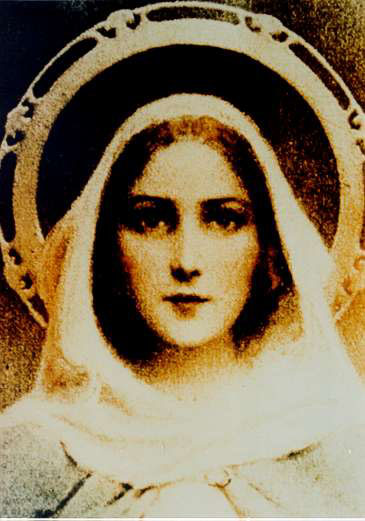
Were they visions of hell fire and damnation? Were they symbolic sexual, male/female, Bride/Bridegroom, Yin/Yang union of opposites kind of visions? Were they so crazy and way out the apostles couldn't accept them?
This leads to a view of MM as pin-up girl to the Gnostics - inner experience of Godhead versus external subjection to dogma. Eventually she is rejected by Peter and the burgeoning male church hierarchy as a dangerous nut who will bring down all they've sacrificed for with her rantings. So they decide to get rid of her by sending her of on a boat to proselytize to the heathens, hoping she won't come back.
When we meet her she has totally lost her wits after weeks at sea, thrown up on a beach with a few loyal supporters - she is in and out of lucidity, but we gradually enter her reality and meet her Master and understand a little of their relationship and spiritual experience, and her Enemy Peter, who reveals his driving conflicts and prejudices, his will to succeed in the name of Christ (means and ends).
Finally we witness her fantasy/memory of her and Jesus spiritual marriage, a hieros gamos in which their erotic energies are transformed into an almost tantric ceremonial mass or rite involving the sacrifice of the Bread and the Wine interwoven with symbols of Chalice and the Cross - a dance/rite at the level of the nature religions in which the God is sacrificed to begin the world again, and the Goddess engenders his rebirth. Christ must die, Mary will see him reborn. It occurs to me that he is born of Mary Innocent (Virgin), but reborn of Mary Experienced (abused, sexually active, passionate, intellectually curious, powerful)
And interestingly, the land where she ends up is familiar with these themes, happy to hear of a God to whom their Goddess can relate, and a new church is started in Southern France that merges this belief into its culture, leading eventually to the Cathars, the wandering priests , possibly both male and female, that stressed the purity of their Christianity in terms of "Love your Neighbour" as highest priciple - a position that eventually led to their being slaughtered as heretics in the 13 C in the Albigensian crusade.
<<