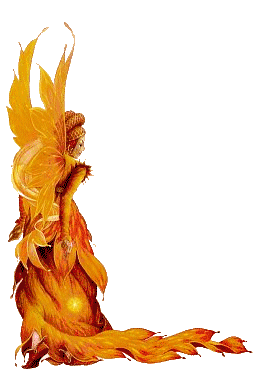
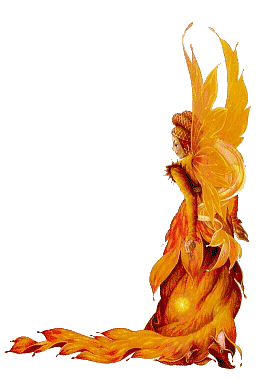
| Male dwarfs are very small, dark-skinned people, much mentioned in Norse mythology, and vary in size from 2 inches to 2 feet in height. They are traditionally of wizened face and hunched back, with large heads and long beards. They live to a ripe old age and their feet are often shaped like goat's hoofs (although they don't have goat's legs). They choose to ride goats as their main source of transportation instead of the usual dragonflies, butterflies and birds favoured by most other small fairies. Their jobs are centered around magick metalworking, using primarily gold, silver, bronze, and copper, and there are many famous stories about their wonderful work, particulary with reference to magickal tools, armor, and protective talismanic and amuletic jewllery. They have the gift of invisibility, can appear and disappear instantaneously, and are difficult to catch. They are also very good at changing shape when in a tight spot. Dwarf males usually wear black, brown, or gray clothes so that they can merge with their surroundings. The females prefer white, gold, and silver clothes, reflecting their joy of light and the sun. The males live mainly in dark and secret places, such as mountains and caves, and always in tribal groups. Each group is ruled over by a King Dwarf and a tribal cheiftain, who controls the vast armies or war dwarfs. The King Dwarf rules over the tribe and the tribal cheiftain is concerned with war, righting wrongs, and guarding the huge underground caves of precios metal and stones that the dwarfs traditionally work with. Strangely enough, the dominant sex of the dwarf race is male, but when you hear about the females they are invariably described in terms that sound as if they belong to a different species. Most dwarf females are taller, around 3 inches to 3 feet, extraordinarily beautiful, fair-haired and fair-skinned, in direct contrast to their darker masculine counterparts. They are also much younger-looking in appearence. The other difference between male and female dwarfs is that |