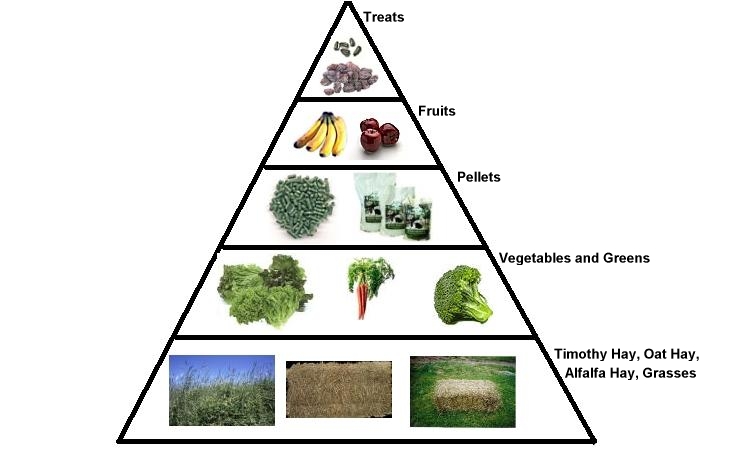

3 to 4 weeks--mother's milk, nibbles of alfalfa and pellets
4 to 7 weeks--mother's milk, access to alfalfa and pellets
7 weeks to 7 months--unlimited pellets, unlimited hay (plus see 12 weeks below)
12 weeks--introduce vegetables (one at a time, quantities under 1/2 oz.)

Decrease pellets to 1/2 cup per 6 lbs. body weight
Increase daily vegetables gradually
Fruit daily ration no more than 1 oz. to 2 oz. per 6 lbs. body weight (because of calories)

1/4 to 1/2 cup pellets per 6 lbs. body weight (depending on metabolism and/or proportionate to veggies)
Minimum 2 cups chopped vegetables per 6 lbs. body weight
Fruit daily ration no more than 2 oz. (2 TBL) per 6 lbs. body

Frail, older rabbits may need unrestricted pellets to keep weight up.
Alfalfa can be given to underweight rabbits, only if calcium levels are normal.
Annual blood workups are highly recommended for geriatric rabbits.