HOME

[Click on image for larger version]

The only tourist attractions in Athens are museums.

|
These wonderful mysterious Greeks
(More soon...)
Have you ever been to Greece only to find yourself puzzled by the seemingly irrational behaviour
of the people? Now is the time to find out what was going on. Here you will find the answers to
all those crazy Greek customs and habits.
The street shrines
 If you travel at the Greek roads you will notice every now and then small rectangular boxes near
the side of the streets that resemble small houses or shrines. What are these? The answer is that
they are indeed something like small shrines dedicated to some saint or Virgin Mary. If you
approach them you will see they usually have small icons and a light candle inside. Most of the
times they are built by people that had a road accident at this point of the street and they have
survived. They are signs of gratitude. Total strangers that happen to pass near by sometimes will
stop and relight the candle even if they do not know the exact reason it was built originally.
Some of these shrines are so well built that look like small chapels.
If you travel at the Greek roads you will notice every now and then small rectangular boxes near
the side of the streets that resemble small houses or shrines. What are these? The answer is that
they are indeed something like small shrines dedicated to some saint or Virgin Mary. If you
approach them you will see they usually have small icons and a light candle inside. Most of the
times they are built by people that had a road accident at this point of the street and they have
survived. They are signs of gratitude. Total strangers that happen to pass near by sometimes will
stop and relight the candle even if they do not know the exact reason it was built originally.
Some of these shrines are so well built that look like small chapels.
The cross sign
 Have you ever spotted Greeks making the sign of the cross for no apparent reason? Well, the
explanations to that vary. The most obvious one has to do with their religious spirit. The Greeks
often will do the sign of the cross while they happen to pass outside of a church, sometimes even
if the church is far away or if they happen to ride a car or a bus. Another explanation could be
the body language of the Greek culture. The Greeks sometimes do the sign of the cross when they
want to show that they find something weird or unacceptable!
Have you ever spotted Greeks making the sign of the cross for no apparent reason? Well, the
explanations to that vary. The most obvious one has to do with their religious spirit. The Greeks
often will do the sign of the cross while they happen to pass outside of a church, sometimes even
if the church is far away or if they happen to ride a car or a bus. Another explanation could be
the body language of the Greek culture. The Greeks sometimes do the sign of the cross when they
want to show that they find something weird or unacceptable!
Money or change?
Have you ever bought and payed for something and waited in vain for the small change? Well, this
is very typical in Greece. Money is viewed in a very peculiar perspective in Greece. People grow
to believe in general that money is worth only as long as it is spend in a way that serves a
purpose, may it be an investment or simple pleasure. That practically means that all small change
is not only detested in Greece but very often it is considered a nuisance! Greek people try to
get rid of them in any way and the worse thing to do to a kiosk owner is to pay him in small
change only! Customers and shop owners alike feel embarassed to ask for the small change and
prices tend to be rounded up.
The evil eye
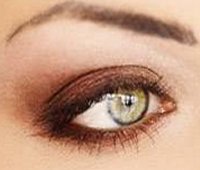 Have you ever noticed Greeks spitting on each other or wearing small blue crystals in the shape
of an eye on them? All these are protection from the evil eye in which not only the Greeks but
all southern Europeans believe. In Italy is the "mal occhio" (bad eye), in Spain is the "mal ojo"
or simply "ojo", in Greece "to mati" (the eye).
Have you ever noticed Greeks spitting on each other or wearing small blue crystals in the shape
of an eye on them? All these are protection from the evil eye in which not only the Greeks but
all southern Europeans believe. In Italy is the "mal occhio" (bad eye), in Spain is the "mal ojo"
or simply "ojo", in Greece "to mati" (the eye).
- So, what is this eye that is so evil?
It is more of a negative power that comes from staring too much at people or objects. The Greeks
call the process of "infesting" someone or something with the evil eye "matiasma", that is
"eyeing". The people most prone to give the evil eye are considered to be those with blue eyes
and that is why charms of blue crystal in the shape of an eye are used as protection. The person
who will give the eye is not necessarily a bad person. A nice person with good intentions who
will praise too much a child or an object could give the evil eye even though malicious people
who stare with envy are considered even more dangerous.
- How do I know if I am attacked by the eye?
The symptoms of being attacked by the eye are not serious in general if you are an adult. Usually
it is a sense of sleepiness, a headache and/or bad temper but young children can even die. When a
child dies unexpectedly people often blame the evil eye.
- How do I protect myself?
One can protect himself by wearing these blue charms already mentioned or by asking the person
under suspicion to give the eye to spit on him or on the object of admiration.
- What do I do once I have been given the eye?
After one has accepted the "matiasma" a more or less mysticistic process called "xematiasma" is
used to drive away the eye. Different people from different areas have different ways to do that
but all methods have one thing in common: they are secret and they pass from generation to
generation through a complex way. The version that I am aware of involves a spell which is
forbidden to men. Only women can use it and they are not allowed to say it out loud. The only way
though to teach this spell to another woman is through a man. The older woman who knows the spell
whispers it to a man, who writes it down on a piece of paper, which is passed in turn to the
younger woman who will learn it by heart and will keep it secret until she will pass it on to
another woman in a similar way. (complicated hah?) The "xematiasma" can be effective even through
the telephone and even if the subject is in another country!
- Do the Greeks really believe in such things?
 The answer is YES! The vast majority of them believe in the evil eye and the "xematiasma" process
even if they are highly educated. As a matter of fact strange things DO happen while a woman does
the "xematiasma". If you ask people they will have to tell you lots of weird stories regarding
the evil eye. One incident I was present was about 20 years ago in Crete. I was only a child and
my mother thought I had the evil eye, so she lead me to a neighbour's house who knew how to do
the "xematiasma". The woman took a white kitchen towel and she measured its width. Then she
placed some salt at one corner and folded it. With the folded corner in hand she made the sign of
the cross in frond of my face a few times while she was whispering in an unintelligible way a
spell. Then she unfolded the towel and when she measured it again it was about 5 centimetres
shorter! This is something I saw with my own eyes! Some others fill a cup with some water and
they drip a little oil. If the subject has the eye the oil will delude instead of forming a layer
on the surface.
The answer is YES! The vast majority of them believe in the evil eye and the "xematiasma" process
even if they are highly educated. As a matter of fact strange things DO happen while a woman does
the "xematiasma". If you ask people they will have to tell you lots of weird stories regarding
the evil eye. One incident I was present was about 20 years ago in Crete. I was only a child and
my mother thought I had the evil eye, so she lead me to a neighbour's house who knew how to do
the "xematiasma". The woman took a white kitchen towel and she measured its width. Then she
placed some salt at one corner and folded it. With the folded corner in hand she made the sign of
the cross in frond of my face a few times while she was whispering in an unintelligible way a
spell. Then she unfolded the towel and when she measured it again it was about 5 centimetres
shorter! This is something I saw with my own eyes! Some others fill a cup with some water and
they drip a little oil. If the subject has the eye the oil will delude instead of forming a layer
on the surface.
The all-knowing Greek
Have you ever asked ten different Greeks about the same thing only to receive ten different
equally certain answers? Well, the rule in Greece is never trust one opinion no matter how
certain the person looks. Always ask someone else as well.
All Greeks have an opinion about everything and they love to talk about everything. An afternoon
with friends chating (or even arguing) about anything is one of the most loved hobbies of the
Greeks. It is a people that loves to rhetor and philosophise and doesn't accept to be second to
none. Once I read in a book something I found amusing: "It is not by accident that Democracy, the
political system where all people are equal and have a saying to everything, was born in Greece,
a country where everyone wants to have a saying about everything!"
The consept of time
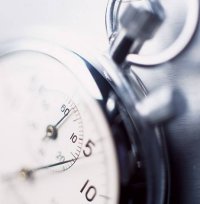 The consept of time in Greece is very relevant. First of all most of the things begin late for
the northern European Standards. Dinner is served between 9 - 10 pm, clubs do not open before 12
at night, children do not go to bed earlier than 11 pm (very often a lot later than that) and all
good movies at the TV do not begin earlier than 11 pm!
Personal meetings are arranged in a flexible spirit where the time is aggreed in general. When
people invite you in a party or a gathering of some sort it is safer to be about half an hour
late since if you are very punctual it is very probable that you will be the first to arrive and
you will find the hosts unready! Theatrical plays and conserts very often begin later than
arranged or mentioned in the program and there are always spectators arriving late. In business
environment this is not so pronounced though as people try to be more efficient there and the
rule is that you should be punctual in proffessional meetings.
The consept of time in Greece is very relevant. First of all most of the things begin late for
the northern European Standards. Dinner is served between 9 - 10 pm, clubs do not open before 12
at night, children do not go to bed earlier than 11 pm (very often a lot later than that) and all
good movies at the TV do not begin earlier than 11 pm!
Personal meetings are arranged in a flexible spirit where the time is aggreed in general. When
people invite you in a party or a gathering of some sort it is safer to be about half an hour
late since if you are very punctual it is very probable that you will be the first to arrive and
you will find the hosts unready! Theatrical plays and conserts very often begin later than
arranged or mentioned in the program and there are always spectators arriving late. In business
environment this is not so pronounced though as people try to be more efficient there and the
rule is that you should be punctual in proffessional meetings.

|