| About the genocide in Darfur |
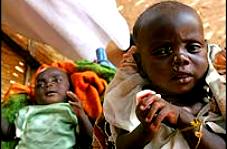
| One of the poorest regions in the world, Darfur lies in western Sudan, which is the largest country in Africa. There are about 6 million people living in Darfur. The crisis that is currently going on in Darfur began almost four years ago. Two rebel groups formed (the Sudanese Liberation Army/Movement and the Justice and Equality Movement) after many years of violence and neglect. The two rebel groups represent agrarian farmers who are largely non-Arab black African Muslims from a number of different tribes. These two rebel groups posed a threat to Sudan�s president, Omar al-Bashir, who responded ruthlessly. Seeking to destroy the rebel groups, he increased arms and supported local militias, which have became known as Janjaweed (also known as �devils on horseback�). Members of the Janjaweed are largely composed of Arab black African Muslims. The Janjaweed have wiped out entire villages, destroyed water and food supplies, murdered, tortured, terrorized, and raped hundreds of thousands of people living in Darfur. All of these attacks have been supported by the government of Sudan, under Bashir�s control. The violence of the genocide has engulfed Darfur and is also affecting neighboring regions, such as Chad and the Central African Republic. This violence has claimed more than 450,000 lives. A total of 2.3 million Darfuris have fled their homes and are now residing in internally displaced persons camps. There are at least 200,000 more people living in refugee camps. The refugees and internally displaced persons need the United Nations to support them with food, water, shelter, and medical care. At least another one million Darfuris still live in their villages, with the constant threat of bombing, raids, murder, rape and torture. Their safety is dependent on the presence of the under-funded African Union (AU) peacekeeping force. They number in just 7,400 troops and personnel. In recent weeks, there has been an increase in attacks, resulting in tens of thousands of new people arriving to the refugee camps. The conditions at the camps are horrible; it is remarkable that the inhabitants have survived for this long. The efforts of the UN and non-governmental humanitarian relief agencies have made it possible for them to survive. UN officials estimated that the death rate could rise to as many as 100,000 people per month without humanitarian aid. Despite the fact that the United States congress has labeled this genocide, the violence in the area is still going strong. Within President Bush�s proposed budget for Fiscal Year 2008, there is $186 million shortfall for Darfur peacekeeping. If this gap is not addressed, the impact to international peacekeeping and aid efforts could negatively affect those still living in fear in Darfur. |
 |