| Affordable Homes for All Queenslanders |
 |
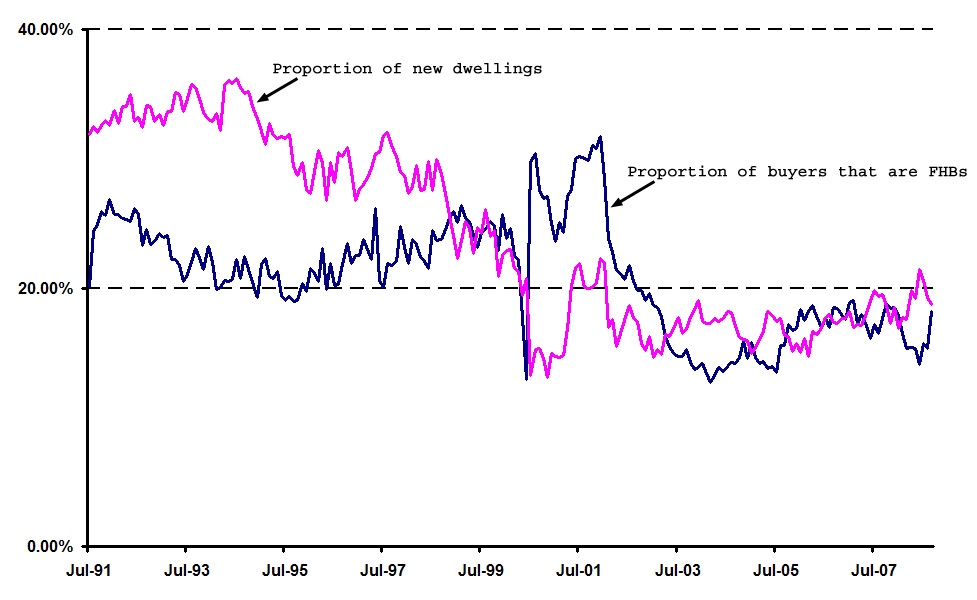
| Graph 1: Impact of the Housing Bubble on Queensland First Home Buyers Data Source: Australian Bureau of Statistics |
 |
 |
|
| Graph 1 tells much of the story. As the housing bubble spread to Queensland (especially Brisbane) in early 2001, first home buyers (FHBs) were faced with a difficult choice - buy then regardless of whether they were ready - or risk not being able to buy for a long, long time. A lot of FHBs did buy in 2001. However, after 2001 the proportion of FHBs declined through to 2005 as the average FHB loan skyrocketed. Graph 2 (below) shows that the proportion of FHBs peaked at 32% in December 2001. At September 2002 the proportion of FHBs dropped below 20% and it has not since been above that level (even though it was rarely below the 20% level in the previous 11 years!) |
   |
 |
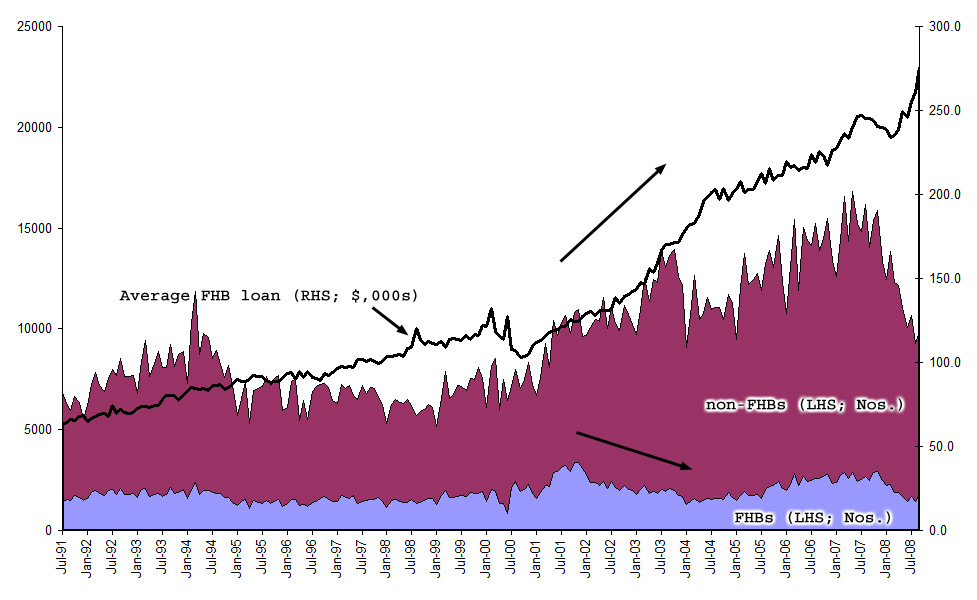
| Graph 2: Activity of First Home Buyers and New Dwelling Construction in Queensland Data Source: Australian Bureau of Statistics |
 |
 |
 |
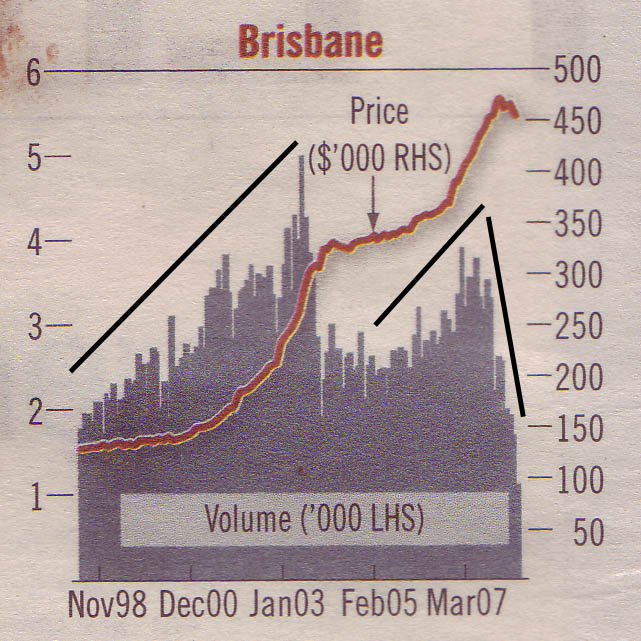
| It is also clear in Graph 2 that the start of the housing bubble coincided with a drop off in the construction of new dwellings. The graph to the right was taken from the Weekend Australian Financial Review at September 6-7, 2008. And it clearly shows the dynamics of the house price bubble in Brisbane - the bubble inflated in 2 clear phases, both accompanied by very strong upticks in sales volume. These three graphs suggest a number of things: 1) The Brisbane house price bubble inflated in two periods of intense speculation; 2) Young Queenslanders were some of the most severely affected by the bubble - priced out from buying their first home and then squeezed by skyrocketing rents; and 3) The boom was limited to a price bubble as investors did not add to the supply of rental accommodation - they simply bid up the price of existing housing. |
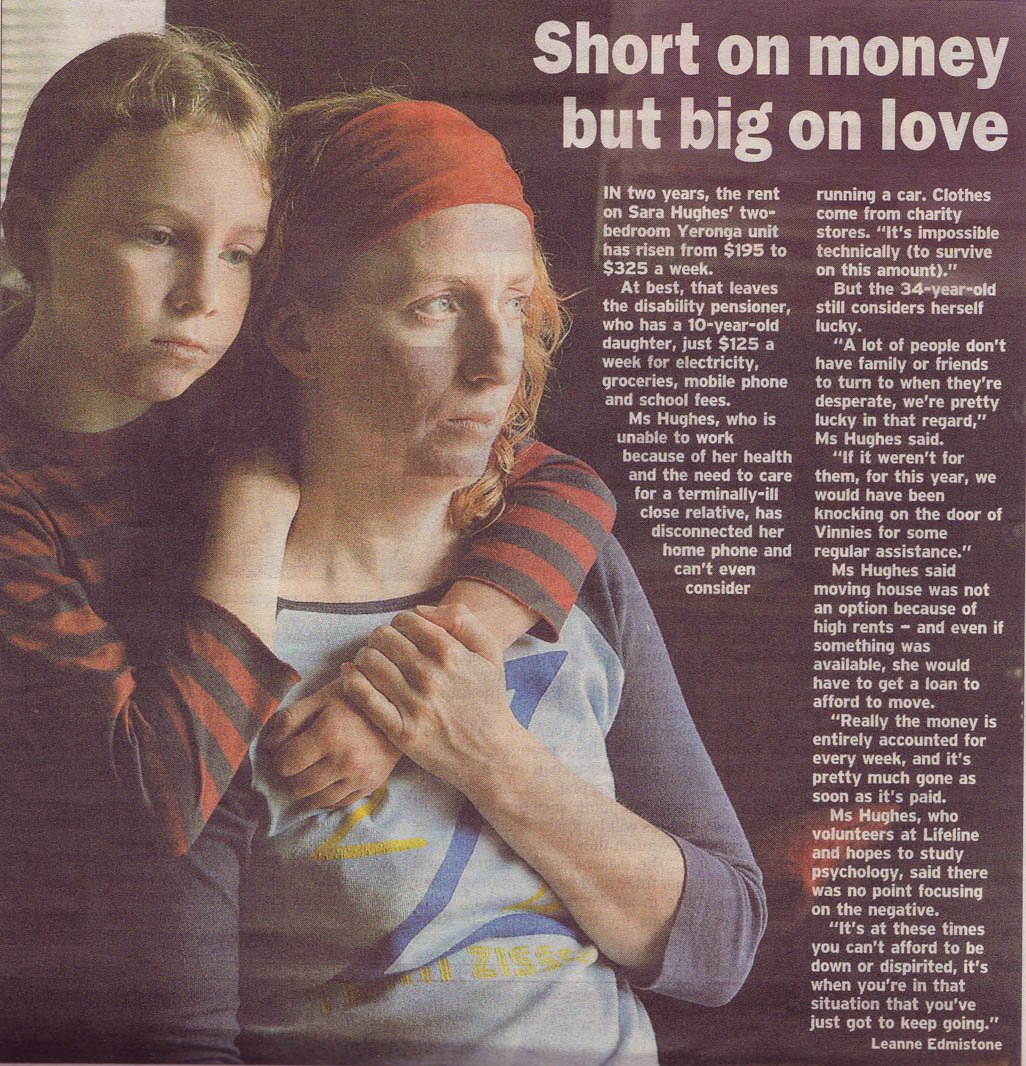
| The Queenslanders that have been most severely affected are the lower income earners. They have no other choice but to rent, and - through no fault of theirs - those rents have skyrocketed in recent years as investors/speculators have driven prices to unsustainable and ridiculous levels. One of the saddest stories that I have read is about Sarah Hughes, the story to the left, who is a disability pensioner who has had her rent raised by 67% in 2 years!! This house price bubble has caused a lot of pain to everyday Queenslanders - it is a huge part of the "fair go" going out the window, and no politician genuinely seeking fairness in society could have sat back idly as the bubble inflated. But our Queensland Labor Government did! |
| What could the Queensland Government have done? Instead of squandering the cash bonanza from the housing bubble - note the share of tax revenue from property rose from 35.7% in 01/02 to a forecasted 43% in 07/08 (Mark Ludlow, AFR in April 2008) - the Government should have put those funds back into housing. The Queensland budget should have automatic stablisers whereby more is spent on building Government housing when revenues from housing increase - acting as a dampener on any price bubble - and then decreasing spending on Government housing construction as revenues fall. Now we are in the situation where the boom years have rapidly evaporated, we have a massive hole developing in our budget (mostly due to the popping of the housing bubble, not reduced GST payments), and what do we have to show from the boom years? Certainly not enough affordable housing as Sarah Hughes' story attests! As Governments respond to the growing financial crisis, and look to resuscitate the economy through spending on infrastructure, I will be looking very closely to see that funding is committed to the construction of more affordable housing. Moreover, as the State election nears, I will be looking for either of the major parties to commit to significant Government housing construction - what's more, I'm not somebody who believes in matching - the first party with the courage - no decency - to do so will have my support! |
| The Real Battlers! |