On the Difference Between Luck and Fortune
By Carlton Johnson (Faculty Advisor)
So you want to make it into a top university, you say? "Good Luck?" or should we prefer "Good Fortune"? What IS the difference between luck and fortune, anyway? The former is empty chance, almost irrespective of any precedent. Luck resembles a 'numbers game' of sorts: statistics played out. Fortune, on the other hand, is on the higher end of the spectrum (from luck). Here is where the goodness we have invested and the suffering we have endured begins to yield returns (sometimes in the form of "good" luck, some times in the form of some deep understanding, or even in the form of profound revelations).
Not until the arrival of our family in Korea had we ever encountered the peculiar manner of warmth and affection Koreans refer to as "Chong." Within a year or two of living here, the virtue of "Filial Piety" (or, in Korean, 'Hyo') came to my attention as being perhaps the root of this mysterious, affectionate "chong." In The Analects of Confucius I encountered this gem:
"It is seldom that a man of filial piety and brotherly love would be inclined to offend those above.
There has not been a man inclined to cause disorder without the inclination to offend those above.
"The Gentleman nourishes the roots. With the roots established, the ways grows.
Are filial piety and brotherly love not the roots of benevolence?"
In order to reach the top colleges, certainly SAT's, AP exams, and high student-rankings are valuable assets, all. But the Ivy Leagues have plenty of applicants with the highest scores. I would argue that of greater importance is our character, particularly our leadership and our ability to contribute positively and constructively to our academic community. But even greater still, we need a certain fortune; that fortune which comes as a result of our sincerity and our ability to respect and appreciate the foundations upon which we stand: Fortune is, in part then, a function of Gratitude and of the will to nourish the roots of benevolence.
Respecting the Channels of Fortune
For all of what some saw as his ideosyncracies, the founder and 1st Headmaster at Minjok Academy did mobilize a great fortune and set that fortune at the feet of future generations (of students and faculty) to come. Students hoping to use that school as a stepping stone to higher dreams really cannot avail themselves of the full force of that fortune without first accepting and respecting the adequacy of the channel of that fortune.
Likewise, we too at CheongShim International Academy should pause and reflect on the roots and the channel of the fortune that has made CSIA to blossom and thrive here, in Song-San Ri, Sorak-Myun. Some might be tempted to use our school, too--as a mere stepping-stone to one�s own greater ambitions--without appreciating the source and fount of the blessings and grace that is made manifest, here.
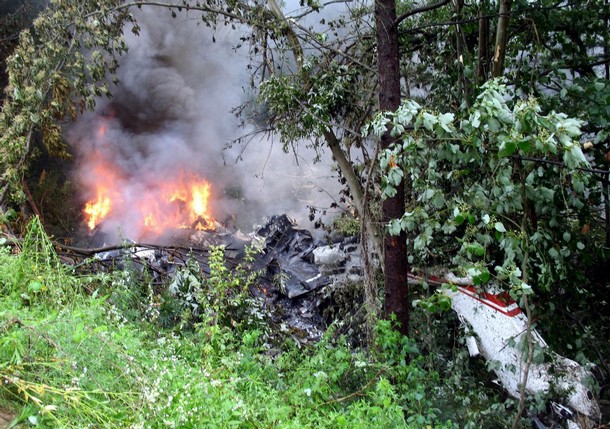
Recently, the inspiration and Founding Parents of CheongShim International School, the Reverend and Mrs. Sun Myung Moon, miraculously survived a horrific helicopter crash in the hills just above and behind the school, itself.
|
Many students and faculty members may hardly be aware at all of the parental role Reverend and Mrs. Moon have played in nourishing the roots of the benevolence that has given rise to the whole CheongShim family, here in this idyllic environment--so unassuming and unimposing has been their influence at CSIA.
Then too, other members of our community may have been anxiously guarding themselves against the event that someday some unwanted influence from the founders might come crashing through all manner of defenses employed so far, employed to keep out all possibly �disagreeable� interference, however real or imaginary such interference might ever be.
To those targeting the highest Sky-Blue dreams, I challenge you: Where we disagree--or imagine that we should or would disagree--let us chose to differ with a modicum of respect. To otherwise tear down the conduit of so abiding a fortune, would be tantamount to effectively disrupting the flow of that fortune, itself. Recognizing and supporting that which is good in the roots, at the center--even at some cost to ourselves and to our concepts--is the surest way to someday become worthy central figures, ourselves.
Gratitude and Grace
My hope is that our students, all, might avail themselves of the fullness of the grace and fortune that undergirds this school. For those of strong faith, or strong secular ideas, those who are prone to spurn the fortune, here: in spite of your objections, may you find the benefit of determining in your hearts to nourish the roots of filial piety and brotherly love, in all of your communications, here. Therein, the way of fortune will surely grow and carry you with it, to the highest heights of your own aspirations.
"Be Aware of Grace and Requite It",
--- Soe Tae-San, 1891-1946 (Founder of "Won" Buddhism)
Gratitude requires one to realize one's indebtedness to what Soe Tae-San calls the "Four Graces," namely, 1) Heaven and Earth, 2) Parents, ) Brethren, and 4) Law; one is also required to requite them by modeling oneself on the way of indebtedness to them.
Let us pursue then the way of fortune, we need not rely on mere luck: Let us desire (and live for) the welfare of others. What are we, if not awakening Bodhisattvas, ourselves? Shantideva, an 8th-century Buddhist scholar from northern India, wrote The Bodhicaryavatara (or, "In Praise of the Awakening Mind"). In Chapter One, one excerpt speaks so well of the way to build fortune and exchange luck for fortune, instead.
[18] From the moment one takes on that Mind (of Original Heart and Zeal) to release the limitless realm of beings, with a resolve that cannot be turned back;
[19] From that moment on, though he may doze off or be distracted many times, uninterrupted streams of merit like the bursting sky continuously pour forth.
[21] Immeasurable merit took hold of the well-intentioned person who thought 'Let me dispel the headaches of beings'.
[22] What then of the person who longs to remove the unequalled agony of every single being and make their virtue infinite?
[23] Whose mother of father ever has such a desire for their welfare as this, what deities or sages or Brahmas have it?
[24] Those beings did not conceive this desire before, even for their own sake, even in a dream. How could they have it for the sake of others?
[25] Such a being, unprecedented, an excellent jewel, in whom there is born a concern for the welfare of others such as others have not even for themselves, how is he born?
[26] That jewel, the Mind [the Awakening, Original Mind], which is the seed of pure happiness in the world and the remedy for the suffering of the world, how at all can its merit be measured?
[27] Worship of the Buddha is surpassed merely by the desire for the welfare of others; how much more so by the persistent effort for the complete happiness of every being? ...
[32] People honor someone who gives alms to a few people, saying, "He does good', because he contemptuously supports their life for half a day with a moment's gift of more food.
[32] What then of the one who offers to a limitless number of beings, throughout limitless time, the fulfillment of all desires, unending until the end of the sky and those beings?
That �one� is you, that �one� me: Such is our great fortune and tomorrow's bright fatherland.
 Links to other sites on the Web
 The Crash in August �08
The Bodhicaryavatara
The Analects of Confucius
Sky Blue Dreams
HT News (and other Homeostatic Truths)