| D.W. Griffith United Artist/Legendary diretor |
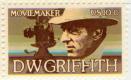
| Lillian Gish called him "the father of film" and Charlie Chaplin called him "the teacher of us all." While I don't know if they were liquored up at the time of those statements or if they really thought that, I do know this guy was a very prominent powerhouse in the early film industry. I have to admit, I really didn't know much about this guy when a friend suggested I do a page on him. As I began learning more and more, I learned he was a great force in Hollywood. He invented the flashback, the iris shot, the mask, and crosscutting. Here's the story ... He was born David Wark Griffith in La Grange, Kentucky on January 22, 1875. He had very little formal education, but knew what he wanted early on and took life by the reigns. He loved to read and write. He was a very creative mind. At the age of 18, he became an actor of plays in his native Kentucky, even though his passion was in writing. In 1907, he headed to Hollywood to try and sell his first script to filmmaker Edwin S. Porter. Edwin rejected it but offered Griffith a part in a film he was making. Griffith took the part and history was just being made .... Griffith played a number of roles as an actor before agreeing to move behind the camera as a director at the Biograph Company. During his five years at Biograph, Griffith took the raw elements of moviemaking as they had evolved up to that time -- lighting, continuity, editing, acting -- and wrought a medium of extraordinary power and nuance. Determined to get beyond the short format films, he left Biograph and began working on what would be his most famous production. Made in 1915, Birth of a Nation was the first masterpiece of cinema, bringing to film the status accorded to the visual and performing arts. A story of the Civil War, captured the violence, the spectacle, and the excitement of the war. Using extreme and dramatic camera angles and complexly interweaved edits, the film brought an event to life unlike any film had done before. The film, however beautiful, was a sad testament to the deep prejudice of the times and black audiences were outraged by the racist distortion of history. Viewed as a contributor to the rise of the Ku Klux Klan, the film caused riots in a number of black communities. Griffith�s new production company, formed that same year, United Artists, brought Griffith together with the three greatest performers of the day; Douglas Fairbanks, Charlie Chaplin, and Mary Pickford. Griffith would spend the next ten years making films with United Artists and Paramount, but would never again reach the fame of The Birth of a Nation. As the 1920s roared on, films took on a newer tone - for the newer audiences. Griffith�s films seemed more and more old-fashioned, and no longer appealed to the younger audiences. Though he had almost single-handedly invented the art of modern cinema, Griffith spent the last fifteen years of his life unable to find work. He lived the last years of his life at the famed Hotel Knickerbocker in Los Angeles. (Here's another shot of it) He spent most of his time in the hotel bar and would tell his story to anyone who would listen. On July 23, 1948, while walking through the lobby of the hotel, he had a stroke and died. He was 73 years old.. His dismissal by Hollywood was as great a tragedy as his death and it would not be until years later that he would be regarded as the genius that he undoubtedly was. R.I.P. Mr. Griffith!! Your contributions are still alive today! Visit his grave and leave flowers here! TRIVIA: Wanna see D.W.'s autograph??? The stamp at the top of the page, was created by the U.S. Postal service in 1975 to honor D.W. After Birth of a Nation was released and criticized as being racist, Griffith was very hurt. He decided to make Intolerance as a follow up, to show how damaging and dangerous people's intolerance can be. |
 |
 |
 |
 |
 |
 |
 |