
SMALL ARMS
|
|
|
|
|
|
|
None |
||||
|
None |
(SVT-40) |
(Gewehr 43) |
None |
|
|
Browning .30 |
Mg-34 |
|||
|
|
|
|



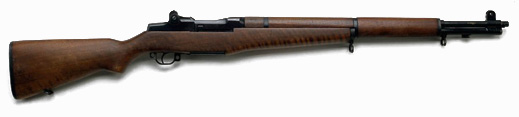
The M1 Garand was the world's first semi-automatic rifle. This rifle
was designed by John Cantius Garand. It was first adopted in 1936 and has
a great advantage over bolt-action rifles of other countries at the time.
The M1 replaced the Springfield 1903 as a standard issue rifle. The Garand
holds eight bullets at a time which must all be fired before reloading a
new clip. It makes a distinctive sound when the spent clip is
automatically ejected. This can be fatal in certain operations.
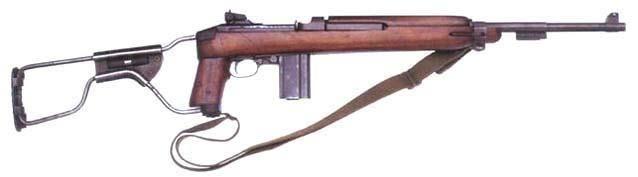
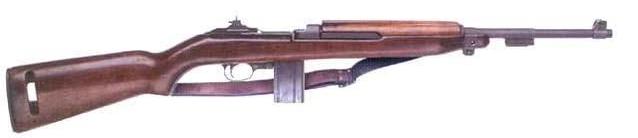
This could be reloaded in mid-clip. A clip held 15 rounds, but this rifle was not very powerful compared to larger rifles. This weapon was commonly used by paratroopers, because it was lighter and took less space with the stock folded.
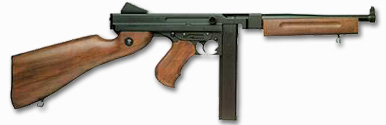
This sub-machinegun was designed by John T. Thompson in 1921, who
helped develop the Springfield 1903 and the Colt .45 pistol. He intended
to make a "trench-broom" for close quarters and recognized that
the Colt 1911's .45 slug would be devastating if used by an automatic
weapon. It also has a good rate of fire, which is important in a
sub-machinegun. However, this weapon has rather high recoil, costs over
$100 to make and weighs over 20 lbs.
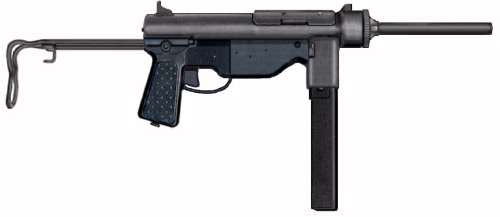
The M3 Greasegun was much cheaper to produce. The M1a1 Thompson cost
well over 100 dollars each, while the Greasegun cost around 20 dollars to
make. The rate of fire was not as high but this also meant that there
would be less recoil than the Thompson. The Greasegun was also much
lighter; the Thompson weighed over 20 pounds.
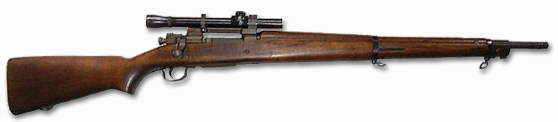
The Springfield '03 was issued as a standard issue rifle to the United
States during World War I. It was later replaced as a standard issue rifle
by the M1 Garand, because it was semi-automatic, not bolt action like the
'03. During the Second World War, the Springfield was used as a
sniper-rifle. An enemy would often be hit by a bullet from the Springfield
before even hearing the shot. This made it the "weapon of the silent
death."
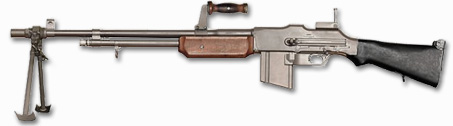
The initial version of this machinegun was used in World War I. This
weapon was adopted in 1918 and designed by John Moses Browning. It weighed
a little over 8kg (21.4 lbs) and was very reliable in trench conditions.
It used a 20 round magazine which could be changed in 2-4 seconds. This
made it faster to reload than the French Chauchat Gun and lighter than the
1911 Lewis Gun.
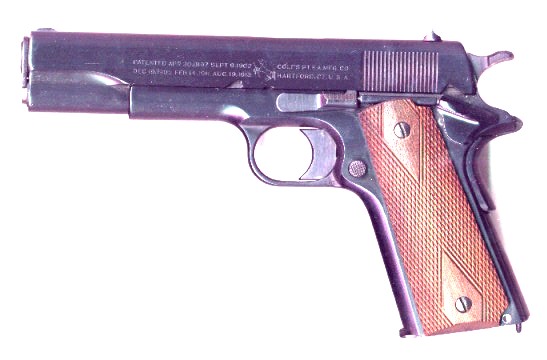
The Colt 1911 was also developed by John Moses Browning and probably
some others, (John T. Thompson). The Colt .45 uses .45 caliber ammo,
instead of the .38 used by revolvers. The .45 underwent a 6000 round test.
After every 100 rounds fired, the pistol would cool for 5 minutes. It was
cleaned and oiled after every 1000. After 6000 rounds, the pistol was
rusted in acid and tested with deformed magazines. Browning's Colt
performed exceptionally well.
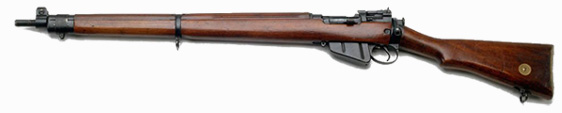
The British Common-wealth forces used the Lee Enfield Mk.IV as their
standard issue rifle during WW2. (The Lee Enfield Mk.I was introduced in
1906.) The locking mechanism on this rifle made it the fastest bolt-action
in the world.
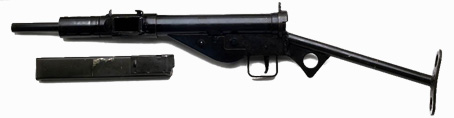
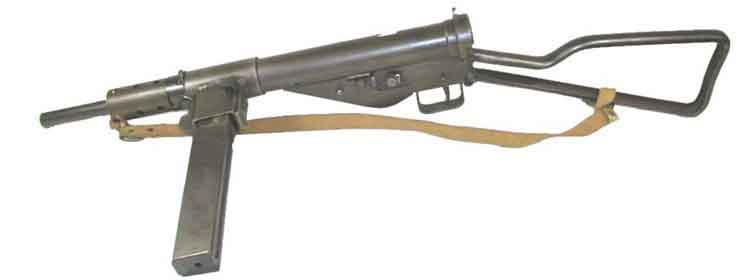
The British entered the war without an adequate sub-machine gun of
their own. A variant of the German MP-28, the Lanchester was rushed into
service, but could not be easily mass produced. The STEN was inspired by
the German MP-40. It was named by the initials of its designers (Major RV Sheffield
and Mister HJ Turpin) and the first two letters of Enfield.
This was the location of the arms factory and arsenal. The Sten was easily
made and produced in large quantities. The magazine protrudes from the
side; this makes it ideal for the prone position.
None
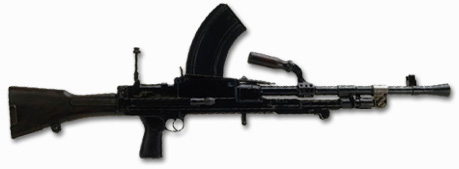
The Bren could be field stripped and reassembled in very little time.
The Bren earned a reputation for its accuracy and reliability.
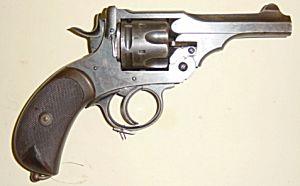
All Webley top break revolvers had a distinctive barrel shape. They were loaded by 2 crescent shaped clips and held 6 rounds total. This .38 calibre pistol, adopted in 1942 is not to be confused with the .455 calibre adopted in 1899.
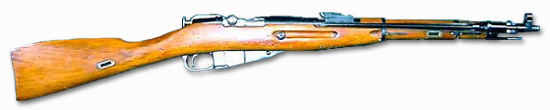
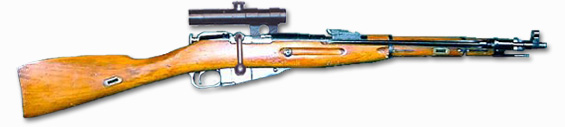
The Mosin-Nagant was adopted in 1890's. Later models were produced in
1938 and 1944. This rifle, known as the "Vintovka Mosina" (Mosin
Rifle), was developed under government commission in the late 1880's. The
final two designs were by Russian army captain Mosin, and Belgian designer
Nagant. The final design included features of both designs. Leon Nagant
was very well paid, and Captain Mosin was promoted.

This gas operated, magazine fed rifle uses a short piston stroke gas
action, located above the barrel. It is semi-automatic, a major
improvement from the bolt-action mosin-nagant. However, Most troops could
not reload the SVT properly. This weapon was prized for its accuracy and
firepower.
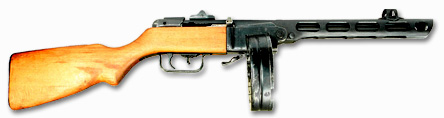
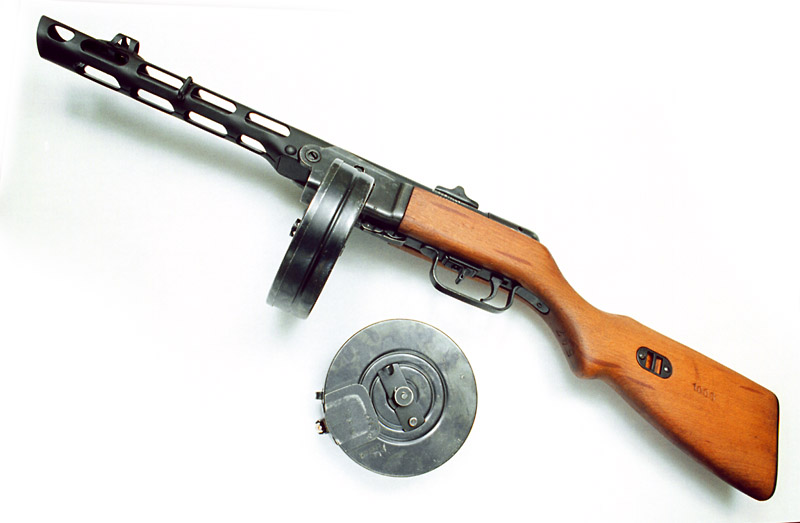
Pistolet-Pulemyot Shpagina (Submachine gun of the Shpagin Type Model
1941). Earlier in WW2, Russia had a bitter winter war with Finland. The
enemy had submachine guns, but the Russians only had the bolt-action
Mosin-Nagant, which was, like most rifles, useless in close quarters.
Russia was in dire need for a submachine-gun. The PPSh-41 was designed by
George Shpagin. The PPSh is surprisingly accurate, reliable and has a
great rate of fire. The drum holds 71 7.62 x 25mm bullets. However, the
drum was uncomfortable to carry, so magazines were later developed for the
PPSh-41.
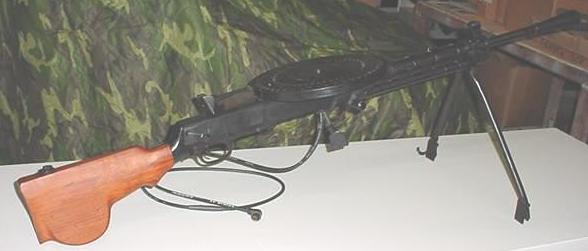
The Ruchnoy Pulemyot Degtyaryova pahkhotnyi (Degtyarev hand-held infantry machine gun) was very simple and easy to maintain. This machine gun, introduced in 1928, provided the Red Army with reliable and effective fire.
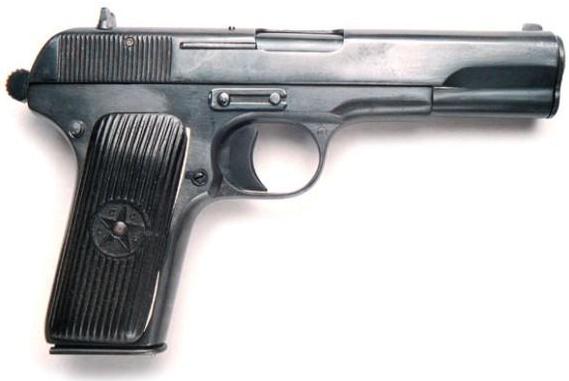
The Tokarev TT-30 and 33 pistols were based off the Browning pistols. They used the basic "tilting barrel" made by John Moses Browning earlier. This pistol has some unique characteristics. The Tokarev does not have a safety. The magazines also did not have lips. This made it easier to produce and removed the possibility of jamming. This pistol remained in production until 1953. The Chinese are the largest remaining user of the T-33.
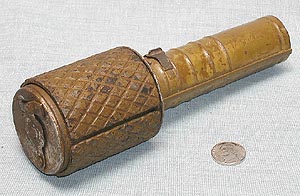

Most German infantry were supplied with either one of two weapons. The
Karabiner98k is a bolt action rifle. It performed very well and was very
accurate. However, it is not very useful in close quarters.
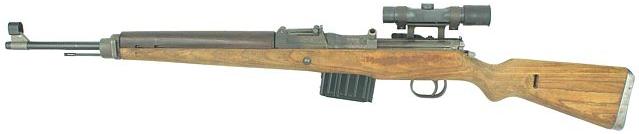
Before WW2, the Germans preferred to have riflemen with Kar98ks
supported up the MG-34. But, by 1941, 2 companies submitted plans for
semi-automatic self loading rifles. The two companies were Walther and
Mauser. The Gewehr 41s proved as poor weapons in combat. The Germans
wanted a rifle more like the Soviet SVT-40. The result was the German
Gewehr 43. No visible changes were made. The magazine held 10 and the 43
had a dovetail rail, which could be mounted with a scope.
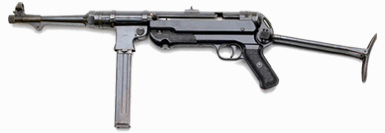
Most German infantry were supplied with either one of two weapons. The
MachinenPistole-44 has a great rate of fire, and deadly in close quarters.
However, it is not very accurate over longer ranges and has a high recoil.
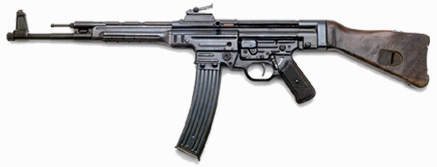
The MP-44 or the STG-44 was the world's first assault rifle. (Sturmgewehr,
abbreviated STG, when translated, means "storm rifle" or assault
rifle in english). The MP-44 had a good rate of fire, but was very
accurate. It could be used as a submachine gun in close quarters and as a
rifle at longer ranges. The design of Russian Kalashnikov Ak-47 was
actually based upon the design of the MP-44.
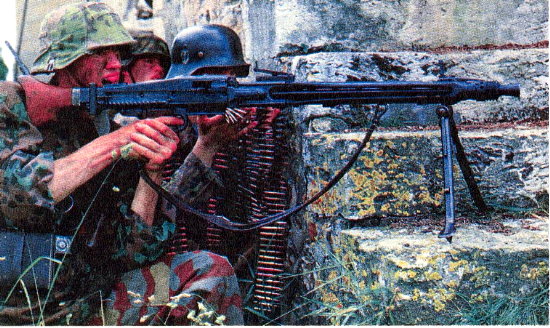
The Machinengewehr 1942 was first manufactured in 1942 as a successor
to the Mg-34. The Germans needed a simpler and cheaper machine-gun to
supply the growing German army. The winning design was submitted by
Metall-und-Lackierwarenfabrik Johannes Grossfuss AG. First named the
Mg-39, the weapon was not manufactured until 1942, so it required the new
name, Mg-42. The Mg-42 weighed 11.6 kg (31 lbs). The Mg-42 had a firing
rate of over 1200 rounds per minute, faster than any other weapon during
the war. At this rate, the human ear cannot tell that an individual round
was being fired. The Mg-42 was described as the "ripping-cloth"
and "Hitler's buzzsaw" because of its sound.
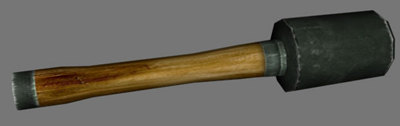
The stielhandgrenate is not as powerful as the frag mkII, but its
strength is that it can be thrown farther because of the handle.
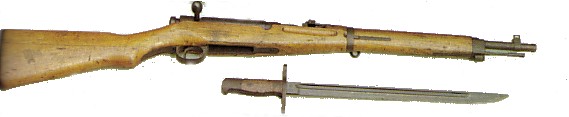
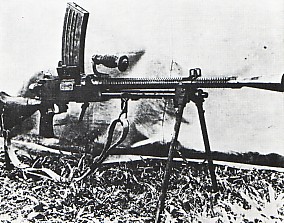
 This was probably the best pistol used by Japanese forces in WW2. The
enlarged trigger guard facilitated use with a glove. The reliability was
rather mediocre, so many officers preferred to use a sword than a pistol.
This was probably the best pistol used by Japanese forces in WW2. The
enlarged trigger guard facilitated use with a glove. The reliability was
rather mediocre, so many officers preferred to use a sword than a pistol.
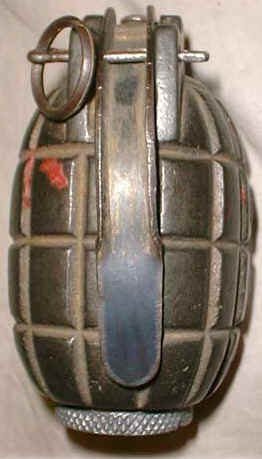
 To
arm the fuze, the firing pin must screwed into position. The safety pin is
then removed. The grenade is struck against a hard object like a helmet
and thrown. Unfortunately for the operator, the grenade often goes of too
quickly or immediately (when struck against an object). If all goes well,
one has 4-5 seconds to throw the grenade.
To
arm the fuze, the firing pin must screwed into position. The safety pin is
then removed. The grenade is struck against a hard object like a helmet
and thrown. Unfortunately for the operator, the grenade often goes of too
quickly or immediately (when struck against an object). If all goes well,
one has 4-5 seconds to throw the grenade.