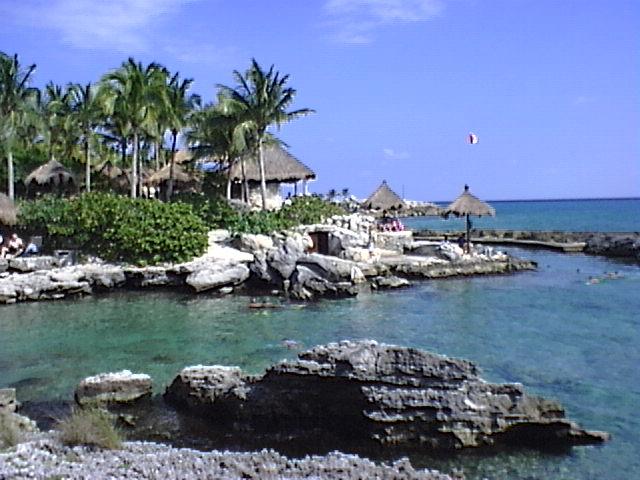
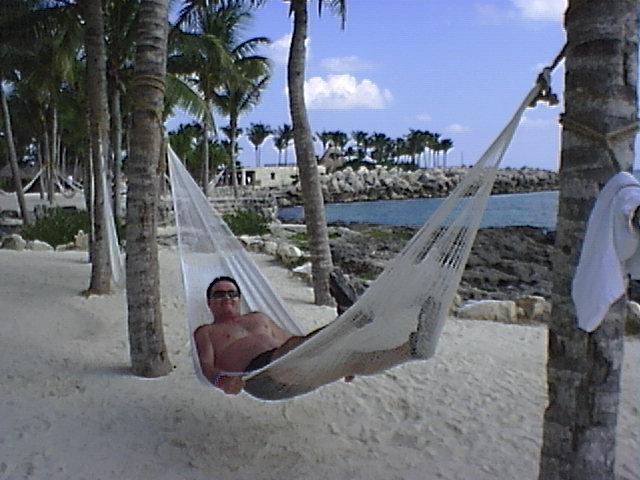
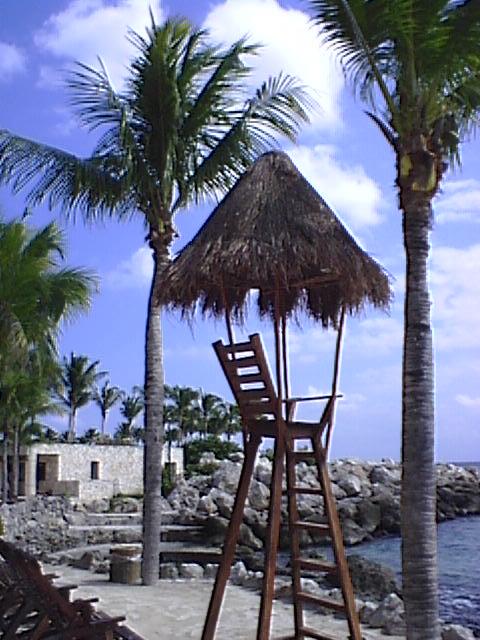
Relax and enjoy the view
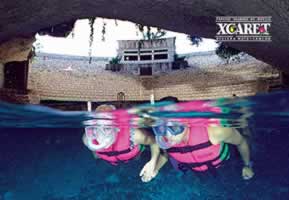
Xcaret Underground Rivers The Underground Rivers attraction of Xcaret invites you to explore their crystalline waters and marvel at this ancient creation of Mexican Nature. Dare to explore and enjoy an experience that is unique in the world. The soft and refreshing currents of these two Underground Rivers will take you for more than one kilometer to discover ancient Mayan sinkholes, magical caves, rock formations and marine fossils. These Playa del Carmen natural wonders are lit, at certain points, by beams of light which make the rivers even more beautiful to the eyes of the visitor. Both Underground Rivers end near the Mexican Caribbean Sea, next to the mangroves inhabited by a group of spectacular pink flamingoes. For your comfort, you will find six different exits on your way where you can stop and relax, enjoy the warm rays of the sun and the tropical jungle before you continue this unforgettable adventure.
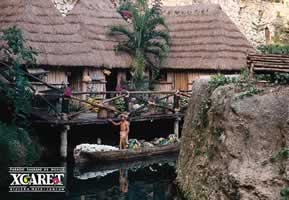
Mayan Village
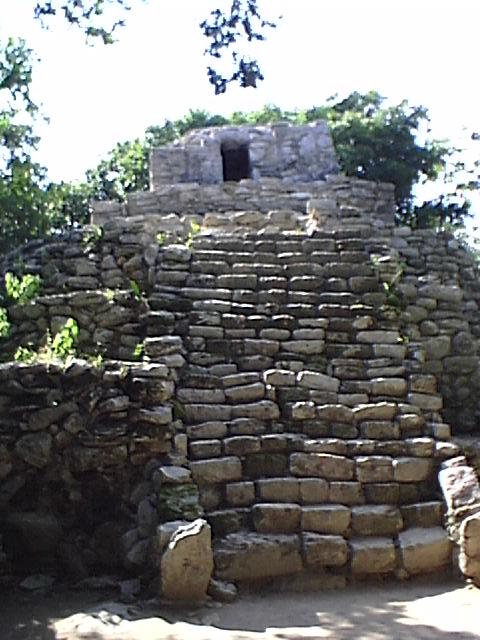
Xcaret Archaeological Vestiges The Mayans, the best known classic civilization of Middle America, built one of their main cities and ceremonial centers at Xcaret. You can find Archaeological Sites at Xcaret where you will discover the vestiges of the rich cultural heritage that these incredible mathematicians, astronomers and architects left to mankind. Xcaret (little inlet), used to be the ancient port of Pol� and it was also one of the most important trade and maritime ports that had its golden days in the Late Post-Classic period (1400-1517 AC). Within the natural shelter of the inlet, boats carrying honey, copal, jade and gold ornaments, obsidian knifes and other merchandise, were unloaded. It was here, in the waters of the sacred sinkhole, where the Mayans purified their bodies to then board their boats and travel to Cozumel where they worshipped Ixchel, goddess of fertility.
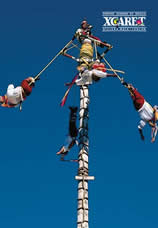
Voladores de Papantla Four bird men of Totonacan blood will descend from the top of the universal tree, doing circles in the air. 30 meters above ground the leader dances and plays pre-Hispanic instruments. These are the Papantla flyers worshipping the sun god. This impressive show of courage and faith of the Papantla fliers at Xcaret is an ancient ceremony which originated in the state of Veracruz in the Gulf of Mexico to ask for a good harvest and fertility. The fliers, representing the four elements and the four cardinal points, go up a 30 meter pole and tied by their waist jump head first into the air with their arms open. The fliers make their way down each going around the pole exactly 13 times which amounts to the number of months in the Mayan calendar.
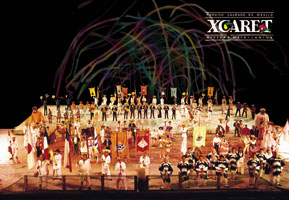
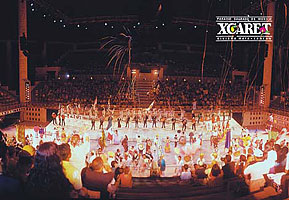
Xcaret Spectacular Night comes at the end of an entire day full of adventures at the Eco Park. In the Valley of the Scents, the deep call of pre-Hispanic drums resonate in the night air and the wind carries the notes of ocarinas, bells and conch shells. The priests and Mayan warriors, wrapped in the smoke of incense, announce an unprecedented cultural and historic journey in the Grand Tlachco, the large theatre that has a seating capacity of 6,000. Accompanied by the song of the conch shells and other pre-Hispanic musical instruments, Mayan children open the spectacle singing in chorus an ancestral legend. For more information about the attractions in Xcaret, please click below the performance of your interest...
Xcaret website
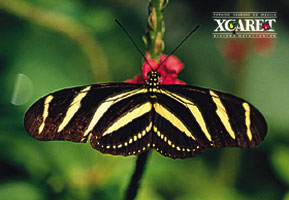
Xcaret - Butterfly Pavilion Considered one of the largest and most spectacular in the world, Xcaret�s Butterfly Pavilion invites you to admire a wide variety of native butterflies flying free. A free flight area of 3,500 m2 in size and 15 meters in height with multi-level gardens, a cascade, and the tropical jungle, are the scenery you will find in this magical home of 20 reproduction area. You will bear witness to a miraculous metamorphosis at our reproduction area where all the stages of their life cycle are shown. Be awed by watching them coming out from their chrysalis or pupa with their new colored wings!. Valued by ancient cultures as a symbol of beauty and mysticism, the Aztecs saw butterflies as the souls of the warriors who died in battle or by sacrifice. Another legend tells of how butterflies flew to heaven and became the stars.
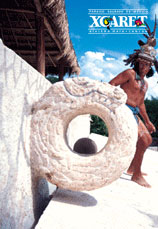
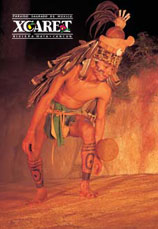
Ball game One of Xcaret�s objectives is to disseminate the culture heritage of the Mexican people and the Mayan culture. At sunset, the Park is transformed with wonderful shows, including the pre-Hispanic ball game announced by the tankules (wooden drums) that resound through the afternoon silence. Originating more than 3,500 years ago, the ball game was a political/religious activity widely played throughout Mesoamerica facing captured nobles against their conquerors. In this ritual game, considered a cosmic metaphor, the ball simulated the trajectory of the stars, and the players determined their path through the firmament. During the conquest, the Spanish forbade the game and nearly succeeded in eradicating it. However, it survived in some regions of Mexico under the name of Ulama. Today, Xcaret presents a demonstration of this ancient game. The ball court new recreates the architectural style of Monte Alban (in Oaxaca) and Copan (in Honduras). The heavy rubber ball (weighing some 8.5 pounds) rolls and bounces against the sloped side walls. The objective is to pass the ball through the stone rings embedded high up on these walls, using only the hips. Through this presentation, Xcaret has rescued and disseminated a millenary tradition. What was once only imagined from the archaeological remains of ball courts throughout Mesoamerica has come spectacularly to life at Xcaret.