 |
| Basic Care of North American Hognose Snakes. |
| Remember these are the things that work for me. Other opinions may vary. |
| 1. Caging (Housing): Fish tank with a sturdy tight fitting lid. 10 Gallon for hatchlings or juveniles. 15 L to 20 Gallon for adults. 2. Substrate (bedding): Substrate should be a soft, dry material such as aspen shavings, Care Fresh, Desert Blend, Bed-A-Beast. can be used. Sand can be used-if care is taken to feed the snake in seperate enclosure, as it is known to cause intestinal blockages in some snakes. The same can be said of potting soil. The substrate should be 1 to 3 inches deep-depending on the size and age of the snake. All of these materials can be moisened on one end of the tank to raise humidity if needed for shedding.( A note on substrates and mites. If you feel you want to make sure mites don't invade your snake's home-you can sanitize the substrate in a number of ways. I personally use a microwave oven to pre-treat substrates such as Care-Fresh and Bed-A-Beast. This can be dangerous so use alot of care, thought, and CAUTION when microwaving any of your snakes supplies. Boiling water will do fine also-allow the bedding to dry naturally and then use it. Make sure it's dried and cooled before use. 3. Other needs: A heavy, shallow water dish, a large flat rock for basking* (not required-see note at bottom on basking), and at least 1 hide box. A hide box can be made of nearly any material. Things you can use: commercially made hide boxes, inverted flower pots with an opening cut in it, well-just about any container with a hole cut in it will do. Old shoe boxes work nicely and can be disguarded and replaced when they get soiled. Any desposible thing you use is great to help keep the cage sanitary. 4. Temperature: cool end-70 F / Hot end 82 to 85 F/ 65 F at night. These are the ideals. An ambient room temp of 72 to 82 F is usually fine-especially for Eastern Hognose. 5. Photoperiod: 12 to 14 hours. Non-brumation (winter cooling). Brumation will be discussed on another page. 6. Feeding: Once per week is generally fine. Hognose tend to take one large meal. Feeding is dicussed on a seperate page also-because the Eastern and Southern Hognose require specialized feeding and sometimes they can be somewhat difficult to feed. Western Hognose are usually converted to eating rodents when they are purchsed from the breeder, and should be given appopriately sized rodents. In the case of wild caught Westerns or non-converted hatchlings that will not accept rodents-see the Feeding Page. * Basking: Hognose do not seem to need to bask or to need UV lighting. Some will bask but many will not, and retreat from the bright lights. Limit basking to about 1 hour each day. My snakes tend to enjoy Black Lights-perhaps this simulates dawn and dusk lighting to them. These are the times they feed and are most active. You can use Full Spectrum light if you desire and it certainly won't hurt them. A light unit with 3 different lights in it is ideal. One flourescent Full Spectrum, one basking, and one Black Light. **Additonal note: Plants can be used in the cage-beware of live plants as they can carry mites. The hognose are active burrowers and will more than likely unroot and kill live plants. You may want to use artificial plants found in flower shops or use plastic plants made for fish tanks. If you use live plants in pots-be aware that hognose will burrow into the pots and uproot those plants as well. |
|
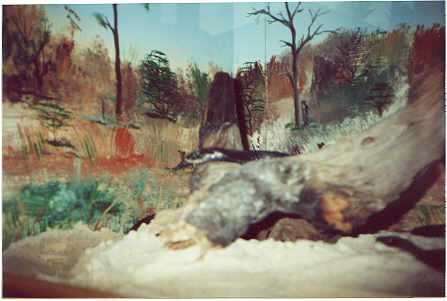 |
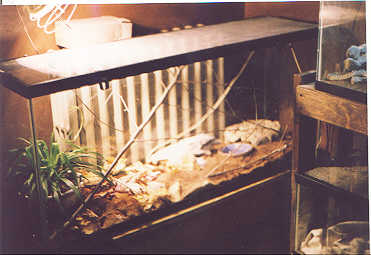
| This is the Eastern Hognose cage setup from Edisto Island Serpentarium Photo by J. McGavin |
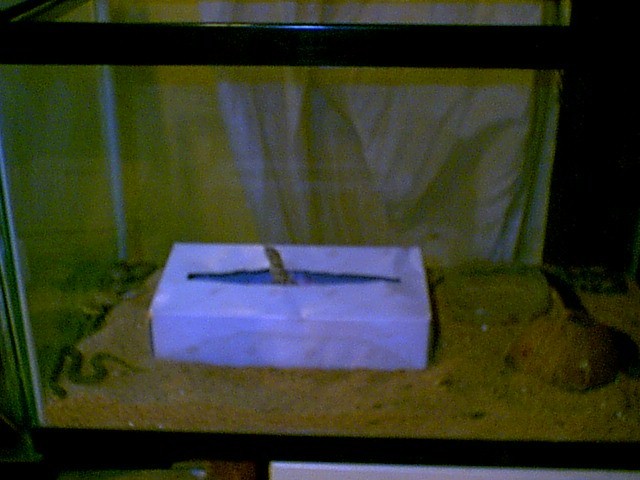 |
| Here is a simple, effecient set-up: using Desert Blend substrate, a small shallow water dish, and tissue box with moist material in it. The snakes seem to enjoy using the moisture box from guite often. It adds humidity to the cage but not enought to make the cage too wet. A Black Light is being used here. Photo by J.McGavin |
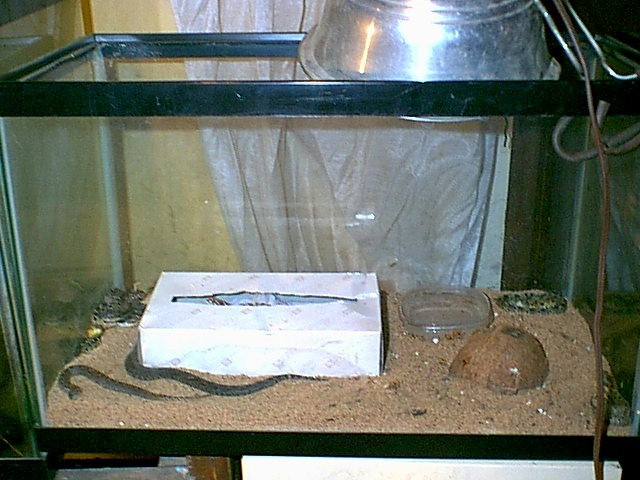 |
| The same cage as above but with normal lighting. The coconut shell has been cut and cleaned to make a small dry hide box for these juvenile snakes. As I said before-any disposable materials you can use make cage cleaning more sanitary, but not always attactive. I believe that re-using boxes from anything non-toxic-such as food boxes, tissue boxes, shoe boxes is a good option to consider. Changing the look of the environment from time totime does not make the snake upset- it only gives them more to do and explore. Photo By J. McGavin |
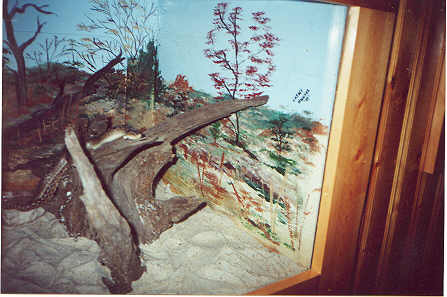 |
| This is again other exhibit cage from the Edisto Island Serpentarium. These are Southern Hognose. The substrate used is sand. The hides are rocks and driftwood. This type of cage is another option the home keeper might want to try. It is simple and easy to maintain. Although cleaning and sterilizing the wood can be problem. The same materials were used in the Eastern Hognose cage pictured above. Photo By J. McGavin |
 |
 |
 |
 |
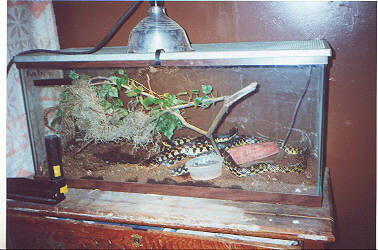
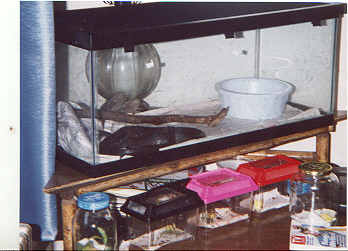
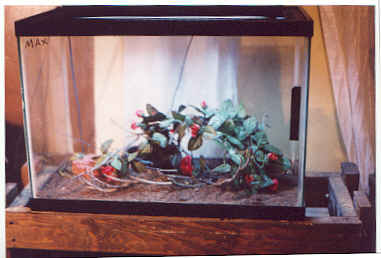
| These are just some examples of different set-ups I have used over the years. They can all be used for hognose snakes. TOP LEFT: Is a nice set-up for Madagascar Hognose snakes. |