|
|

|

Back to Products' menu
Telephone controller
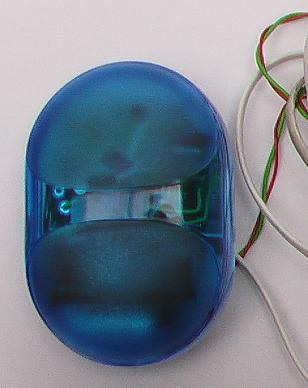
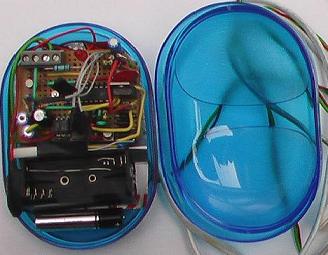
About the device in general
The telephone controller is small enough to be assembled in a soap box.
Despite of its size this equipment can be a very powerful tool.
It is developed around a small microprocessor with embedded software,
which makes it very flexible in terms of control.
The microprocessor even simulates operations such as DTMF tones dialling.
All control processes are based in a single chip.
Usage
The device has 3 inputs and 2 outputs plus a telephone connection. One of the inputs is specially
designed to trigger the processor and dial a specially programmed phone number.
Further the listener can hear the logical situation of the 2 inputs and 2 outputs.
By dialling numbers or producing tone in the line back to the device,
the listener can change the outputs levels (the state of the outputs) and this way to control two digital
outputs. If no one picks up the phone, the system will close the line in about 2 minutes.
Supply
The device needs a very low electrical current. In this case, we use 3 small batteries 1.5V each. With no
operating mode,
this device consumes microamperes and possibly can survive years without recharging the batteries.
Applications
Due to its flexibility, this device can be used in many different ways.
It can be connected to an alarm system, where it will trigger a telephone call when the alarm is activated.
Also it can be used in experimental equipment where the listener can control processes or it can be just
built into the telephone in order to protect from calling different numbers from the pre-programmed once.
It can be used also to spy some events (presence of people, light, darkness, noise, electrical or magnetic
impulses, mechanical movements, temperature changes etc…). The number of applications is endless.
|
|
|